An Environmental, Health, and Safety (EHS) specialist is responsible for ensuring workplace safety, regulatory compliance, and environmental protection. By developing safety protocols, conducting risk assessments, and implementing training programs, EHS specialists mitigate workplace hazards and promote sustainable practices. This article details what an EHS specialist does, focusing on their core duties and the skills required to excel in this critical role across industries like manufacturing, healthcare, and construction.
Primary Duties of an EHS Specialist
An Environmental, Health, and Safety (EHS) specialist ensures workplace safety, regulatory compliance, and environmental protection. Their work involves developing protocols, assessing risks, and training employees to mitigate hazards and promote sustainable practices. This article explores what an EHS specialist does, detailing their core responsibilities, tools, challenges, and evolving role in industries like manufacturing, healthcare, and education.
Duties of an EHS Specialist
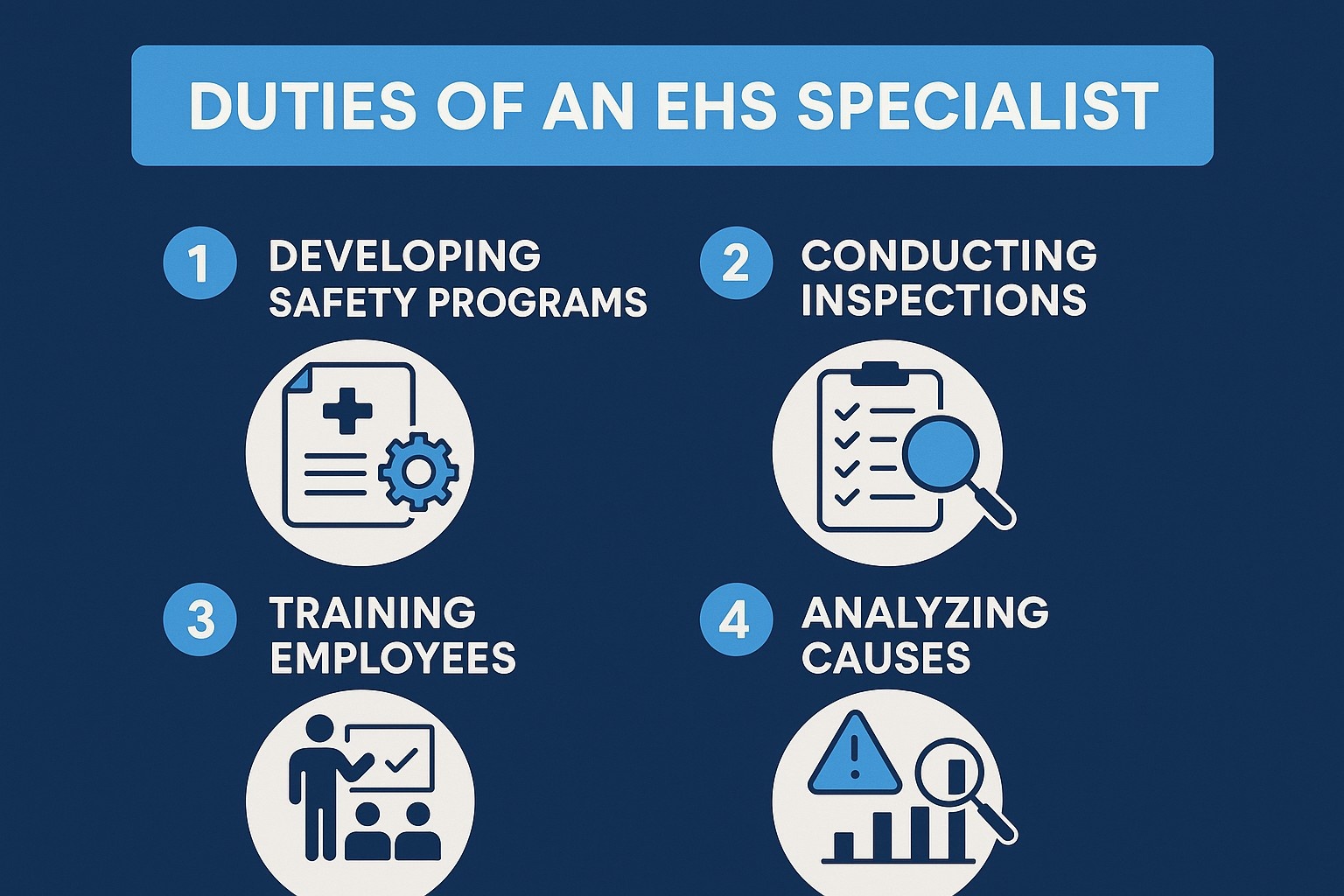
The role of an EHS specialist encompasses a broad set of tasks to maintain safe, compliant, and environmentally responsible workplaces. These duties require a mix of strategic planning, hands-on assessments, and collaboration with employees and management. Below are the key responsibilities that define what an EHS specialist does.
Developing Safety Programs
EHS specialists create and implement safety policies tailored to specific workplace risks. These programs outline procedures for safe equipment operation, handling hazardous materials, and maintaining secure environments. For example, in a manufacturing plant, they might develop protocols for operating heavy machinery, while in a hospital, they focus on biohazard containment. They work with management to integrate these policies into daily operations, ensuring employees follow clear, standardized practices to minimize incidents.
Conducting Inspections and Audits
Regular inspections and audits are a cornerstone of what an EHS specialist does. They systematically evaluate facilities, equipment, and processes to identify hazards, such as faulty machinery or improper storage of chemicals. Audits also verify compliance with regulations, like ensuring fire exits are accessible or that ventilation systems meet air quality standards. EHS specialists document findings, prioritize risks, and recommend corrective actions, often revisiting sites to confirm compliance.
Training Employees on Safety Protocols
Training is a critical responsibility, equipping employees with the knowledge to handle workplace risks. EHS specialists organize sessions on topics like emergency evacuation, proper use of personal protective equipment, or safe chemical handling. These programs may include certifications, such as first aid or CPR, and are tailored to the workplace’s needs-for instance, construction workers might receive training on fall protection. Regular drills and refreshers ensure employees remain prepared for emergencies.
Investigating Incidents and Analyzing Causes
When accidents occur, EHS specialists investigate to pinpoint root causes. They use methods like fault tree analysis or the “5 Whys” to examine factors such as equipment failure, human error, or inadequate training. For example, if a worker is injured due to a machine malfunction, they assess whether maintenance schedules or operator training were deficient. Their findings inform corrective actions, and detailed reports are shared with management to prevent recurrence.
Ensuring Regulatory Compliance
Compliance with regulations is a fundamental part of what an EHS specialist does. They monitor standards from agencies like OSHA, EPA, and ISO, ensuring workplaces meet requirements on issues like chemical exposure limits or waste disposal. This involves staying updated on regulatory changes, conducting compliance audits, and preparing documentation for inspections. Non-compliance can lead to fines or operational shutdowns, so EHS specialists act as a bridge between regulatory bodies and their organization.
Planning Emergency Response
EHS specialists develop emergency response plans for scenarios like fires, chemical spills, or natural disasters. These plans detail evacuation routes, communication protocols, and coordination with external agencies like fire departments. For instance, in a university lab, they might outline procedures for containing a chemical spill. They conduct regular drills to test these plans and update them based on feedback or new risks, ensuring the workforce is prepared for crises.
Managing Environmental Impact
Environmental stewardship is a growing focus for EHS specialists. They implement initiatives to reduce waste, control pollution, and lower carbon footprints. This might involve setting up recycling programs, monitoring emissions, or ensuring proper disposal of hazardous materials. In industries like manufacturing, they assess processes to minimize environmental harm while maintaining compliance with EPA regulations, balancing operational needs with sustainability goals.
Analyzing Data and Maintaining Records
EHS specialists collect and analyze data on incidents, injuries, and environmental performance to identify trends and improve safety measures. For example, a spike in repetitive strain injuries might prompt ergonomic assessments. They use data to evaluate the effectiveness of safety programs and inform policy updates. Detailed record-keeping is also essential for regulatory reporting, audits, and tracking compliance activities, ensuring all documentation is accurate and accessible.
Industries Where EHS Specialists Work
EHS specialists are employed in sectors where safety and environmental compliance are critical. Their work adapts to the unique risks of each industry, including:
- Manufacturing: Managing machinery safety and hazardous material handling.
- Healthcare: Ensuring sterile environments and biohazard control.
- Construction: Overseeing site safety and compliance with building codes.
- Government: Supporting public safety and environmental initiatives.
- Educational Institutions: Maintaining safe facilities for students and staff.
Tools and Technologies for EHS Specialists
Technology is integral to what an EHS specialist does, enhancing efficiency in managing safety and compliance tasks. EHS management software automates processes like compliance tracking, audit management, and incident reporting. These platforms often include:
- Custom checklists for inspections, ensuring consistency across sites.
- Real-time data analysis for identifying risk patterns, such as frequent incidents in specific areas.
- Centralized documentation for storing safety data sheets, permits, and audit reports.
- Collaboration tools for coordinating with teams across multiple locations.
For example, during a lab inspection, an EHS specialist might use software to log hazards via a mobile app, attach photos, and generate reports instantly. These tools reduce manual errors, streamline workflows, and provide data-driven insights for safety improvements. Integration with visualization tools also allows specialists to map risks or safety assets, such as fire extinguishers, across large facilities.

How CampusOptics Enhances the Work of EHS Specialists in Higher Education
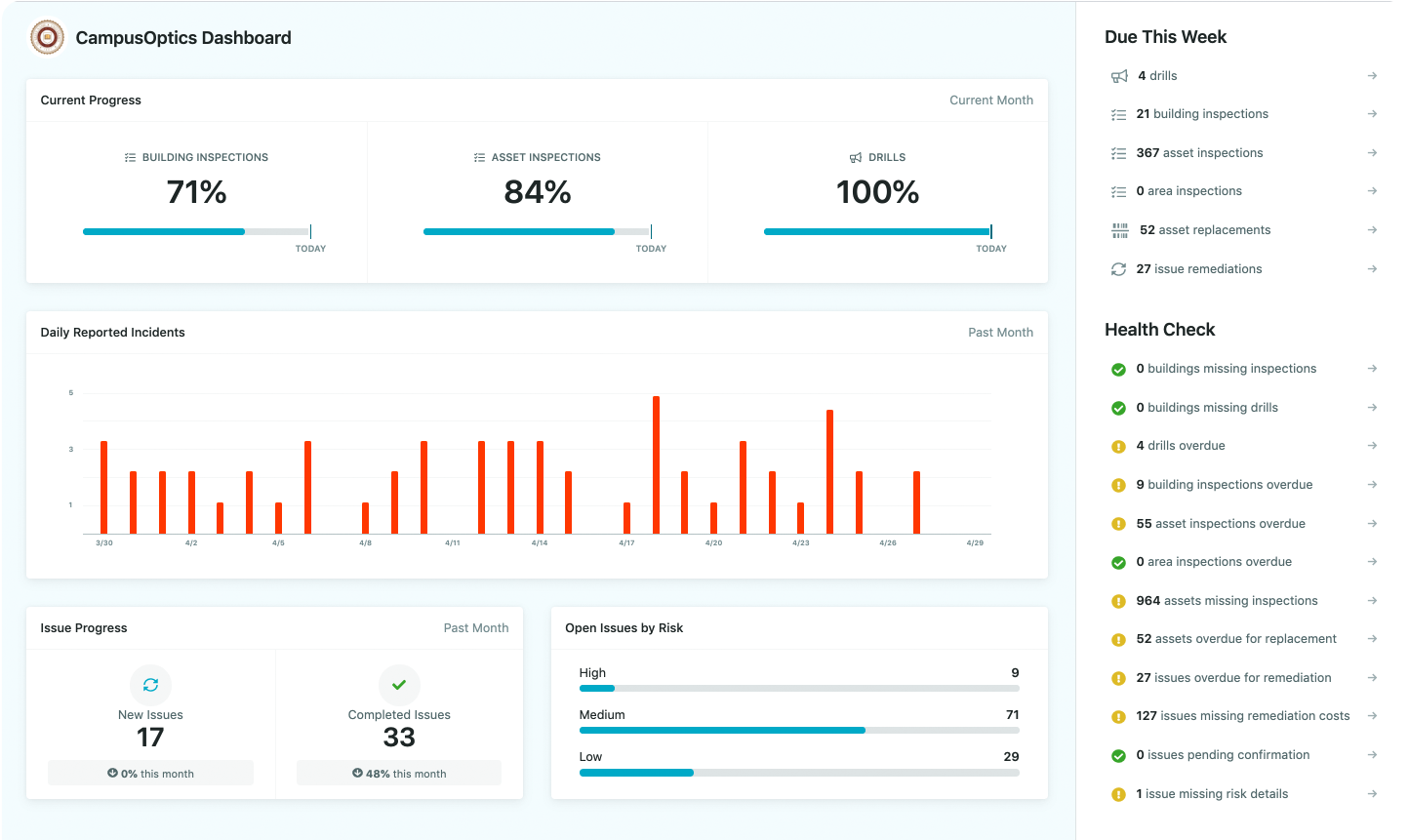
At CampusOptics, we recognize the critical role EHS specialists play in ensuring safe and compliant higher education environments, where they manage everything from lab safety to emergency preparedness across complex campuses. Our platform supports what an EHS specialist does by providing a mobile-first solution that streamlines tasks like conducting inspections, tracking chemical inventories, and documenting incidents with features such as barcode scanning, talk-to-text, and photo uploads. We offer interactive campus maps to visualize safety assets and risks, alongside tools like compliance calendars and incident management systems to simplify regulatory reporting and audits, enabling EHS specialists to focus on creating safer academic spaces with efficient, tailored collaboration.
Essential Skills for an EHS Specialist
Performing the duties of an EHS specialist requires a blend of technical, analytical, and interpersonal skills to address workplace safety and compliance challenges.
Technical Knowledge
EHS specialists need expertise in safety regulations, risk assessment techniques, and technical systems like fire protection or electrical safety. Understanding industry-specific equipment, such as chemical storage systems in labs or heavy machinery in factories, is crucial for identifying and mitigating hazards.
Analytical and Problem-Solving Abilities
Analyzing data and assessing risks are key to what an EHS specialist does. They evaluate workplace conditions, interpret incident reports, and develop tailored solutions, such as redesigning workflows to reduce ergonomic risks.
Communication and Training Skills
Clear communication is essential for explaining safety protocols and conducting training. EHS specialists present complex information effectively, ensuring employees understand procedures, and collaborate with management to address safety concerns.
Attention to Detail
Precision in inspections, audits, and documentation is vital. EHS specialists identify subtle risks, like improper labeling of chemicals, and ensure compliance with regulatory standards to prevent oversights.
Leadership and Organizational Skills
Leading safety initiatives and coordinating across departments are integral to what an EHS specialist does. Strong organizational skills support managing audits, training, and compliance tasks, while leadership ensures effective policy implementation.
Educational and Professional Pathways
To effectively perform the duties of an EHS specialist, professionals require a structured educational and professional foundation tailored to the complexities of workplace safety and environmental management. A bachelor’s degree in a relevant field, such as environmental science, occupational health, industrial hygiene, or safety engineering, provides the technical knowledge needed to understand regulations, risk assessment, and hazard mitigation. These programs typically cover topics like toxicology, ergonomics, and environmental compliance, equipping aspiring specialists with the tools to address industry-specific challenges.
Certifications play a significant role in enhancing expertise and credibility. Credentials like the Certified Safety Professional (CSP) or Certified Industrial Hygienist (CIH) demonstrate advanced proficiency in safety management and industrial hygiene, respectively. Other relevant certifications, such as the Associate Safety Professional (ASP) or Occupational Health and Safety Technologist (OHST), can also strengthen a candidate’s qualifications, particularly for specialized roles in high-risk industries like construction or chemical manufacturing.
Entry-level EHS roles typically require 1-2 years of practical experience, often gained through internships, co-op programs, or related positions in safety or environmental management. For example, an internship in a manufacturing facility might involve conducting risk assessments or assisting with compliance audits, providing hands-on exposure to real-world safety challenges. These experiences help develop practical skills in areas like incident investigation and safety program implementation.
Continuous professional development is essential due to the evolving nature of regulations and safety practices. EHS specialists regularly participate in training programs, workshops, and industry conferences to stay updated on changes in standards from agencies like OSHA or EPA, as well as emerging trends like AI-driven risk analysis. Professional organizations, such as the American Society of Safety Professionals (ASSP) or the Board of Certified Safety Professionals (BCSP), offer resources and networking opportunities to support ongoing learning. This commitment to education ensures EHS specialists remain equipped to handle new challenges and maintain compliance in dynamic workplace environments.
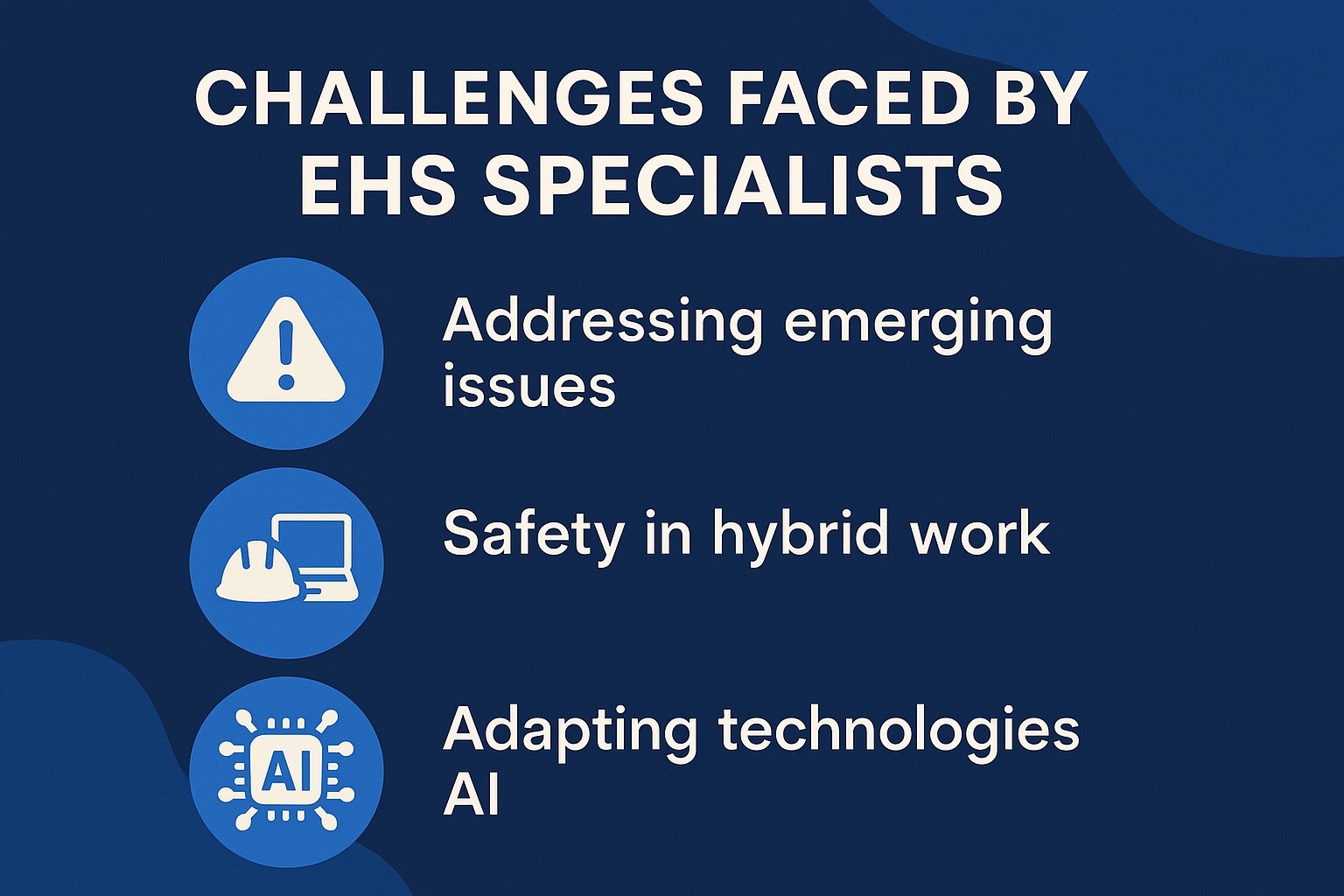
Challenges Faced by EHS Specialists
EHS specialists face several challenges that test their adaptability and expertise. Keeping up with evolving regulations is a constant task, as new standards or amendments can require immediate policy updates. For example, changes in OSHA chemical exposure limits might necessitate retraining staff or upgrading equipment. Balancing safety with operational efficiency is another hurdle, particularly in high-pressure industries like construction, where downtime for safety upgrades can disrupt schedules. The following challenges further complicate their role:
- Addressing emerging issues, such as mental health or ergonomic risks, requiring integration of new frameworks into traditional safety programs.
- Managing safety in hybrid or remote work environments, ensuring compliance for off-site workers.
- Adapting to technologies like AI for risk prediction or robotics for hazardous tasks, which demands learning new systems while aligning with safety goals.
Emerging Trends in EHS
The EHS field is evolving, driven by technological advancements and shifting workplace priorities, which reshape what an EHS specialist does. A growing focus on ergonomics prompts specialists to assess workplace designs, such as adjusting workstations to reduce strain injuries. Mental health is gaining attention, with EHS specialists evaluating workplace stressors and proposing wellness programs. Key trends influencing their work include:
- Integration of AI-driven analytics to predict risks, such as flagging labs with frequent chemical spills for targeted interventions.
- Use of robotics to handle dangerous tasks, reducing human exposure to hazards.
- Adoption of advanced monitoring systems to enhance real-time safety assessments.
These trends require EHS specialists to stay agile, updating their skills to integrate new tools and address broader safety concerns.
Conclusion
The role of an EHS specialist is multifaceted, encompassing workplace safety, regulatory compliance, and environmental management. By developing safety programs, conducting audits, training employees, and leveraging technology, EHS specialists ensure safer and more sustainable workplaces. Their work remains vital as industries adapt to new challenges and regulatory requirements.
Frequently Asked Questions
What does an EHS specialist do to ensure workplace safety?
They develop safety programs, conduct inspections, train employees, and investigate incidents to mitigate risks and maintain safe work environments.
Which industries employ EHS specialists?
EHS specialists work in manufacturing, healthcare, construction, government, and educational institutions where safety and compliance are priorities.
How do EHS specialists ensure regulatory compliance?
They monitor regulations from agencies like OSHA and EPA, conduct audits, and implement policies to meet legal standards.
What tools do EHS specialists use?
EHS management software supports tasks like compliance tracking, incident reporting, and data analysis to enhance safety processes.
Why is employee training a key part of what an EHS specialist does?
Training ensures employees understand safety protocols and emergency procedures, reducing the risk of workplace incidents.
How do EHS specialists contribute to environmental management?
They implement initiatives like waste reduction and pollution control to minimize environmental impact and ensure regulatory compliance.
What challenges do EHS specialists face?
They must keep up with changing regulations, balance safety with operational needs, and adapt to new issues like mental health or advanced technologies.