If you’ve ever tried to manage environmental, health, and safety compliance using spreadsheets, shared folders, or old forms from a binder in the supply closet, you already know how messy things can get. Between inspections, incident reports, safety training, and regulatory deadlines, the list of moving parts doesn’t just grow – it multiplies.
That’s where EHS regulatory compliance software comes in. It’s not just a digital filing cabinet or a nicer version of your current checklist. It’s a tool built to bring structure to a process that’s usually scattered across departments, formats, and people’s inboxes.
This article walks through what this software does, who needs it, and how it actually helps in real life. Whether you’re just trying to understand the basics or thinking about switching from manual tracking, here’s what to know.
What does EHS regulatory compliance really mean?
EHS stands for Environmental, Health, and Safety. Every workplace is expected to keep people safe and follow regulations that reduce risk to employees, the community, and the environment. That could mean tracking hazardous waste, keeping tabs on chemical inventory, logging incidents, or making sure required training is up to date.
“Compliance” is the part that usually creates the most stress. It means proving you’re following the rules – documenting your actions, preparing for inspections, staying current with changing standards, and addressing issues before they turn into fines or headlines.
EHS regulatory compliance software is a digital system that keeps all of this organized and traceable.
So what exactly does the software do?
It depends on the system, but the main goal is to simplify and centralize the stuff that tends to get lost or delayed. A good EHS platform gives you tools to:
- Track compliance tasks and deadlines
- Assign and monitor corrective actions
- Log and investigate incidents and near misses
- Manage permits and environmental reports
- Keep training records updated
- Conduct inspections and audits from your phone
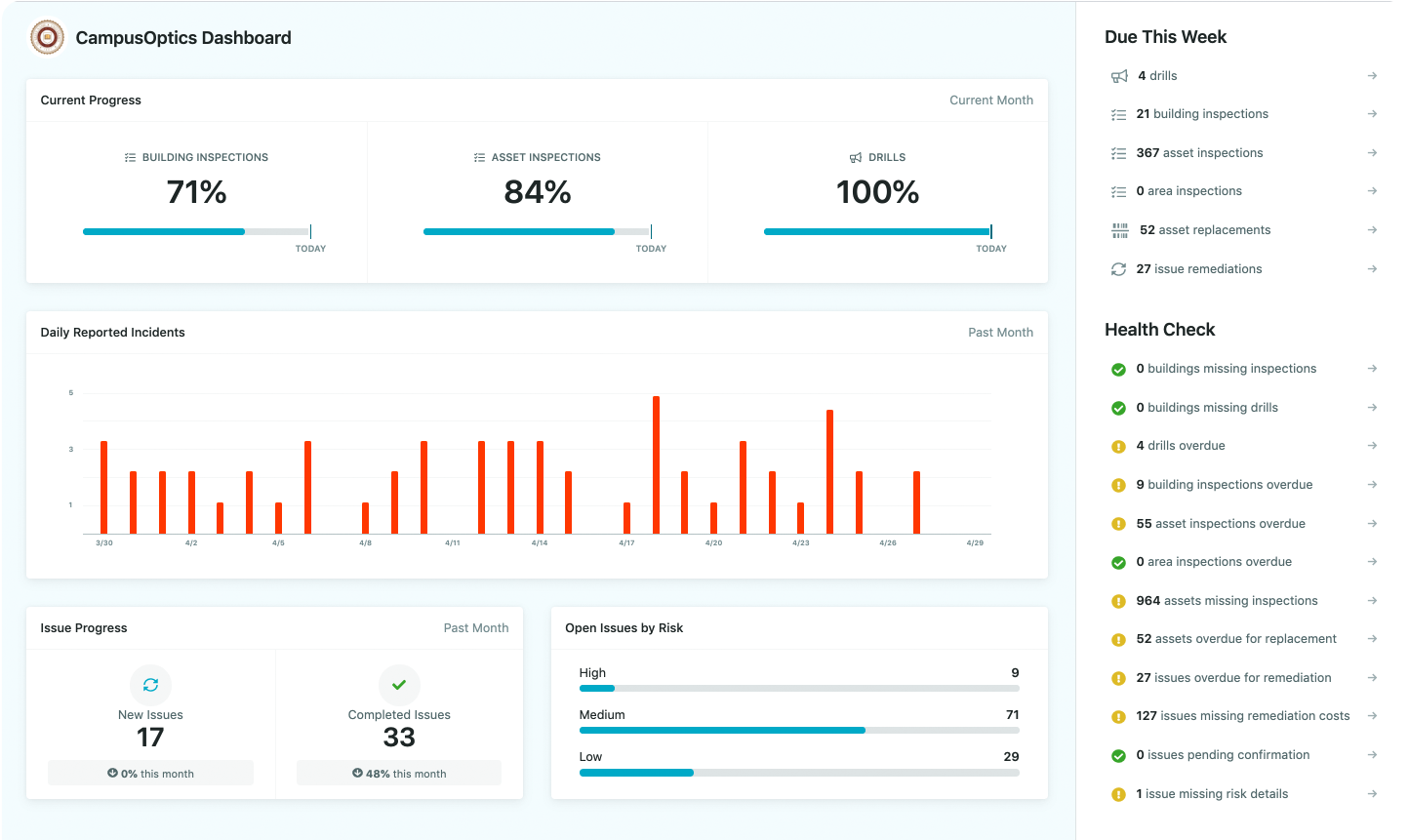
- Visualize risks and performance with real-time dashboards
Instead of switching between ten different programs or trying to piece together reports from separate teams, everything sits in one place. And most systems offer mobile access, so it works whether you’re in the office or inspecting a lab on the other side of campus.
Who Actually Uses EHS Compliance Software?
You’ll see it most in industries with high risk or high regulation. That includes:
- Universities and colleges
- Chemical and pharmaceutical companies
- Oil and gas
- Construction
- Utilities and power plants
- Food processing and distribution
- Large-scale manufacturing
But honestly, any organization that deals with inspections, training, permits, or hazardous materials can benefit. What’s changing is that more small and mid-sized teams are realizing the value of having all compliance activities in one system.
It’s also not just used by EHS managers. Many platforms are built for cross-functional use, meaning risk managers, facilities teams, lab coordinators, safety officers, and even HR or legal departments might be involved. The best tools allow configurable access so each team sees only what’s relevant.
Why This Matters More Than Ever
Let’s be honest – most teams don’t wait around looking for new software unless something isn’t working. And in EHS, what’s “not working” usually shows up in one of these ways:
- Missing documentation before an audit
- Reactive, last-minute responses to safety issues
- Confusion about what tasks are due and who owns them
- Training gaps that go unnoticed
- Permits or inspections getting delayed or forgotten
These aren’t just inconveniences. They affect safety, reputation, and liability. When records are incomplete or buried in emails, it’s hard to prove you’re doing the right thing, even if you are.
Regulatory bodies like OSHA and the EPA aren’t getting less strict. Requirements shift. Expectations increase. And for industries like higher education, energy, healthcare, or manufacturing, there’s not much room for error. Compliance software isn’t about convenience – it’s quickly becoming a baseline need.
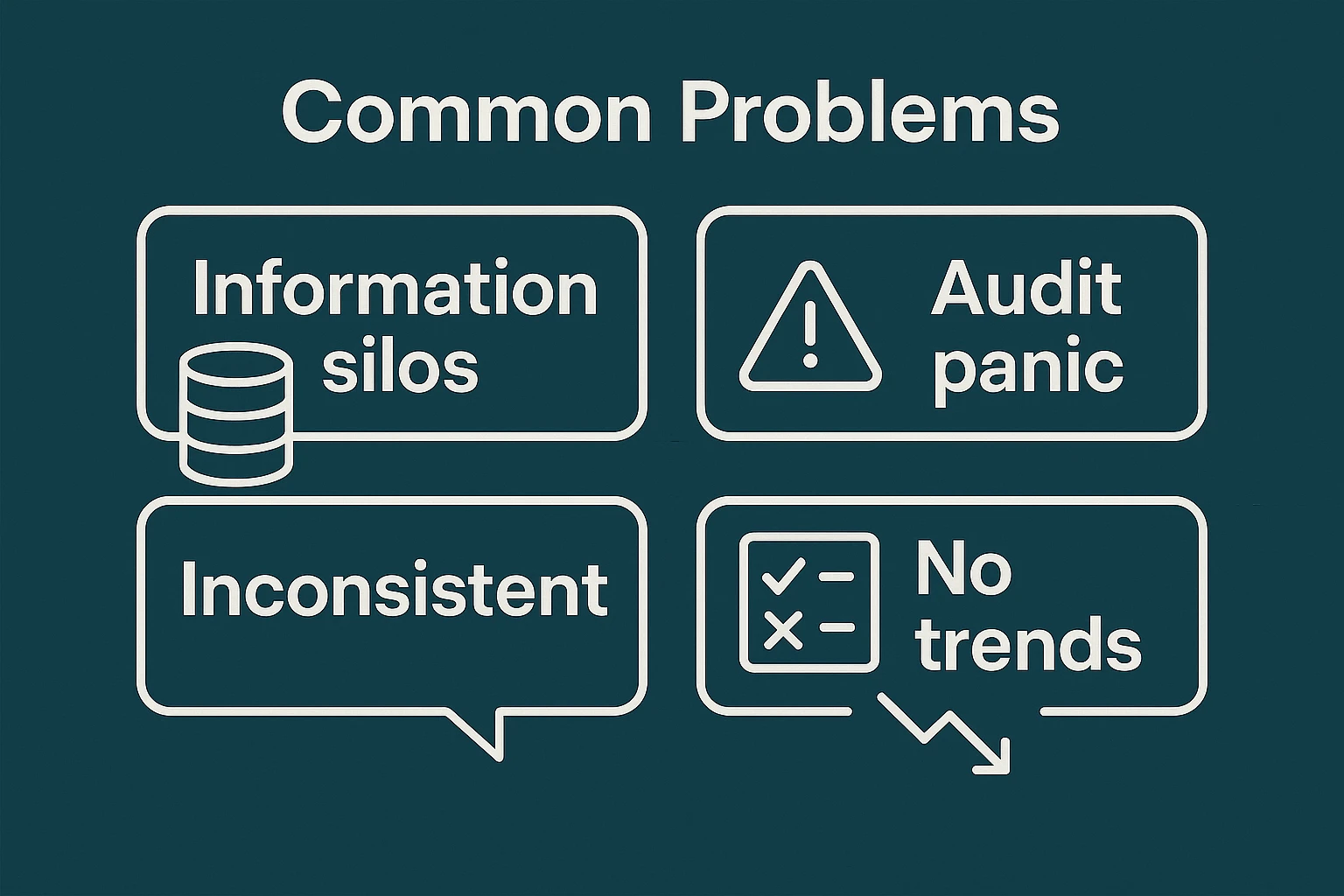
Common Problems This Software Solves
Here’s what tends to go wrong when teams are still relying on manual or disconnected systems.
Information silos
One person tracks inspections in a spreadsheet. Another logs incidents in a shared drive. Training records sit in HR software, and permit deadlines are saved in someone’s calendar. It works, until it doesn’t. When teams can’t see the same data, small issues fall through the cracks.
Audit panic
A surprise inspection shouldn’t trigger chaos. But for many organizations, audits mean digging through email threads, updating outdated logs, and hoping nothing important got missed. Compliance software allows audit logs, reports, and documents to be generated in minutes – not days.
Inconsistent follow-through
If someone reports a broken safety device or a chemical spill, what happens next? In some systems, the issue gets noted but never resolved. A digital platform lets you assign that issue, set deadlines, track progress, and close the loop with a documented trail.
No visibility into trends
One incident isn’t always a pattern. But if the same type of issue keeps coming up in the same building or department, you need to know. Software helps teams spot those patterns and act on them early.
Core Features to Look For
Not all platforms are built the same. Some focus more on environmental data. Others are stronger on training or inspections. But in general, a good EHS compliance system should offer:
Modules and Tools
- Incident management: Log events, near misses, injuries, and tie them to investigations or root cause analysis.
- Audit and inspection tools: Use standard or custom checklists, schedule site visits, and flag follow-up actions.
- Training management: Assign, track, and update employee safety training and certifications.
- Permit and compliance calendars: Keep track of permit expirations, compliance tasks, and send automatic reminders.
- Task management: Tie actions to incidents, inspections, or compliance needs, and track them through to completion.
- Mobile access: Submit reports or conduct inspections from the field, including talk-to-text, photos, and barcode scanning.
- Analytics and dashboards: See KPIs, trends, and status in a simple, visual way for better decision-making.
It’s Not Just About Checking Boxes
This software isn’t just for satisfying regulators. It’s also about building a stronger safety culture.
When people have an easy way to report issues, complete inspections, or log near misses, participation goes up. That means you get better data and fewer surprises. The system becomes part of your safety process instead of something separate from it.
It also helps leadership see where risk is concentrated. Are training gaps isolated to one department? Are certain locations generating more incident reports? With that kind of insight, your response becomes proactive, not reactive.
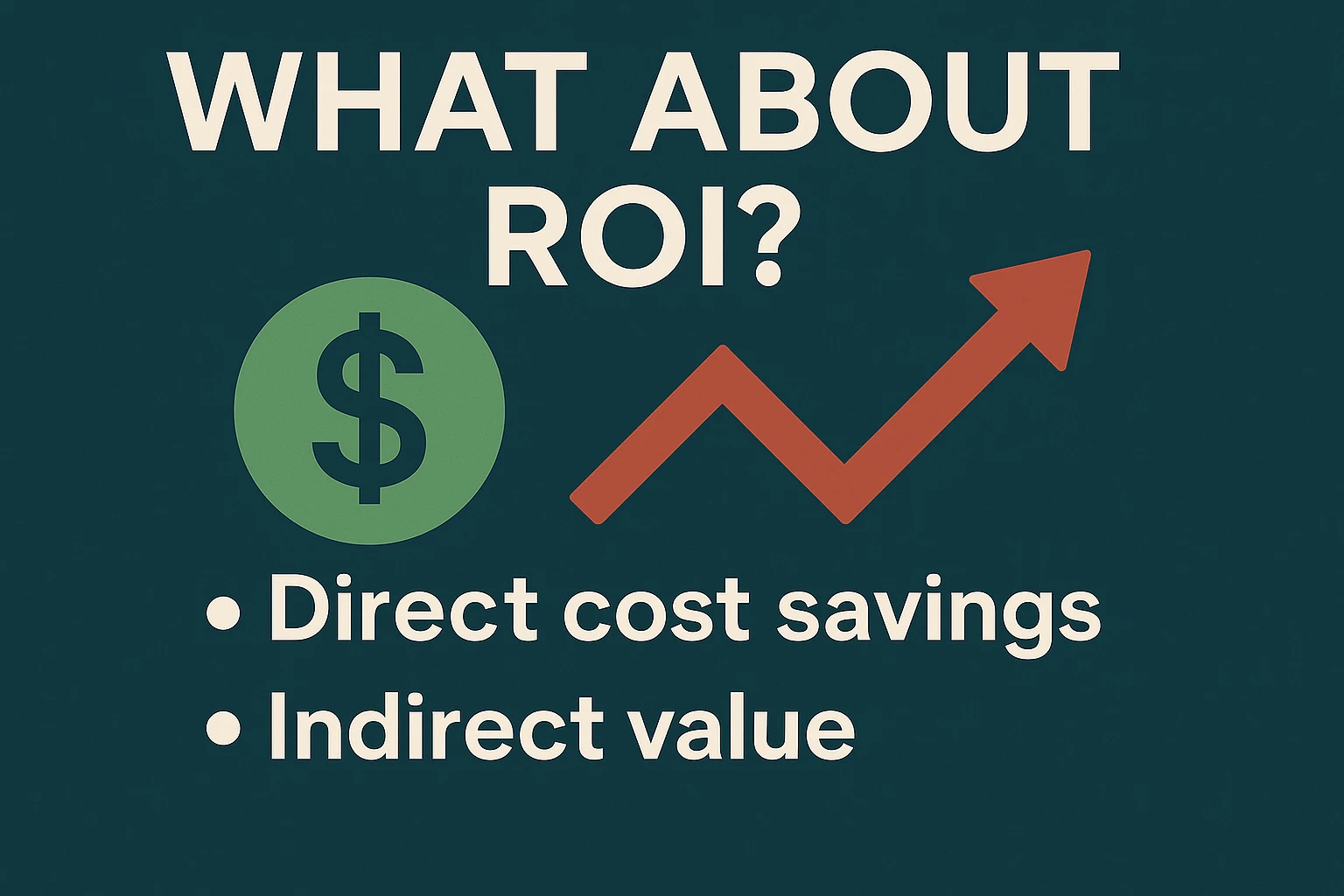
What About ROI?
This part often gets overlooked, but it’s one of the strongest reasons organizations invest in EHS regulatory compliance software. The savings don’t always show up as a single line item on a budget, but they’re real and measurable once the system is in place.
Direct cost savings
On the most obvious level, software helps cut costs by reducing fines or citations from missed deadlines and regulatory oversights. Teams also spend far less overtime scrambling to prepare for inspections because records and reports are already organized and ready to go. Insurance claims and workers’ compensation expenses can drop as well when incidents are prevented or addressed faster. Finally, replacing multiple overlapping tools with one platform avoids the hidden expense of duplicate systems and the IT work to keep them running.
Indirect (but real) value
There’s also a less visible, but equally important, side to the return. A safer workplace improves employee morale and retention, which reduces the cost of turnover and training. Staff save time on reporting, scheduling, and document preparation because the software automates routine tasks and centralizes information. Knowledge stays within the organization instead of walking out the door when a key safety officer leaves. And when audits or vendor reviews come up, having a complete, well-documented system puts the organization in a stronger position to prove compliance and professionalism.
Avoiding just one serious incident can often justify the cost of the software. In many organizations, teams begin to see this payoff within the first year.
Tips for Choosing the Right Platform
There are a lot of EHS compliance tools out there, and many look similar on the surface. But once you start comparing, the differences become more obvious. Focus on these key factors:
- Industry relevance
- Ease of use
- Mobile functionality
- System integration
- Support quality
- Room to grow
The best software is the one that fits the way your team actually works. It should reflect your industry’s needs, feel easy to use without hours of training, and work just as well in the field as it does at a desk. If it doesn’t integrate with your existing tools or feels clunky in real-world use, it’s going to be a problem.
Also consider what happens after you sign the contract. Some platforms offer strong support and smooth onboarding, while others leave you on your own. And don’t just think short-term. The right platform should grow with your organization, whether that means adding new users, expanding to other departments, or managing more complex compliance needs down the road.

How We Approach EHS Compliance at CampusOptics
At CampusOptics, we’ve seen firsthand how fragmented and outdated systems can get in the way of safety on college campuses. Our platform was built specifically to address that. Unlike general-purpose tools, our focus is squarely on the real challenges faced by higher education institutions trying to manage fire and life safety, EH&S, and risk in a unified way.
We’ve worked with campus safety professionals across the country, and one thing is always clear: compliance doesn’t happen in a vacuum. It takes coordination across departments, reliable access to accurate data, and tools that actually fit into the daily rhythm of campus life. That’s why we designed our software to bring everything into one place – from chemical inventory and hazardous waste tracking to inspections, incident management, permit approvals, and compliance calendars. And because we know campus safety teams are rarely at a desk, everything is accessible by mobile, with features like barcode scanning, talk-to-text, and interactive maps. For us, EHS compliance software isn’t about checking boxes. It’s about helping institutions prevent harm, stay audit-ready, and make smarter decisions in real time.
Wrapping It Up
EHS regulatory compliance software isn’t just a tool to keep track of safety data. It’s a shift in how organizations approach risk, accountability, and day-to-day operations. Whether you’re in higher education, manufacturing, or any field that juggles inspections, permits, training, and incident reporting, having a centralized, reliable system can take a huge weight off your team. The right software doesn’t just help you avoid problems – it gives you the clarity to see them coming.
At the end of the day, compliance isn’t just about ticking off requirements. It’s about making sure people go home safe, operations stay on track, and nobody’s left scrambling for answers when something goes wrong. With the right platform, that job gets a lot more manageable.
FAQ
What makes EHS software different from general task management tools?
While some basic features might overlap, EHS software is built specifically for safety and compliance needs. That means it includes modules like incident tracking, chemical inventory, regulatory deadlines, inspections, and audit trails – all with built-in accountability and data reporting that generic tools just aren’t designed to handle.
Is it only useful for large organizations or high-risk industries?
Not at all. We see more small and mid-sized teams adopting EHS software because they’re tired of chasing emails and spreadsheets. It doesn’t matter if you’re managing one facility or an entire campus – if your responsibilities include safety, inspections, permits, or compliance reporting, a platform like this can make a noticeable difference.
How long does it usually take to get up and running?
That depends on the vendor, but some platforms are surprisingly fast to implement. We’ve seen organizations go live in a matter of weeks with minimal internal IT involvement. The key is choosing a system that’s easy to configure without needing to rebuild your workflows from scratch.
Do you need to be “tech-savvy” to use this kind of software?
Thankfully, no. The better platforms are designed for real-world users, not just software experts. If you can use a smartphone, you can usually navigate most modern EHS tools. Features like mobile access, talk-to-text, and visual dashboards are there to make your job easier, not harder.