Chemical asset management isn’t just a fancy phrase someone tossed into a compliance manual. It’s a real, ongoing process that affects how safe, efficient, and organized a facility is, especially in places like universities, research labs, and manufacturing plants.
But here’s the catch: the more chemicals you store, track, and use, the faster things can spiral out of control if you don’t have a clear system in place. This article unpacks what chemical asset management really looks like from the ground up, without buzzwords or overcomplication.
What Chemical Asset Management Is
At its core, chemical asset management is about control and visibility. It’s the practice of knowing exactly what chemicals exist in your organization, where they are, how they’re used, and what risks they carry. Think of it as the central nervous system for your safety and compliance operations, connecting inventory data, safety information, and maintenance records into one clear picture.
It’s not just about logging containers or storing Safety Data Sheets. It’s about managing the full lifecycle of each chemical and the assets tied to it, from the moment something arrives on-site to when it’s safely used, stored, or disposed of. A good chemical asset management process ties together data from procurement, storage, maintenance, and waste handling, so you can make informed decisions without guesswork.
When done right, it helps prevent incidents before they happen, simplifies audits, and makes everyday operations safer and more predictable. Whether you’re running a university lab or overseeing multiple facilities, understanding chemical assets at this level gives you the control you need to keep both people and processes in sync.
Why It Matters More Than People Think
Most people outside the safety or facilities team don’t give chemical storage or asset tracking much thought unless there’s a spill, inspection, or something goes wrong. But managing these materials is one of those jobs that, when done right, nobody notices, and when done wrong, it can cause a cascade of problems.
From expired containers to safety gaps and budget waste, poor chemical asset oversight puts people, operations, and compliance at risk. Good asset management, on the other hand, keeps the place running smoothly. It improves visibility, reduces downtime, and makes sure people are safe without burying them in paperwork.

It’s Not Just About Age: The Bigger Picture
When people think about chemical assets, the conversation often starts and stops with how old something is. But age doesn’t tell the whole story.
A piece of equipment might be 30 years old and working fine, while something newer is already showing signs of deterioration. That’s because failures often trace back to how something was operated or maintained, not just when it was installed.
Things to factor in beyond age:
- Maintenance history
- Operating conditions
- Design limitations
- Exposure to harsh materials
- Material degradation from corrosion or wear
In other words, context matters. A well-maintained older asset may be safer and more reliable than a newer one that’s been neglected.
What a Real Chemical Asset System Should Track
Managing chemical assets isn’t just about keeping an inventory spreadsheet or checking expiration dates once in a while. A well-designed system should follow every chemical and safety-related asset across its full lifecycle – from acquisition and use to maintenance and eventual disposal. And just as importantly, it should give people easy access to this information without needing to dig through folders or switch between three different tools. Here’s a breakdown of what that actually involves.
Inventory and Location
At the core of any chemical asset system is a clear record of what you have and where it is. But that doesn’t just mean counting bottles. A good system tracks the exact type and amount of each chemical, including identifiers like container barcodes, lot numbers, and expiration dates.
It should also include precise location details. We’re not just talking about which building or lab – we’re talking down to the specific room, cabinet, or even shelf. That way, if there’s a spill, an inspection, or someone needs to double-check compatibility before storage, no one has to guess or hunt around.
Another often overlooked detail is use history. Knowing when a chemical was last opened, who used it, or how it was disposed of helps complete the picture and keeps things transparent.
Safety and Compliance Information
Beyond tracking where chemicals are, a real system must also make their safety information easily accessible. Each item should be tied to its latest Safety Data Sheet (SDS), so users can instantly check hazard classifications, handling instructions, and emergency procedures.
Compatibility information matters, too. The system should help flag if incompatible chemicals are being stored too closely – for instance, flammables near oxidizers. On top of that, it should include details like exposure thresholds, labeling rules, and any regulatory markings needed for transport or inspection readiness.
When this information is baked into the system instead of buried in a binder or desktop folder, you’re not just safer – you’re also inspection-ready at any time.
Asset Status and Maintenance
Chemicals aren’t the only assets worth tracking. Equipment, storage units, safety systems, and even labeling tools need regular attention to stay compliant and functional.
A complete chemical asset system should include condition reports for equipment that stores or handles chemicals. That means documenting any signs of corrosion, leaks, missing labels, or outdated fittings.
Inspection records are just as important. If checks are overdue or skipped, the system should flag them. Likewise, repair logs and notes about asset replacements help teams see what’s been fixed and what’s on its last legs. For assets nearing the end of their usable life, alerts for obsolescence or phase-out plans ensure teams can plan ahead instead of scrambling later.
Waste and Disposal Tracking
Waste management is often one of the messiest parts of chemical handling – both literally and from a compliance standpoint. That’s why any serious chemical asset system needs to include clear, traceable records of hazardous waste.
This includes what types of waste are being generated, how much of it is on hand, where it’s being stored, and when it moves through the disposal process. Proper documentation should follow each step, from the moment it’s logged as waste to the final manifest confirming it was disposed of according to regulations.
Some systems also allow you to define waste profiles, which group and categorize different waste streams for easier reporting and auditing. This makes end-of-year reports and regulatory inspections much easier – and reduces the chances of a small recordkeeping slip turning into a big problem.
The Problem with Relying on Spreadsheets and Sticky Notes
Some teams are still managing all this with spreadsheets, whiteboards, or even handwritten logs. And if the setup works for them, that’s fine, until it doesn’t.
The more chemicals and users involved, the more risky it gets. People forget to update things. Labels fall off. A folder gets lost. Suddenly you have no idea what’s in the back of storage, or worse, someone uses the wrong chemical because the info was outdated.
Spreadsheets weren’t built to handle safety-critical asset data. They can’t trigger alerts, flag risks, or integrate with mobile devices. A digital system with built-in checks and real-time access isn’t just more convenient – it’s safer and easier to scale.

Breaking Down the Lifecycle: From Acquisition to Retirement
Every chemical and asset has a lifecycle. And the more you understand and track that journey, the better decisions you can make. Here’s a rough breakdown of the stages:
1. Identification and Onboarding
Chemicals and equipment are added to the system when purchased or received. This is where data accuracy matters most-wrong info here causes problems later.
2. Storage and Use
This phase includes monitoring usage, condition, and inspections. Mobile tools really help here, especially for teams that move between labs or buildings.
3. Maintenance and Issue Tracking
Small problems like fading labels or a cracked container may not seem urgent at first, but they add up. Recording and acting on these details in real time keeps bigger issues from sneaking up.
4. Disposal and Documentation
Proper logging of waste, transfer, or decontamination is not optional. It’s also one of the most overlooked steps if the system isn’t set up to guide people through it.
Using Data to Actually Improve, Not Just Store Info
Collecting data for the sake of data doesn’t help much. What makes a real difference is how that data is used to make smart decisions.
Some practical ways data from asset systems should be used:
- Spot patterns in failures (Are certain labs or types of chemicals causing more issues?)
- Plan preventative maintenance before things break
- Optimize purchases (Avoid overstocking chemicals that expire unused)
- Support audits with up-to-date records, not last-minute scrambles
- Improve safety by flagging incompatible storage or expired materials
If your system isn’t helping with this, it might be time to rethink how it’s set up.
Integrating Compliance Without Slowing Everything Down
Let’s face it – a big reason organizations adopt chemical asset management systems is to stay compliant. Inspections, reporting, regulations, audits – they’re all part of the job. But here’s the thing: compliance shouldn’t feel like a separate task list taped to the wall. It should be something that happens as a natural part of daily operations.
When the right tools are in place, the system takes care of a lot of the heavy lifting quietly in the background. For example, instead of chasing down paperwork, each chemical container can have a scannable QR code that links directly to its Safety Data Sheet and inspection history. Waste logs can update automatically as materials are disposed of, saving time and avoiding errors.
If you’re managing emergency planning, real-time maps showing the location of hazardous materials across campus or facility buildings can be pulled up with a click – no need to compile information from five different sources. Even high-risk work approvals, like for welding or confined space entry, can be handled inside the platform itself, with built-in steps for review and sign-off.
When compliance is integrated into the actual workflows people already use, it becomes less about checking boxes and more about making sure everything runs safely and smoothly. Instead of being a burden, it becomes a stress-reducer – especially when audits or incidents come around.
What Makes or Breaks a Chemical Asset Management Program
There’s more to success than picking good software. From what we’ve seen across different teams and facilities, here’s what usually helps – and what tends to hold things back.
What Works:
- Clear roles: People know who’s responsible for what
- Cross-team access: Maintenance, safety, and lab staff share the same data
- Mobile functionality: Staff can log and review info on the go
- Ongoing updates: The system evolves with changing needs and regulations
- Training and support: New users aren’t left guessing how to use it
What Slows Things Down:
- Overcomplicated workflows that require too many steps
- Systems that live in silos (e.g. one for inventory, another for waste, another for safety)
- Lack of accountability when problems are flagged
- Poor onboarding for new team members
- Resistance to change from people used to doing things the old way
Moving from Reactive to Preventative: A Shift in Mindset
A lot of chemical asset management still runs in reactive mode. Something breaks, gets flagged, or causes a problem, then people scramble to fix it.
But with the right system and habits, teams can get ahead of issues instead. That means fewer breakdowns, smoother inspections, and less last-minute stress.
It’s not about perfection. It’s about creating a culture where small issues are noticed early, decisions are based on real data, and everyone knows where to find the info they need without hunting through outdated folders.

Choose CampusOptics to Make Chemical Asset Management Easier
When we created CampusOptics, our goal wasn’t just to build software that ticks off regulatory boxes. We aimed to solve real problems we’ve seen firsthand across higher education safety programs, especially when it comes to chemical asset management. After talking to hundreds of campus safety professionals, it became clear: people weren’t struggling because they didn’t care about compliance – they were struggling because their systems made it harder, not easier, to do the right thing.
Chemical asset management is at the heart of many daily safety challenges. Whether you’re tracking inventory, logging waste, managing inspections, or preparing for audits, all of it relies on accurate, accessible data. That’s why our platform is built to support those needs right out of the box.
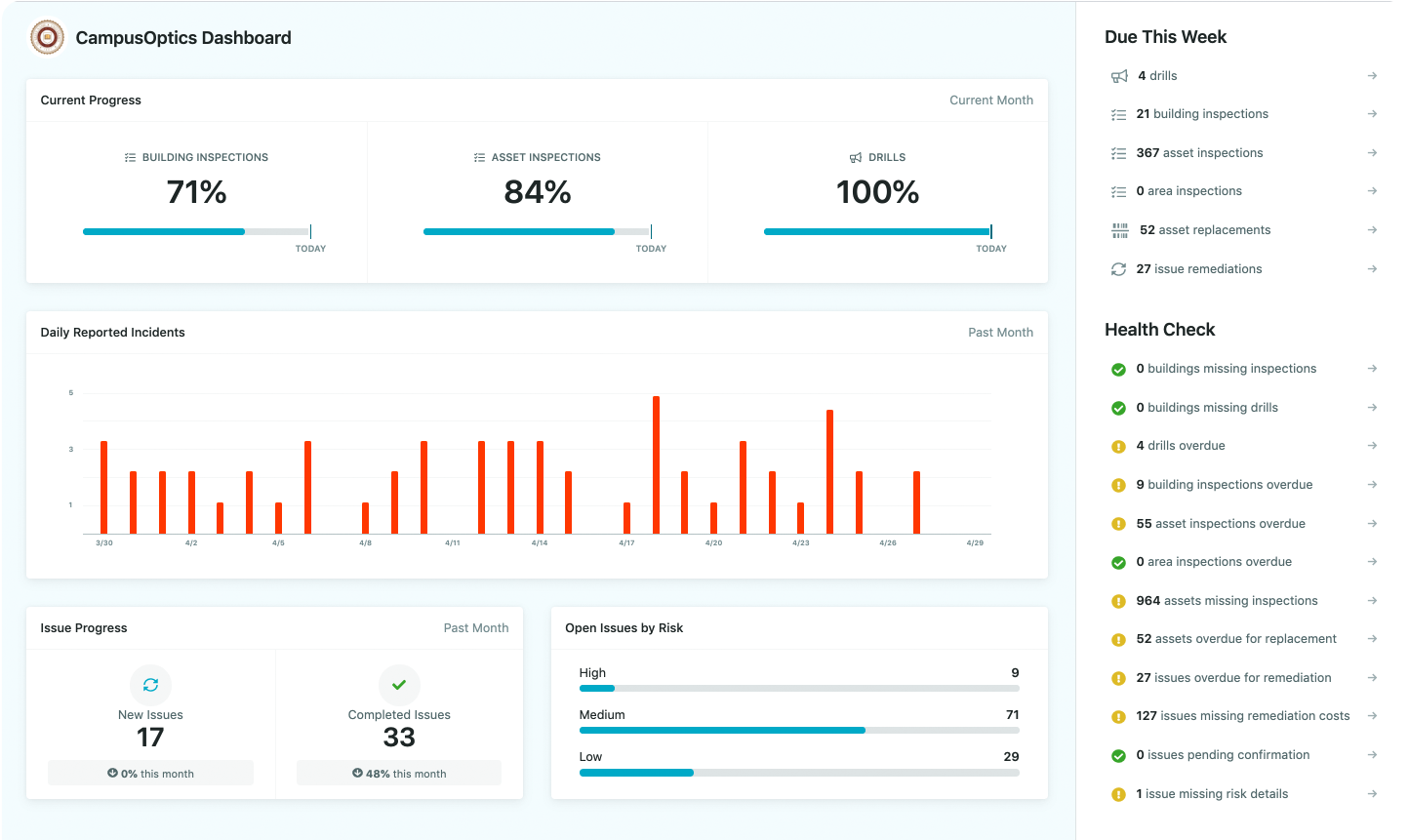
With CampusOptics, you can:
- Manage chemical inventory and SDS access in real time
- Track hazardous waste from origin to final manifest
- Use QR codes to pull up asset data instantly from a mobile device
- Assign and complete safety inspections on the go
- Monitor issues, incidents, and remediation efforts in one place
We know that safety professionals aren’t sitting at their desks all day. That’s why everything we build, from mobile inspection tools to permit workflows and compliance calendars – is made to be used in motion, across departments, and with as little friction as possible. Because when information flows, safety improves. And when safety improves, everyone on campus benefits.
Wrapping It Up
Chemical asset management isn’t just another admin task or a box to check. It’s the thread that quietly holds together safety, compliance, and operational sanity, especially in complex environments like higher ed, research labs, or large facilities. When it works, you barely notice it. When it doesn’t, everyone scrambles.
That’s why we believe it’s worth doing right. It’s not about flashy dashboards or bloated systems nobody uses. It’s about building something that helps people on the ground get what they need, when they need it, without the usual friction. That’s the whole reason CampusOptics exists. If your team is tired of wrestling spreadsheets or chasing missing data, maybe it’s time for a system that works with you, not against you.
Frequently Asked Questions
Do I really need a dedicated system for chemical asset management, or will a spreadsheet work?
A spreadsheet can work, for a while. But once your inventory gets more complicated, or more than one person needs access, it becomes a liability. Dedicated systems reduce mistakes, improve safety, and make your life easier in the long run.
How often should chemical inventories be updated?
Ideally, you should update inventory every time something is added, used, or removed. That sounds like a lot, but with a system that uses mobile scanning or talk-to-text features, it becomes second nature instead of a chore.
What’s the biggest mistake teams make with chemical asset management?
Probably waiting too long to get organized. A lot of teams only start thinking about this seriously after an audit, a spill, or some other wake-up call. The earlier you get a handle on your system, the easier it is to stay ahead of problems.