Environmental Health and Safety (EHS) certifications validate expertise in maintaining safe workplaces, ensuring regulatory compliance, and managing environmental risks. Professionals in industries like manufacturing, construction, and healthcare pursue these credentials to demonstrate competence in hazard identification, risk mitigation, and regulatory adherence. This article outlines the process of obtaining an EHS certification, drawing from industry standards and authoritative sources. It provides a structured path for aspiring EHS professionals, detailing educational requirements, experience, training, and certification options.
Understanding EHS Certifications
EHS certifications are credentials issued by recognized bodies to verify a professional’s ability to manage workplace safety and environmental compliance. They are often sought by individuals in roles such as safety coordinators, industrial hygienists, or EHS managers. These certifications range from entry-level to advanced, each addressing specific aspects of safety, health, or environmental management. Organizations value certified professionals for their ability to reduce workplace incidents and ensure compliance with regulations like those from the Occupational Safety and Health Administration (OSHA) and the Environmental Protection Agency (EPA).
Certifications differ from certificates in that they require professional experience and ongoing recertification, ensuring continued competence. They are typically accredited by organizations like the American National Standards Institute (ANSI), adhering to standards such as ISO/IEC 17024. Common certifications include the Certified Safety Professional (CSP), Associate Safety Professional (ASP), and Occupational Hygiene and Safety Technician (OHST), each tailored to specific career stages or industries. These credentials focus on distinct areas of expertise:
- Certified Safety Professional (CSP): A comprehensive credential for experienced professionals, emphasizing advanced safety and compliance management.
- Associate Safety Professional (ASP): An entry-level certification, ideal for those starting their EHS career with foundational safety knowledge.
- Occupational Hygiene and Safety Technician (OHST): Targets professionals handling occupational hygiene or safety tasks, often in technical roles.
The process of earning an EHS certification involves a combination of education, experience, training, and examination. Below is a detailed breakdown of the steps required to achieve this credential.
Benefits of EHS Certifications
EHS certifications enhance professional credibility and career prospects. They demonstrate competence in managing workplace safety, reducing incidents, and ensuring compliance. Certified professionals are better equipped to navigate complex regulations, implement effective safety programs, and contribute to organizational goals. Additionally, certifications can lead to higher earning potential, with CSP holders often earning significantly more than non-certified peers.
Certifications also support organizational outcomes by reducing workplace incidents and improving compliance. Companies with certified EHS professionals benefit from lower injury rates, reduced regulatory penalties, and enhanced safety cultures, contributing to operational efficiency.

EHS Software Solutions for Certified Professionals
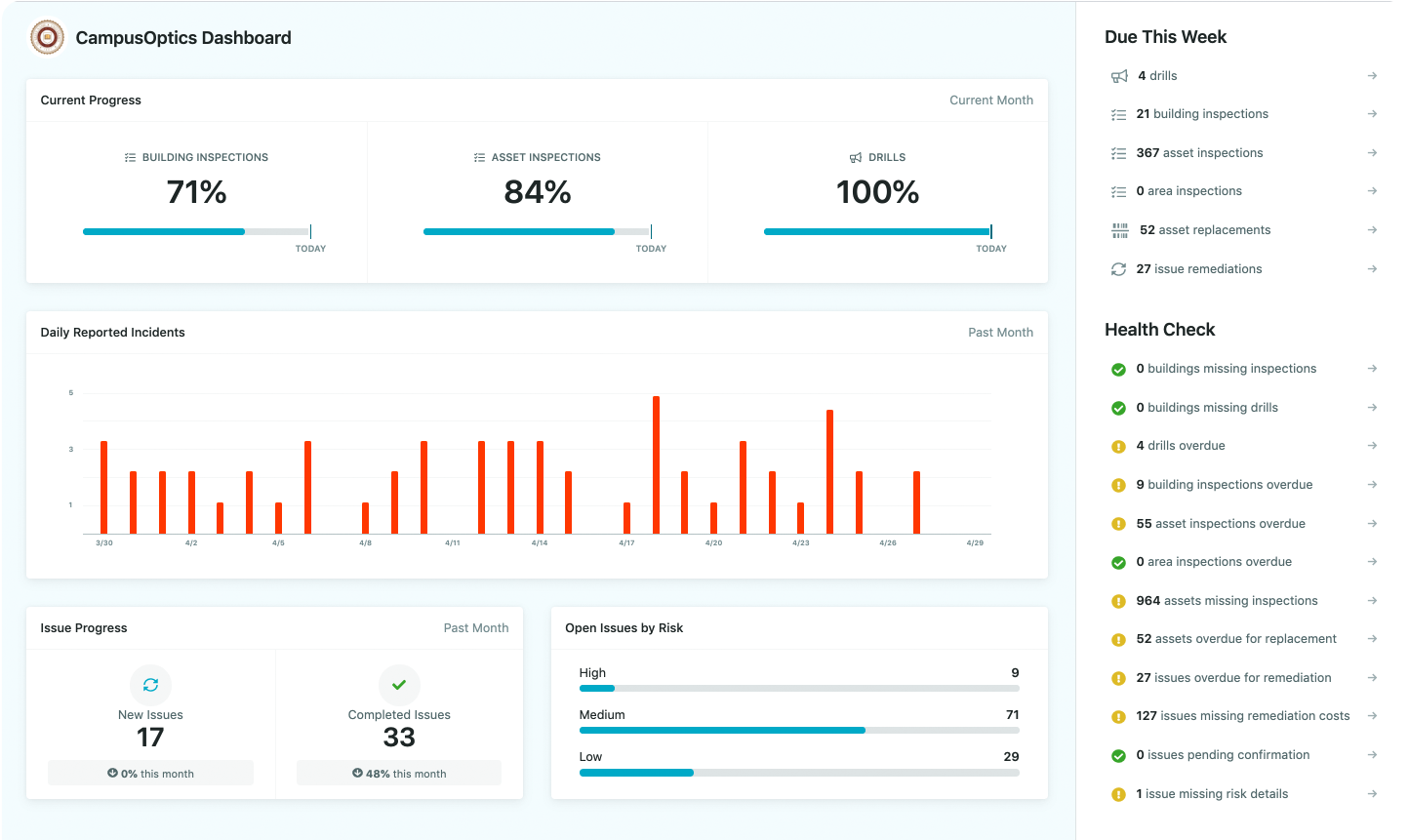
At CampusOptics, we understand the critical role that EHS certifications, such as the CSP or ASP, play in equipping professionals to manage safety and compliance in higher education environments. These certifications provide the expertise needed to address complex risks across campus facilities, from laboratories to public spaces. Our platform complements this expertise by offering a centralized, cloud-based solution that streamlines safety management tasks. Certified professionals can use CampusOptics to track chemical inventories, monitor compliance, and manage incident reports, ensuring that their skills are applied effectively to enhance campus safety.
Our mobile-first approach supports EHS professionals who are rarely at their desks, providing an iOS and Android app with features like barcode scanning for chemical containers, talk-to-text for efficient inspections, and instant access to safety data sheets or emergency plans. These tools allow newly certified individuals to translate their knowledge into practical outcomes, such as mapping safety assets like AEDs or generating compliance reports on the go. With a turnkey implementation that gets systems running in weeks and configurable permissions for cross-departmental collaboration, we help EHS professionals focus on safety rather than administrative burdens. This integration of certification-driven expertise with our technology empowers safer, more transparent campus environments.
Step 1: Acquire Relevant Education
A foundational education is typically required to pursue an EHS certification. Most certifications mandate at least a bachelor’s degree in fields such as occupational health and safety, environmental science, industrial engineering, biology, or chemistry. Some certifications, like the ASP, allow an associate degree in safety, health, or environmental disciplines, provided it includes relevant coursework.
For those aiming for advanced roles, a master’s degree in occupational health, environmental management, or a related field can enhance career prospects. Online programs offer flexibility for working professionals, allowing them to balance education with job responsibilities. Educational programs should cover topics like hazard analysis, regulatory compliance, and risk assessment to prepare candidates for certification requirements.
Step 2: Gain Professional Experience
Practical experience is a critical component of EHS certification eligibility. Most certifications require a minimum number of years in roles where safety, health, or environmental duties constitute a significant portion of responsibilities. For instance, the CSP requires four years of professional experience where safety tasks account for at least 50% of duties, while the OHST and Construction Health and Safety Technician (CHST) certifications require three years with at least 35% of duties focused on safety.
Entry-level professionals can gain experience through internships, safety technician roles, or coordinator positions in industries like construction, manufacturing, or healthcare. These roles provide hands-on exposure to hazard identification, incident investigation, and compliance monitoring, which are essential for certification eligibility and career growth.
Step 3: Select an Appropriate Certification
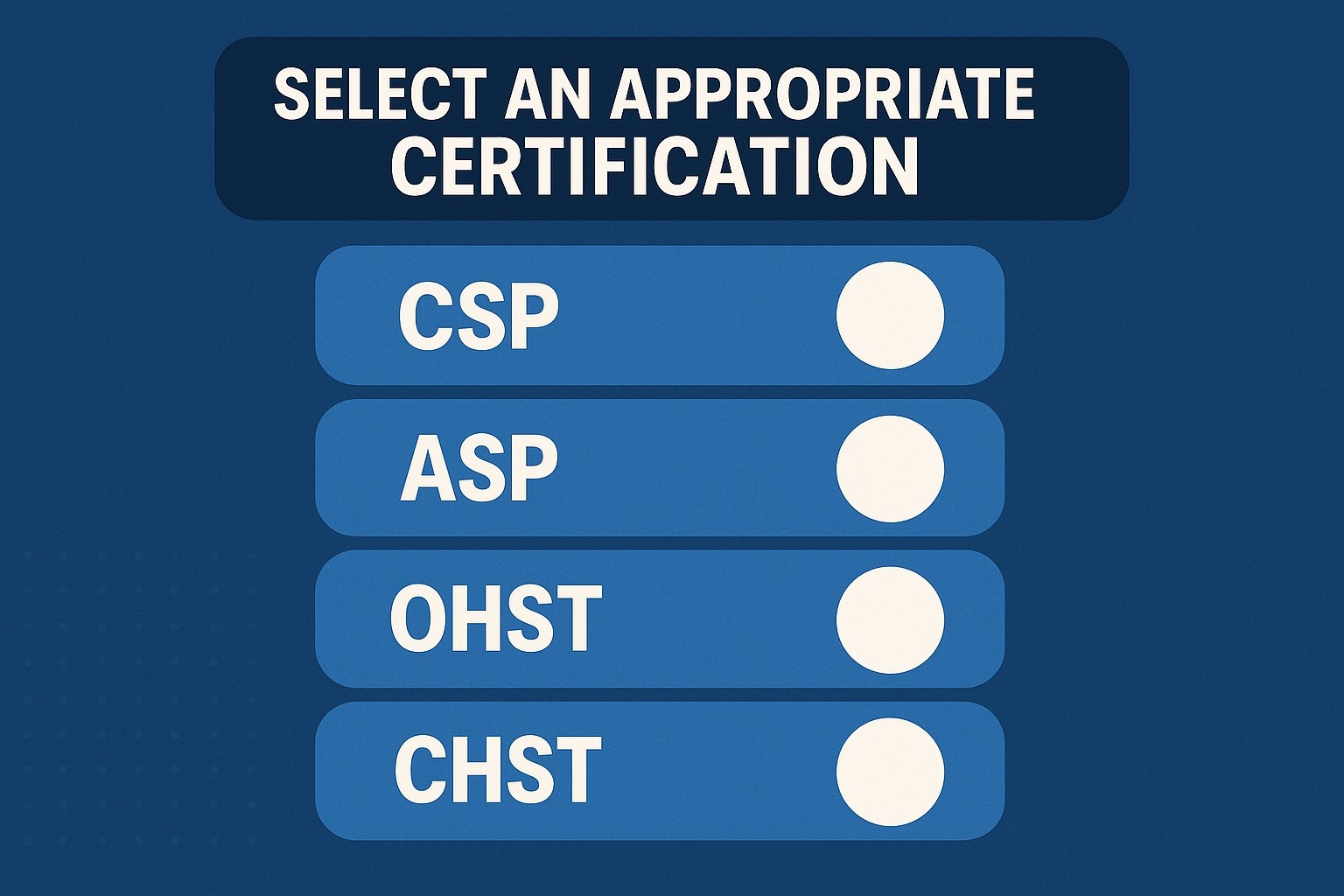
Choosing the right certification depends on career goals, industry focus, and current experience level. Below are some of the most recognized EHS certifications, each with specific requirements:
Certified Safety Professional (CSP)
Administered by the Board of Certified Safety Professionals (BCSP), this is a highly regarded credential requiring a bachelor’s degree, four years of safety experience, and a prerequisite certification like the ASP. It focuses on comprehensive safety, health, and environmental management.
Associate Safety Professional (ASP)
Also offered by BCSP, this is an entry-level certification requiring a bachelor’s degree or an associate degree in safety-related fields, plus one year of experience. It serves as a stepping stone to the CSP.
Occupational Hygiene and Safety Technician (OHST)
This certification, from BCSP, targets professionals involved in occupational hygiene or safety tasks, requiring three years of experience with 35% safety-related duties.
Construction Health and Safety Technician (CHST)
Designed for construction professionals, this BCSP certification requires three years of experience with a focus on construction safety.
Certified Industrial Hygienist (CIH)
Offered by the Board for Global EHS Credentialing (BGC), formerly the American Board of Industrial Hygiene (ABIH).
Certified Hazardous Materials Manager (CHMM)
Administered by the Institute of Hazardous Materials Management (IHMM), this focuses on hazardous materials handling and requires a bachelor’s degree and four years of relevant experience
Selecting a certification involves assessing current qualifications and career aspirations. For example, those in construction may prioritize the CHST, while professionals handling hazardous materials may opt for the CHMM.
Step 4: Complete Required Training
Training programs are essential to prepare for certification exams and build practical knowledge. These programs equip candidates with skills to address workplace safety and compliance challenges effectively. They can be delivered through online platforms, in-person sessions, or hybrid formats, with providers like 360training and UniAthena offering flexible options tailored to various schedules and learning preferences.
Key training areas critical for EHS certification include:
- Hazard Recognition: Identifying potential risks, such as chemical exposures or mechanical dangers, to prevent workplace incidents.
- Regulatory Compliance: Understanding OSHA, EPA, and industry-specific regulations to ensure adherence and avoid penalties.
- Emergency Response: Learning protocols for handling fire, medical, or environmental emergencies, including proper incident reporting.
- Safe Work Practices: Mastering procedures for equipment handling, personal protective equipment use, and risk control measures.
OSHA training courses, such as the 10-hour or 30-hour programs for construction or general industry, are widely recognized and often serve as a foundation. Specialized training, like Hazardous Waste Operations and Emergency Response (HAZWOPER), is critical for roles involving hazardous materials. Training duration varies, with some courses completed in days and others requiring weeks, depending on the certification’s complexity.
Step 5: Pass the Certification Exam
Each EHS certification requires passing a standardized exam that tests knowledge of safety, health, and environmental principles. Exams typically cover hazard analysis, risk assessment, regulatory compliance, and incident investigation. For example, the CSP exam assesses advanced safety management, while the OHST exam focuses on occupational hygiene and safety practices.
Preparation involves studying exam blueprints provided by certification bodies like BCSP or ABIH, which outline key topics and question formats. Candidates can use study guides, practice tests, and training courses to ensure readiness. Exams are administered at approved testing centers.
Step 6: Maintain Certification Through Continuing Education
EHS certifications require ongoing maintenance to ensure professionals stay current with industry standards and regulations. This typically involves earning Continuing Education Units (CEUs) through refresher courses, seminars, or workshops. For example, BCSP certifications require recertification every five years, with specific CEU requirements based on the credential.
Continuing education covers updates to regulations, emerging technologies like AI-driven safety monitoring, and industry-specific challenges. Online platforms and professional organizations like the National Association of Environmental Managers (NAEM) provide resources for ongoing learning, ensuring professionals remain compliant and competitive.
Key Considerations for Choosing an EHS Certification
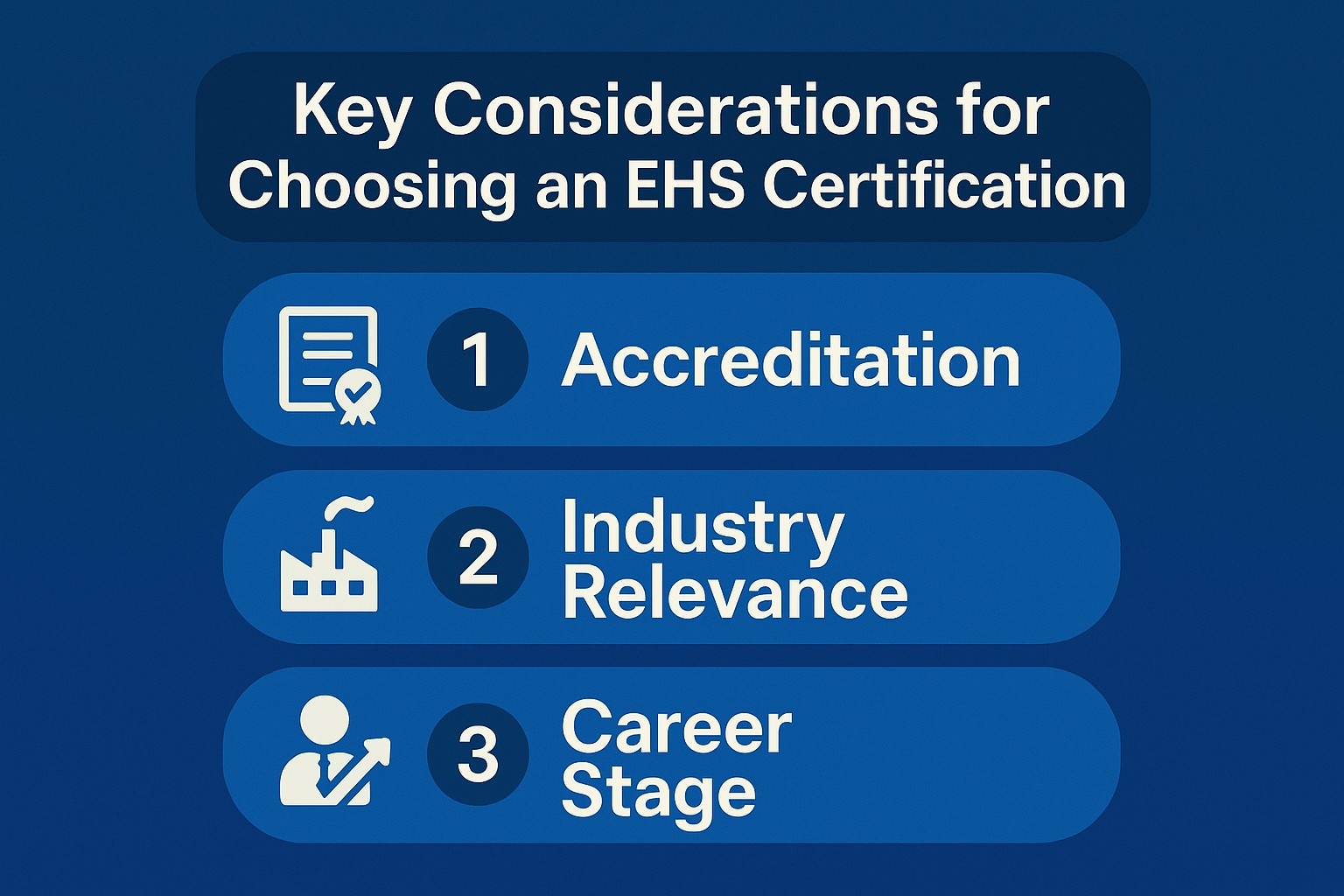
Selecting an EHS certification requires careful evaluation of several factors to ensure alignment with career goals and industry needs.
Accreditation and Recognition
Certifications should be accredited by reputable organizations like ANSI, adhering to standards such as ISO/IEC 17024. Accredited credentials, like those from BCSP or ABIH, are widely recognized by employers and regulatory bodies, ensuring their validity across industries.
Industry Relevance
Certifications should align with the specific risks and requirements of the target industry. For instance, construction professionals benefit from the CHST, while those in chemical or manufacturing sectors may prioritize the CIH or CHMM. Researching industry-specific needs helps ensure the certification enhances employability.
Career Stage and Prerequisites
Entry-level professionals may start with the ASP or OSHA 10-hour training, while experienced individuals can pursue advanced credentials like the CSP or SMP (Safety Management Professional). Understanding prerequisites, such as education and experience requirements, is critical to avoid ineligible applications.
Industry-Specific EHS Training Requirements
Different industries have unique safety challenges, requiring tailored training to complement certifications. Below are examples of training needs across key sectors:
- Manufacturing: Focuses on lockout/tagout, machine guarding, and chemical handling to address risks from heavy machinery and hazardous materials.
- Construction: Emphasizes fall protection, scaffolding safety, and hazard communication to manage dynamic job site risks.
- Healthcare: Covers bloodborne pathogens, infection control, and chemical hygiene to address biological and chemical hazards.
- Logistics: Includes forklift safety, ergonomic practices, and spill response to ensure safe material handling and transportation.
Training programs should be role-specific, regularly updated, and aligned with regulatory requirements to ensure relevance and compliance.
Challenges in Pursuing EHS Certifications
Obtaining an EHS certification involves challenges that candidates should anticipate. Balancing work and study can be demanding, particularly for professionals pursuing advanced credentials like the CSP. Exam preparation requires significant time investment, and costs can be a barrier for some. Additionally, maintaining certifications through CEUs requires ongoing commitment to professional development. Candidates can mitigate these challenges by selecting flexible training options, budgeting for expenses, and leveraging employer support for certification costs.
Conclusion
Obtaining an Environmental Health and Safety (EHS) certification is a structured process that equips professionals with the expertise to manage workplace safety, ensure regulatory compliance, and mitigate environmental risks. By pursuing relevant education, gaining practical experience, selecting an appropriate certification, completing targeted training, passing rigorous exams, and committing to ongoing learning, individuals can establish themselves as competent EHS professionals. These certifications, such as the CSP, ASP, or CHST, align with industry standards and enhance career prospects across sectors like manufacturing, construction, and healthcare. Despite challenges like time commitment and costs, the investment in EHS certifications yields long-term benefits, including improved workplace safety and professional credibility. Aspiring EHS professionals should leverage available resources, such as online training platforms and industry networks, to navigate this path effectively and contribute to safer, compliant work environments.
FAQs About EHS Certifications
What is an EHS certification?
An EHS certification is a credential that validates a professional’s expertise in environmental, health, and safety management, focusing on hazard identification, regulatory compliance, and risk mitigation.
Which EHS certification is best for beginners?
The Associate Safety Professional (ASP) is ideal for beginners, requiring a bachelor’s degree or associate degree in safety-related fields and one year of experience.
How long does it take to earn an EHS certification?
The timeline varies: entry-level certifications like OSHA 10-hour take days, while advanced credentials like the CSP may require months of preparation and years of experience.
Are EHS certifications recognized internationally?
Certifications like the CSP and CIH, accredited by ANSI, are widely recognized, though specific requirements may vary by country or region.
Do EHS certifications require renewal?
Yes, most certifications require recertification every three to five years through Continuing Education Units (CEUs) or refresher courses.
Can I pursue EHS certifications without a degree?
Some certifications, like the OHST or CHST, allow candidates with an associate degree or equivalent experience, though a bachelor’s degree is preferred for most credentials.