Managing workplace safety and compliance used to mean piles of binders, endless spreadsheets, and a lot of manual follow-up. Today, most organizations have moved past that stage. They’re turning to cloud-based platforms that make Environmental, Health, and Safety (EHS) management faster, smarter, and easier to track. That’s where EHS SaaS comes in.
At its core, EHS SaaS (Environment, Health, and Safety Software as a Service) is about giving safety and compliance teams a single, connected space to manage risks, track incidents, and stay aligned with regulations. It’s the difference between reacting to problems and actually staying ahead of them.
Let’s break down what EHS SaaS really is, how it works, and why it’s quietly becoming one of the most valuable tools for any organization that takes safety seriously.
Understanding EHS SaaS
EHS SaaS is a cloud-based platform that helps organizations manage their environmental, health, and safety responsibilities. Instead of installing software on local computers, everything runs online. Users can log in from anywhere, whether they’re on a job site, in the office, or walking across campus.
In simple terms, it brings all your safety and compliance data into one secure, centralized system. It replaces dozens of manual tasks with automated ones: reporting incidents, managing inspections, tracking chemicals, or maintaining compliance records.
This model also makes EHS tools accessible to organizations of all sizes. You don’t need massive IT budgets or complex infrastructure. You just subscribe, log in, and start managing safety from the cloud.
Why Cloud-Based Safety Management Is Gaining Ground
A few years ago, the idea of managing workplace safety from a phone or tablet might have sounded futuristic. Today, it’s standard practice. Teams are busier, regulations change faster, and the expectation for transparency has never been higher.
EHS SaaS solves a lot of problems that traditional systems couldn’t. For example:
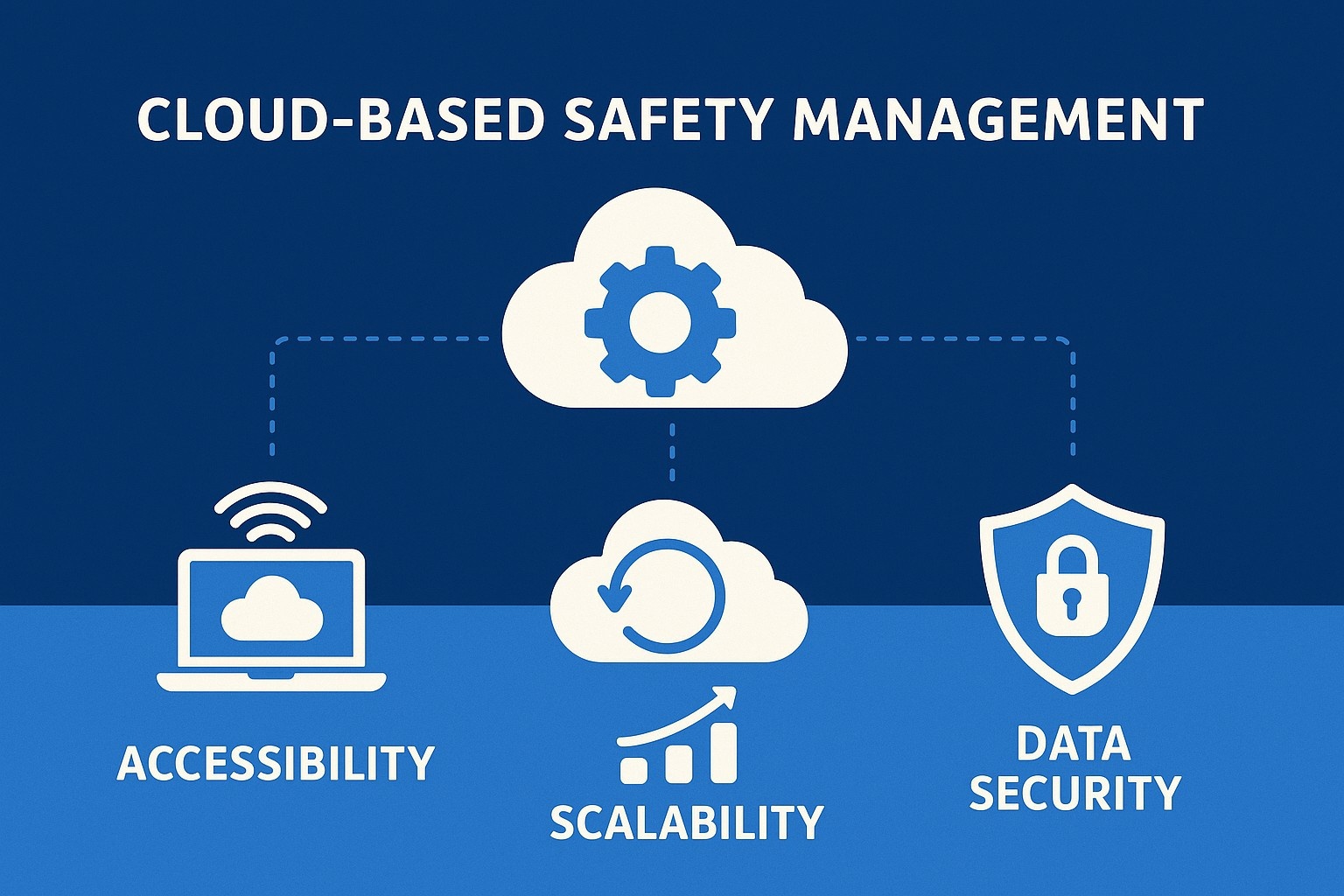
- Accessibility: Everyone can see the same information in real time, whether they’re in the field or in the compliance office.
- Updates: Software is automatically updated, so teams are always using the latest version without the hassle of manual installs.
- Scalability: It grows with your organization. Add new users, facilities, or programs as needed without rebuilding your system.
- Data security: Cloud platforms are built with strict security protocols and encrypted data storage.
The shift to the cloud isn’t just about convenience. It’s about speed, accuracy, and the ability to manage risks before they escalate.
How EHS SaaS Works in Practice
To understand how EHS SaaS actually functions, think of it as a connected network of tools designed to handle every major part of safety management.
Here’s what it typically covers:
- Incident Management: Logging and tracking workplace incidents, near-misses, and corrective actions in real time.
- Inspections and Audits: Conducting routine safety inspections using mobile devices, complete with photo uploads and automatic reporting.
- Chemical and Waste Management: Keeping track of chemical inventories, safety data sheets, and waste disposal documentation.
- Training and Compliance: Assigning safety training, tracking completion rates, and ensuring that certifications stay current.
- Document Control: Centralizing policies, manuals, and safety protocols for easy access.
- Analytics and Dashboards: Turning data into insight, showing trends, and identifying areas for improvement.
Each of these functions ties together in one interface. Instead of chasing updates through emails or paper logs, you have a single system that gives you the full picture of your organization’s EHS performance.
The Real-World Benefits
EHS SaaS isn’t just another piece of software. It changes how teams work and communicate.
1. Better visibility into safety data
Most safety issues don’t appear out of nowhere. There are early warning signs buried in data – minor incidents, inspection delays, training gaps. The challenge is spotting those signs before they grow into real problems. Instead of sorting through scattered spreadsheets, the data tells its own story in one view. That visibility helps leaders take action sooner – and with a lot more confidence.
2. Time savings
Ask anyone managing safety programs what eats up their time, and paperwork will probably top the list. Traditional systems mean filling out forms, chasing updates, and manually entering data. EHS SaaS takes much of that off your plate.
3. Consistency across sites
For organizations spread across multiple campuses, buildings, or regions, consistency can be a nightmare. One location might have a great inspection process while another struggles to stay up to date. EHS SaaS brings everyone onto the same page. When standards live in the cloud instead of on someone’s hard drive, they’re easier to share, update, and enforce.
4. Easier compliance tracking
Regulatory compliance is a moving target. Whether it’s OSHA, EPA, or state-level requirements, the rules shift constantly – and keeping track manually is almost impossible. Instead of scrambling when an auditor calls, you can simply log in, pull up the data, and show your compliance trail. That alone can reduce stress levels across an entire department.
5. Collaboration that actually works
In a typical setup, safety communication often gets lost between teams. One department logs a hazard, another investigates, and somewhere along the way the information doesn’t reach the right person. With EHS SaaS, all that friction fades.
Since the system is centralized, everyone sees the same data and updates in real time. A reported issue at one facility can automatically trigger notifications to maintenance, safety officers, or administrators – whoever needs to act.
What all these benefits have in common is clarity. EHS SaaS gives organizations a full picture of their safety landscape – where the risks are, what’s improving, and what still needs attention. It’s not just about technology; it’s about making safety management something that fits naturally into how people already work.
Why Traditional Systems Fall Short
Before cloud-based platforms became common, most EHS programs relied on spreadsheets, email threads, and local databases. They worked for a while, but they couldn’t scale or adapt.
Manual systems struggle because they:
- Depend on individuals to keep records updated.
- Don’t provide real-time data or alerts.
- Are vulnerable to version control errors.
- Require a lot of effort to produce compliance reports.
EHS SaaS removes those bottlenecks. It doesn’t depend on one person’s spreadsheet or memory. The system tracks and updates data automatically, which makes it both more accurate and easier to manage.

EHS SaaS for Higher Education and Complex Environments
Colleges, universities, and research facilities face a unique mix of safety challenges. They manage labs, chemicals, waste, housing, and public spaces all at once. Each area carries its own risks and compliance requirements.
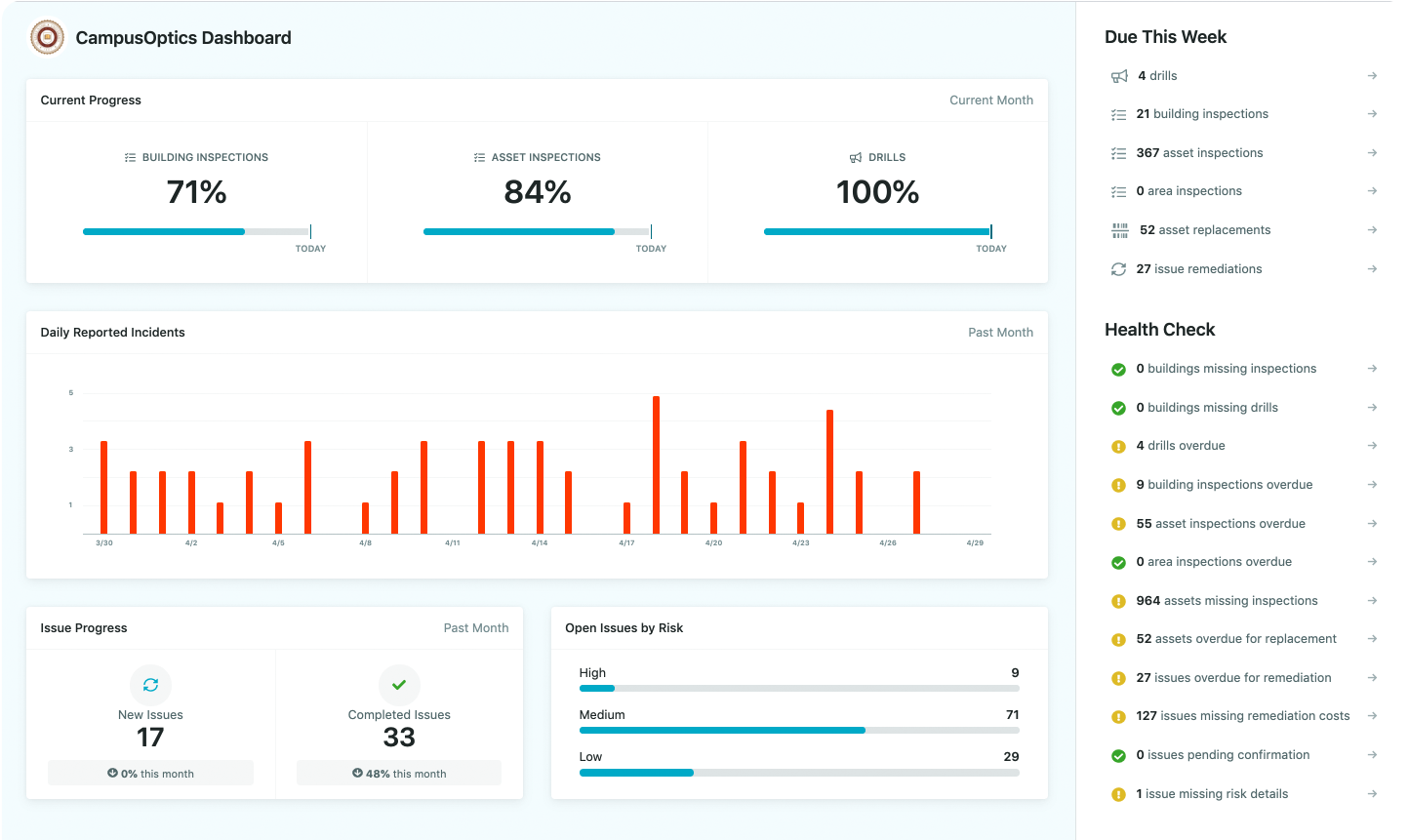
Platforms like CampusOptics were designed specifically for this environment. Built with input from real campus safety professionals, we created CampusOptics as an all-in-one platform that connects Environmental Health & Safety, Risk Management, and Fire & Life Safety operations. From tracking chemical inventories and inspection schedules to managing incidents and emergency pre-plans, our platform helps higher education institutions keep every corner of campus safer and more organized. With a mobile-first design, we make it easy for safety teams who are constantly on the move between buildings, labs, and events to stay connected and productive.
What sets us apart is how we blend structure with flexibility. We provide clear frameworks for compliance while allowing institutions to adapt workflows to their unique programs and departments. Instead of forcing schools into a one-size-fits-all model, we give them the tools to build a system that truly fits how their campus operates – whether that means managing chemical safety in a research lab, coordinating fire drills across dorms, or keeping hundreds of assets up to code.
Here’s why EHS SaaS is such a natural fit for education:
- Multiple departments can access the same platform with tailored permissions.
- Mobile access makes inspections easy for staff who are rarely at their desks.
- Data visualization helps administrators understand risk trends across the entire campus.
- Automated workflows make it easier to stay ahead of regulatory deadlines.
What makes these systems so effective is that they blend structure with flexibility. They provide clear frameworks for compliance, but they can adapt to different programs and departments.
Building a Culture of Safety Through Technology
Technology alone doesn’t create a safe workplace, but it does make it much easier to build and sustain one.
When EHS tools are easy to use, people actually use them. That’s the real advantage of SaaS models: they remove friction. Employees can log incidents on their phones, supervisors can approve reports instantly, and safety officers can review data without waiting for weekly meetings.
Over time, that kind of responsiveness builds a stronger culture. People see safety as part of their everyday work instead of an extra chore.
Here are a few ways EHS SaaS supports that mindset:
- Transparency: Everyone knows what’s being tracked and why it matters.
- Accountability: Tasks are assigned clearly, and progress is visible to all stakeholders.
- Engagement: When reporting tools are simple, more people participate.
- Learning: Analytics highlight trends, helping teams focus on prevention, not just correction.
A strong safety culture doesn’t rely on slogans or posters. It grows from shared information, quick feedback, and reliable systems – all things that EHS SaaS makes possible.

Key Features That Define a Good EHS SaaS Platform
When it comes to choosing an EHS SaaS solution, the best platforms all have one thing in common – they make safety and compliance easier, not harder. While different industries may have specific needs, the foundations of a strong system are fairly universal. A great EHS SaaS platform should feel like an extension of your daily workflow, not another tool you have to wrestle with.
Centralized Data Management
At the heart of every good EHS SaaS platform is a single, connected database. Instead of storing data in multiple spreadsheets or systems that never quite talk to each other, everything lives in one place. That means inspection results, chemical inventories, training records, and incident reports all link together.
This level of centralization eliminates data silos and helps everyone – from safety officers to administrators – see the same version of the truth. No more guessing which report is up to date or digging through email attachments to find an old record. When everything syncs automatically, the entire organization works with real-time, reliable data.
In practice, centralized management enables:
- Consistent reporting across departments and locations
- Faster access to key safety metrics and compliance data
- Clearer visibility into ongoing corrective actions
- Better collaboration between safety, maintenance, and HR teams
Mobile Access for Work on the Go
Safety professionals rarely sit at a desk all day. They’re out in the field, walking facilities, running inspections, and responding to issues. That’s why mobile access isn’t just a nice add-on – it’s essential.
A strong EHS SaaS platform should have a mobile app that mirrors the web version’s functionality, allowing users to log issues, upload photos, and complete checklists directly from their phones or tablets. Offline capabilities are a huge plus, especially for teams working in areas with limited connectivity.
Mobile tools make a difference by:
- Enabling instant data capture through barcode or QR code scanning
- Allowing photo and video uploads to document conditions
- Supporting talk-to-text entries for quick note-taking
- Syncing automatically once back online
The goal is simple: let people focus on the work in front of them, not the paperwork waiting afterward.
Automation That Reduces Manual Effort
The beauty of EHS SaaS lies in its ability to automate what used to be repetitive, manual work. From reminders about inspection deadlines to instant notifications when an incident is logged, automation keeps safety processes running smoothly even when teams are stretched thin.
Common automation features include:
- Automatic routing of safety issues to the right departments
- Scheduled reports and recurring task reminders
- Escalation workflows for overdue actions
- Auto-generated analytics for performance tracking
Automation doesn’t replace people – it gives them time back. It lets safety leaders focus on prevention and strategy instead of constantly chasing down forms or sending reminder emails.
Seamless Integration with Existing Systems
No organization runs on one platform alone. HR systems track employee data, facilities software manages assets, and IT handles security. A good EHS SaaS platform connects with these systems so that data flows naturally without duplication or extra work.
Integration ensures that training records, employee information, and incident data align automatically. For example, when someone completes a safety course in the LMS, that update can sync instantly with the EHS dashboard.
Effective integrations might include:
- HR and payroll systems for employee data sync
- Maintenance management tools for work order tracking
- Document management platforms for version control
- Single sign-on (SSO) for secure, easy access
When everything connects, you get a more complete, accurate view of safety performance across the organization.
Customization That Fits How You Work
Every organization has its own way of managing safety. The ability to configure fields, forms, and workflows means you can tailor the software to match your specific processes. That flexibility is what separates great EHS SaaS systems from rigid, one-size-fits-all tools.
Whether you’re adjusting approval paths, labeling fields to match your internal terminology, or setting user permissions for different departments, customization helps the system fit you – not the other way around.
Common customization options include:
- Editable inspection templates and risk assessment forms
- Adjustable access levels for various roles
- Custom dashboards to highlight department-specific metrics
- Configurable notifications and reminders
This adaptability is especially valuable for complex environments like universities or manufacturing plants, where operations vary widely between departments.
Security and Compliance Built In
EHS platforms handle sensitive data – employee health details, safety records, and regulatory documentation. That makes security a top priority. Reputable EHS SaaS providers use encryption, access controls, and compliance frameworks to ensure information stays protected at every stage.
Strong platforms typically include:
- Secure cloud hosting with encrypted storage
- Role-based permissions to limit access
- Regular third-party security audits
- Compliance with data privacy regulations like GDPR or HIPAA (where applicable)
Having these protections in place means organizations can focus on their safety goals without worrying about data breaches or regulatory missteps.
Scalable Architecture for Growth
A good EHS SaaS system grows with you. Whether your organization is expanding to new sites or adding new compliance programs, scalability ensures the platform can handle more users, more data, and more complexity without slowing down.
Scalability benefits include:
- Support for unlimited users and departments
- Easy addition of new modules as needs evolve
- Stable performance even as data volumes increase
- Flexible licensing models that adapt to your growth
The best systems are built with longevity in mind. You shouldn’t have to replace your software just because your organization outgrew it.
Common Challenges When Adopting EHS SaaS
Even the best technology can stumble during implementation if the transition isn’t handled carefully. EHS SaaS has huge potential to make life easier for safety teams, but getting there requires time, patience, and buy-in from the people who’ll use it every day. Most challenges aren’t technical – they’re human. The good news is that with the right approach, you can turn early resistance into long-term success.
Resistance to Change
Let’s be honest: nobody loves having their daily routine disrupted. When teams have been tracking safety data through spreadsheets or paper forms for years, switching to a digital platform can feel like a big leap. People might worry that the new system will be complicated or that they’ll lose control of “their way” of doing things.
The key is communication. Change is always easier when people understand why it’s happening and how it makes their jobs better. Before launching a new platform, involve your team in the process – ask for feedback, show them demos, and let them test small parts of the system.
Here’s what helps overcome resistance:
- Share clear, honest explanations of what’s changing and why
- Highlight real benefits, like less paperwork and faster reporting
- Identify internal “champions” who can encourage others and answer questions
- Start small with pilot groups before rolling out campus- or company-wide
When employees see that the software actually saves time and reduces headaches, the resistance fades naturally.
Data Migration: Turning Old Data into Clean, Usable Information
Moving years of records, reports, and checklists into a new system is rarely smooth sailing. Old data is often messy – duplicates, missing fields, inconsistent formatting. If this step isn’t handled carefully, it can lead to frustration and unreliable information in your new platform.
A good EHS SaaS provider won’t leave you to figure this out alone. They’ll help you map your existing data, clean it up, and import it safely so that nothing important gets lost. This stage is the backbone of your new system’s accuracy, so it’s worth taking the time to do it right.
Smart ways to simplify migration:
- Audit and clean up your data before moving it
- Decide what’s truly needed and what can be archived
- Work closely with your vendor’s implementation team
- Test imports in stages to catch any formatting or mapping errors early
Once migration is complete, you’ll have cleaner, more structured data that’s far easier to track, analyze, and report on moving forward.
Training and Adoption: Helping People Feel Confident, Not Confused
Even the most intuitive software won’t succeed if users don’t feel comfortable with it. Proper training is what turns hesitation into confidence. Without it, people fall back into old habits or avoid using the system altogether.
The goal isn’t to overwhelm staff with technical detail but to show them how the system fits naturally into their day-to-day work.
Effective training programs usually include:
- Interactive onboarding sessions that let users practice real workflows
- Short video tutorials or quick-start guides for common tasks
- Ongoing refresher sessions and Q&A support
- Clear communication channels for troubleshooting and feedback
And remember – adoption doesn’t stop after the first week. Keep checking in with teams to see what’s working, what’s confusing, and where they could use more support. Over time, using the system should feel less like “learning new software” and more like “just how we do things now.”
Integration with Existing Systems
Most organizations already rely on a mix of tools for HR, facilities, maintenance, and reporting. If your new EHS SaaS platform doesn’t integrate well with those systems, it can create extra steps instead of eliminating them. That’s why planning integrations early is so important.
EHS data is most powerful when it connects with the systems that touch safety operations every day. For example, linking to your HR software ensures employee training records stay up to date automatically, while integration with facilities systems can turn safety issues into work orders in real time.
To make integration smooth, focus on:
- Reviewing your current tech stack before implementation
- Identifying where data overlaps or needs to sync
- Confirming compatibility and integration options with the vendor
- Running test connections before full deployment
When systems work together seamlessly, data flows naturally and teams can focus on solving problems instead of managing software.
Conclusion
EHS SaaS isn’t just another piece of tech to add to your already long list of tools. It’s a smarter, simpler way to handle what really matters – keeping people safe, staying compliant, and staying ahead of change. When you move your safety and compliance processes into the cloud, everything just starts to click. You can actually see what’s going on, track it in real time, and fix issues before they become problems. No more digging through old spreadsheets or trying to remember which version of a form is the latest. It’s all right there, working for you instead of against you.
At the end of the day, this kind of software is about connection. It brings your teams, your data, and your departments together so everyone’s working from the same playbook. It takes the guesswork out of safety and makes it something people can actually stay engaged with. Whether you’re running a factory floor or managing a university campus, having that kind of visibility gives you confidence – and that confidence spreads.
Sure, change takes effort. There’s always a learning curve at first. But once you’re past setup and everyone’s settled in, the difference is huge. Things run smoother, decisions get made faster, and the whole safety culture just feels stronger. The future of EHS isn’t about adding more software – it’s about making safety simple, connected, and built for the way people actually work today.
FAQs
What does EHS SaaS actually mean?
EHS SaaS stands for Environmental, Health, and Safety Software as a Service. It’s a cloud-based system that helps organizations manage safety programs, compliance tasks, and risk data in one central platform instead of relying on manual spreadsheets or disconnected tools.
Why are companies moving to EHS SaaS?
Because it saves time, reduces paperwork, and keeps everything organized. It also makes it easier for teams to collaborate, track performance, and respond quickly to issues. Cloud-based platforms update automatically, so you’re always using the latest version with no IT hassle.
Is EHS SaaS only for big organizations?
Not at all. While large enterprises benefit from scalability and data integration, small and mid-sized organizations often see the biggest improvements in efficiency. The right platform can be tailored to fit your size, budget, and specific safety needs.
How does EHS SaaS help with compliance?
It automates tracking and reporting for safety regulations, reminders for audits, and documentation for inspections. You can see what’s overdue, what’s compliant, and what needs attention – all from one dashboard. That means fewer surprises and fewer missed deadlines.
What about data security?
Reputable EHS SaaS providers use encrypted data storage, regular security audits, and strict access controls to protect sensitive information. You get the convenience of cloud access without sacrificing safety or compliance standards.
How long does it take to get up and running?
Implementation depends on how complex your setup is, but many organizations are fully operational within weeks. The best vendors guide you through migration, training, and customization so you can start seeing results quickly.
What makes EHS SaaS different from traditional software?
Traditional software is usually installed on local computers and requires manual updates. EHS SaaS lives in the cloud, so it’s accessible anywhere, updates automatically, and scales as your needs grow. It’s not just about convenience – it’s about keeping your safety operations ready for whatever comes next.