Keeping people safe, protecting the environment, and staying compliant with regulations might sound like three different goals, but they all come together under one umbrella: EHS. Environmental, Health, and Safety programs are more than a requirement or a checklist – they’re a practical way to make sure everyone goes home healthy at the end of the day and that operations run without major interruptions. In today’s world, where workplaces are more complex and the expectations around safety and sustainability are higher than ever, EHS isn’t optional. It’s a must.
This article breaks down why EHS is such a critical part of every organization’s strategy, what’s really at stake when it’s ignored, and how strong EHS practices can make a workplace safer, smarter, and more sustainable.
What EHS Really Means
Before diving into the details of why EHS matters, it helps to understand what the term actually includes. EHS – short for Environmental, Health, and Safety – isn’t just a department or a set of rules. It’s the framework that keeps organizations running responsibly. Every policy, inspection, or training session tied to EHS exists for one reason: to protect people and the world they work in. When done right, EHS blends practical safety measures with a sense of shared accountability, making it less about compliance and more about culture.
- Environmental: Managing how operations affect the planet, from waste disposal to emissions.
- Health: Safeguarding employees’ physical and mental well-being.
- Safety: Preventing accidents, injuries, and unsafe conditions in the workplace.
At its core, EHS is about connection – the link between people, the environment, and operations. When these elements work together, organizations not only stay compliant but also build safer, healthier, and more sustainable workplaces. Understanding what EHS really means is the first step toward creating systems that don’t just react to problems but prevent them before they happen.

Why EHS Is a Big Deal
A lot of people think of EHS as a behind-the-scenes requirement—something handled quietly by a specific team while everyone else focuses on “real work.” But in reality, EHS is woven into every part of how an organization operates. From protecting employees on the ground to shaping how the public views a company’s integrity, EHS plays a direct role in keeping everything safe, efficient, and trustworthy. It’s not just about checking boxes; it’s about building an environment where safety and responsibility guide everyday decisions.
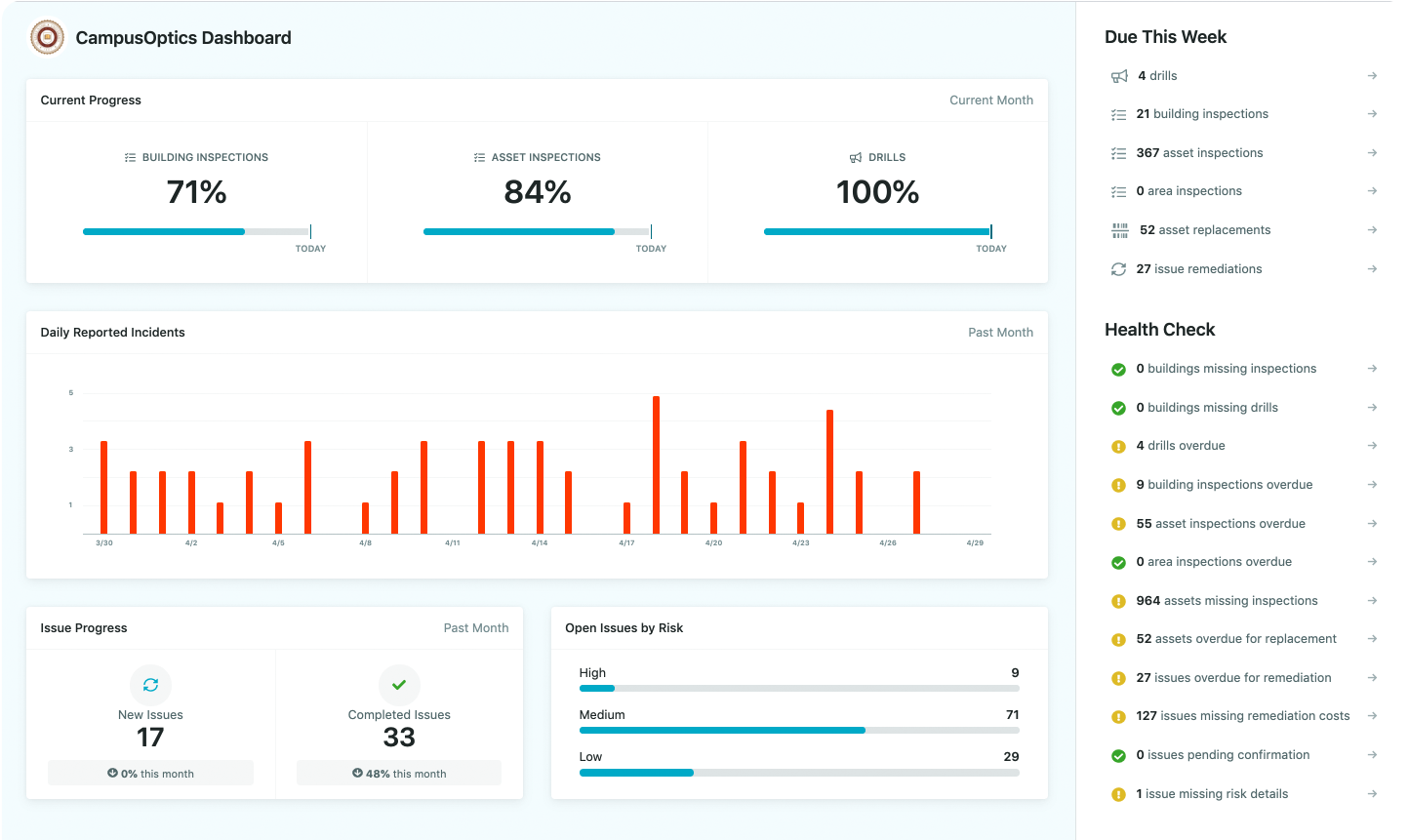
At CampusOptics, we help higher education institutions manage every aspect of EHS in one centralized platform. We make it easy for campus safety teams to track chemical inventories, conduct inspections, report incidents, and plan for emergencies. With our mobile access and real-time data visualization, we give teams the tools to spot risks as they happen and take action immediately, turning EHS from a reactive process into a proactive part of daily operations.
1. It protects people
Every job comes with risks, whether it’s heavy machinery, hazardous materials, or simple office ergonomics. A solid EHS plan identifies those risks and sets up systems to prevent harm. That could mean better ventilation in labs, regular equipment checks, or safety training for staff.
2. It keeps the organization compliant
Ignoring regulations doesn’t just invite fines – it can damage a company’s reputation and lead to lawsuits or shutdowns. EHS management ensures organizations stay in line with local, state, and federal laws, which keeps operations running smoothly.
3. It prevents costly downtime
Workplace incidents disrupt schedules, lead to investigations, and cost money. Prevention is always cheaper than reaction. A proactive EHS program keeps operations steady and minimizes the chances of unexpected shutdowns.
4. It strengthens trust
When employees know their safety and health are prioritized, they’re more likely to stay engaged and loyal. Customers, partners, and communities also notice when a company takes responsibility seriously.
When you look at the bigger picture, EHS isn’t an expense – it’s an investment. It keeps people safe, safeguards operations, and strengthens the organization’s reputation from the inside out. By treating EHS as a core value rather than a compliance task, companies create workplaces that run smoother, earn more trust, and stay ready for whatever challenges come next.
The Real-World Impact of Poor EHS Management
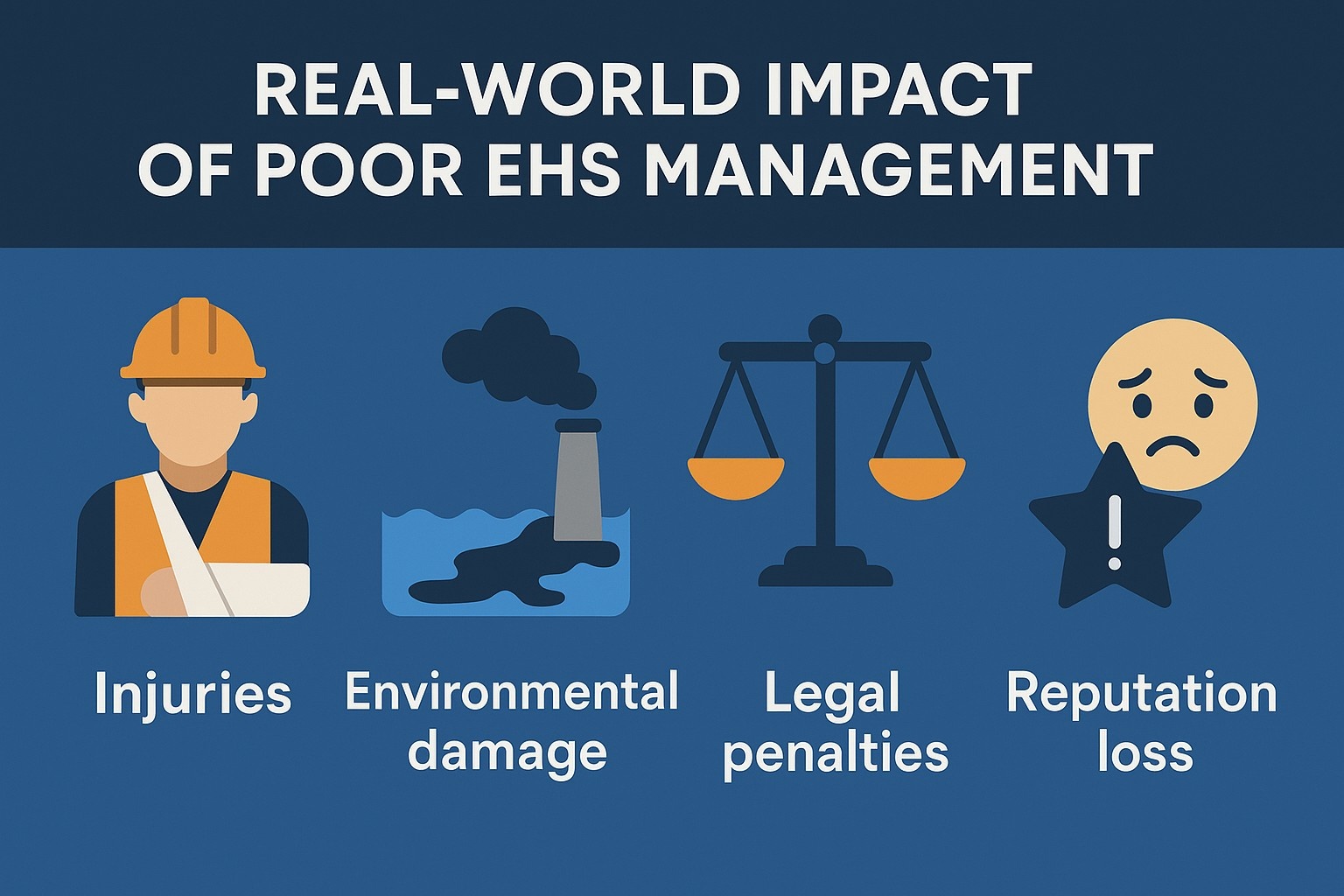
Ignoring EHS isn’t just risky on paper – it has real, tangible consequences that ripple through an organization. When safety, health, and environmental practices are overlooked, the effects can hit employees, the community, and the bottom line almost immediately. From serious injuries to legal trouble, the cost of neglecting EHS goes far beyond compliance forms or audits.
- Injuries and fatalities: Even one preventable accident can have devastating results.
- Environmental damage: Leaks, spills, and pollution can harm ecosystems and destroy community trust.
- Legal and financial penalties: Non-compliance can lead to hefty fines and court cases.
- Reputation loss: In an age where everything is public, poor safety practices can ruin credibility overnight.
The stakes are high, and the impact of poor EHS management is felt on multiple levels – human, environmental, financial, and reputational. Organizations that fail to prioritize safety don’t just face penalties; they risk losing the trust of employees, partners, and the public. Understanding these consequences underscores why investing in EHS isn’t optional – it’s essential for a sustainable, responsible workplace.
The Core Goals of EHS Programs
At the heart of every effective EHS program are a few clear, guiding goals. Regardless of the industry or size of an organization, EHS isn’t just about checking boxes – it’s about actively preventing harm, staying compliant, and finding ways to operate more efficiently and responsibly. These goals provide direction, helping teams focus their efforts on what really makes a difference for safety, people, and the environment.
1. Prevention of Incidents
This is the starting point for any EHS strategy. Identifying potential hazards, assessing their risks, and putting controls in place are the basic steps that keep workplaces safe. It’s about spotting the small warning signs before they become big problems.
2. Compliance Management
EHS teams stay on top of complex and changing regulations, ensuring that reporting, documentation, and safety measures are up to date. Automation tools and EHS software make this easier, reducing manual work and lowering the risk of oversight.
3. Sustainability and Environmental Stewardship
Sustainability isn’t a buzzword anymore – it’s a responsibility. EHS plays a key role in waste reduction, pollution control, and resource conservation. A good program helps organizations meet their sustainability targets while staying compliant.
4. Continuous Improvement
EHS is never “done.” It’s an ongoing process that involves monitoring, feedback, and constant adjustment. Regular audits, employee input, and data analysis help refine safety procedures over time.

Key Components of an Effective EHS Framework
Building an effective EHS program isn’t about piling on policies or creating endless procedures. It’s about putting the right pieces in place so safety, health, and environmental responsibilities are clear, manageable, and actionable. A strong framework combines leadership, employee engagement, training, and the right tools to create a system that works consistently and adapts as needs change. Here’s what typically makes the difference:
- Clear Leadership Commitment: Safety culture starts at the top. Leadership sets the tone by making EHS a visible priority.
- Employee Involvement: Workers are the eyes and ears of the workplace. Their feedback is crucial in identifying hazards and improving practices.
- Training and Education: Regular, relevant training ensures that everyone understands both the risks and the right responses.
- Accurate Data and Reporting: Tracking incidents, near-misses, and inspections builds a realistic picture of safety performance.
- Regular Audits and Inspections: Consistent checks make sure standards don’t slip over time.
- Technology and Tools: Digital platforms streamline inspections, track compliance deadlines, and centralize data for better decision-making.
When these key components come together – committed leadership, engaged employees, proper training, accurate data, regular audits, and smart technology – they form the backbone of a reliable EHS framework. This structure doesn’t just enforce rules; it guides everyday decisions, reduces risk, and ensures that safety and compliance become integral parts of how the organization operates.
How EHS Drives Better Business Outcomes
EHS isn’t just about keeping people safe or staying compliant – it has a direct impact on how well a business performs. Organizations that take EHS seriously often see benefits that go far beyond the safety department, influencing everything from finances to operations and even public perception. When safety, health, and environmental practices are integrated into daily workflows, companies set themselves up for stronger, more sustainable results. Companies with mature EHS programs consistently perform better in several areas:
1. Financial Stability
Preventing accidents, avoiding penalties, and reducing downtime save money. Even small improvements in safety can have a measurable financial return.
2. Operational Efficiency
A well-organized EHS system identifies inefficiencies and helps teams work smarter. Safe operations are typically more reliable, with fewer disruptions.
3. Employee Retention
Workers want to feel safe and valued. Organizations that invest in EHS tend to have lower turnover and higher engagement levels.
4. Brand Reputation
Stakeholders, investors, and customers all pay attention to a company’s ethics and sustainability record. Strong EHS practices show responsibility and integrity.
By investing in EHS, organizations aren’t just preventing accidents – they’re improving efficiency, building trust, and protecting their bottom line. From financial stability to employee satisfaction and brand reputation, the advantages ripple across the entire business. A mature EHS program ultimately creates a workplace that’s safer, smarter, and better positioned for long-term success.
Technology’s Role in Modern EHS
Technology has transformed the way we approach EHS. What used to be managed with paper checklists and manual tracking can now be handled with smart, integrated systems that provide real-time insights. Digital tools give organizations the ability to monitor safety, streamline compliance, and respond quickly to emerging risks, making EHS management more efficient and effective than ever.
Key benefits of EHS software:
- Real-time monitoring of safety incidents and compliance activities
- Automated reporting and documentation
- Centralized access to data for all departments
- Mobile inspections and instant updates from the field
- Predictive analytics that identify risks before they escalate
By leveraging modern EHS technology, organizations can move from reactive to proactive safety management. Real-time data, automated reporting, and predictive insights remove manual bottlenecks and free teams to focus on prevention and continuous improvement. In the end, technology doesn’t replace good safety practices – it amplifies them, helping create safer, more resilient workplaces.
The Human Side of EHS
Behind every policy and process are people. EHS isn’t just about statistics or compliance forms; it’s about protecting lives and creating workplaces where people feel respected and secure.
Building that kind of environment requires communication, empathy, and trust. Employees need to feel comfortable reporting hazards without fear of punishment. Managers need to listen, act quickly, and show that safety isn’t just a rule – it’s a shared value.
A genuine safety culture happens when everyone, from leadership to interns, believes their actions make a difference.
Common Challenges in Implementing EHS
Even with strong intentions, implementing an effective EHS program can be challenging. Organizations often face obstacles that slow progress or create gaps in safety and compliance. From scattered data to resistance to change, these hurdles can make it difficult to manage risks consistently and efficiently. Recognizing these common challenges is the first step toward overcoming them. Some of the most common obstacles include:
- Data silos: When information is scattered across departments, it’s hard to see the full picture of risk.
- Resistance to change: People often stick to old habits, especially when new systems or tools are introduced.
- Limited resources: Small organizations might struggle with time, budget, or expertise to manage EHS properly.
- Complex regulations: Keeping up with evolving compliance standards can be overwhelming without proper tools.
While implementing EHS comes with hurdles, none are insurmountable. With clear communication, committed leadership, and the right technology, organizations can address data gaps, streamline processes, and build a program that truly protects people, the environment, and operations. Overcoming these challenges turns potential weaknesses into opportunities for stronger, more resilient EHS management.
Making EHS Proactive Instead of Reactive
The most effective EHS programs don’t just respond to problems – they prevent them. Being proactive means actively looking for risks, addressing them before they escalate, and embedding safety into everyday operations. By focusing on anticipation rather than reaction, organizations can create safer, more reliable workplaces that stay ahead of potential hazards. A proactive approach focuses on:
- Regular risk assessments and inspections
- Encouraging near-miss reporting
- Continuous training and awareness campaigns
- Reviewing incident trends to spot patterns
- Updating procedures as new risks appear
Taking a proactive approach to EHS turns safety management from a reactive duty into a strategic advantage. Regular assessments, open reporting, continuous training, and procedure updates help organizations spot risks early and prevent incidents before they occur. Staying one step ahead not only protects people and the environment but also strengthens operations and builds lasting confidence across the organization.
Measuring EHS Success
Measuring the success of an EHS program goes beyond counting accidents or compliance violations. True effectiveness shows up in employee engagement, operational consistency, and the organization’s ability to confidently demonstrate that safety, health, and environmental standards are being met. Tracking the right indicators helps teams see what’s working and where improvements are needed.
Useful EHS performance indicators:
- Number and severity of incidents or near-misses
- Employee participation in safety programs
- Inspection and audit completion rates
- Training completion and effectiveness
- Compliance audit results
- Environmental impact metrics, such as waste reduction or emissions control
By monitoring key EHS performance metrics – like incidents, training completion, audits, and environmental impact – organizations can turn data into actionable insights. Measuring success allows teams to refine processes, celebrate achievements, and ensure that safety and compliance remain an integral part of daily operations. Regular evaluation transforms EHS from a set of rules into a dynamic system that drives continuous improvement.

Creating a Culture Where Safety Comes Naturally
No matter how robust your policies or advanced your tools, EHS programs only succeed when safety becomes part of the organizational culture. A culture where safety is natural ensures that employees don’t just follow rules – they actively look out for themselves and each other. Making EHS a daily habit, rather than an occasional task, is what turns good programs into lasting, effective practices.
Practical ways to build that culture include:
- Recognizing and rewarding safe behavior
- Encouraging open communication about risks
- Making safety training relevant, not routine
- Having leaders model good safety practices
- Including EHS discussions in regular meetings
When safety is embedded in the culture, it stops being a checklist and starts being second nature. Recognizing safe behavior, fostering open communication, making training meaningful, and having leaders set the example all help employees take ownership of safety. The result is a workplace where protecting people, the environment, and operations becomes an instinct, not just a responsibility.
Conclusion
EHS isn’t just another corporate checkbox – it’s what keeps a workplace safe, responsible, and running smoothly. When we actually take the time to think ahead about risks, involve our people, and use the right tools, we’re not just avoiding fines or accidents. We’re creating places where employees feel looked after, operations don’t hit unnecessary snags, and the company can genuinely show it cares about both its people and the planet. Treating EHS as an ongoing effort, not a one-time project, pays off over time – in trust, performance, and just knowing the workplace is prepared for whatever comes next.
FAQs
Why is EHS so critical for organizations?
EHS matters because it protects people, the environment, and the organization itself. It helps prevent accidents, reduce operational disruptions, and ensures compliance with laws, all of which keep the company running smoothly and safely.
How does EHS affect employees beyond safety?
A strong EHS program signals that the organization cares about its people. It improves morale, fosters engagement, and builds trust by showing that safety and well-being aren’t just policies – they’re priorities woven into everyday work.
Can technology really make a difference in EHS management?
Absolutely. Modern tools let teams track incidents, manage inspections, and monitor compliance in real time. Technology doesn’t replace human judgment, but it removes friction, provides clear insights, and makes proactive risk management much easier.
What happens if an organization ignores EHS?
Neglecting EHS can have serious consequences, from workplace injuries to environmental harm, legal penalties, and damage to reputation. The costs aren’t just financial; they affect employee trust, public perception, and long-term operational stability.
How can organizations make EHS a proactive effort?
The key is anticipating risks rather than reacting to them. Regular assessments, near-miss reporting, ongoing training, and reviewing incident trends all help organizations stay one step ahead, preventing problems before they escalate.
How do you know if your EHS program is working?
Success shows up in more than just accident numbers. Engaged employees, smooth operations, completed audits, and measurable improvements in environmental performance all indicate that an EHS program is doing its job.