Fire safety isn’t exactly the kind of thing you want to manage with a stack of binders and scattered emails. When real risks are involved, especially in complex spaces like schools, hospitals, or industrial buildings, you need something a little more dependable than memory and spreadsheets. That’s where fire risk assessment software comes into play.
It’s not just another app. It’s a practical tool that helps organizations stay ahead of potential fire hazards, streamline inspections, and keep their safety plans in check. Whether you’re in charge of one facility or twenty, fire risk software makes it easier to spot problems, track fixes, and stay compliant with the rules that matter.
Let’s break down what it actually does, why it matters, and what to look for if you’re thinking about using it.
What It Actually Does (In Plain Terms)
Fire risk assessment software is designed to help people find, track, and manage anything that might increase the chance of a fire. That includes obvious things like faulty wiring or flammable storage, but it also goes deeper – into inspection scheduling, emergency plan reviews, staff training, and even compliance documentation.
At a basic level, it replaces manual tasks like:
- Paper-based checklists
- Excel trackers
- Email reminders
- Handwritten notes during inspections
- Separate folders for floor plans, permits, and reports
Instead, everything lives in one system where you can create assessments, assign actions, update progress, and share results – all without digging through paperwork or following up manually with five different departments.
Real Problems This Software Solves
Anyone who’s been responsible for building safety knows the pain points. Things fall through the cracks. Reports get buried. Risks get overlooked. Here’s how software helps address those problems in the real world:
- Disconnected data: It brings everything into one platform – maps, inspection logs, training records, emergency plans.
- Poor task visibility: You can assign follow-ups to specific people and see when tasks are overdue or completed.
- Slow updates: Changes can be logged on the spot using a mobile device.
- Compliance stress: You can quickly generate reports to show auditors, insurers, or local authorities exactly what’s been done.
It’s not just about checking boxes. It’s about making the whole process less chaotic – and less risky.
Key Things It Can Track and Manage
Depending on the platform, fire risk assessment software can help manage a wide range of areas. Here’s what most tools support in some way:
- Building risk zones and hazard mapping
- Inspection checklists and scheduling
- Fire alarm and suppression system testing
- Permit and protocol reviews
- Emergency evacuation planning
- Chemical or flammable material inventory
- Incident logging and investigation
- Corrective action follow-up
- Safety training assignments
- Automated compliance calendars
Some platforms even let you scan barcodes on safety equipment or drop GPS pins for asset locations, which helps when managing large campuses or multi-building sites.
Who Actually Uses It
It’s not limited to one specific industry or building type. You’ll find it in use across higher education, healthcare, manufacturing, corporate offices, and even in government facilities. Schools, event venues, and property management companies rely on it, too. These are all places where fire safety is a real concern – not just because of potential property damage, but because people’s lives could be at risk. Whether it’s a large campus or a single building, any organization responsible for the safety of its occupants has a reason to take fire risk management seriously. Software helps them stay ahead of the risks and keep everything in check.
Field Use Is a Big Deal
One major benefit of modern fire risk tools is mobility. Safety professionals aren’t sitting at desks all day. They’re walking through buildings, inspecting equipment, and responding to issues. The best tools now include mobile apps that allow users to:
- Conduct inspections directly on their phones or tablets
- Add photos or videos as supporting evidence
- Use talk-to-text for faster notes
- Access safety plans or documents from the field
- Scan barcodes or QR codes for assets
- Log incidents immediately on-site
Being able to do this in real-time cuts down on back-and-forth and helps avoid situations where something gets forgotten before you’re back at your desk.
Why Paper-Based Systems Aren’t Cutting It Anymore
At first glance, they might seem reliable – they’re tangible, familiar, and have been around forever. But in practice, they often cause more problems than they solve.
One of the biggest issues is that paper is hard to keep current. Once something is written down in a logbook or checklist, it’s surprisingly easy for it to be forgotten, misplaced, or stuck sitting on a shelf. If a team member needs to check a record from last quarter, it might take hours to dig it up, assuming it hasn’t gone missing altogether.
There’s also the issue of access. With paper records, only one person can review the information at a time, and usually only if they’re standing in the right office. That makes collaboration harder and slows down communication when multiple departments or team members need to weigh in on a fire safety concern.
Another major flaw is the lack of a clear audit trail. If something goes wrong – say, an incident occurs or an inspection was missed – it becomes incredibly difficult to reconstruct what happened. You can’t always tell who did what, when it was done, or if a critical step was skipped altogether.
And then there’s reporting. Pulling together updates, overdue actions, or compliance history from paper files is tedious and time-consuming. It’s the kind of task that gets pushed to the bottom of the list, even when it’s important for safety or compliance.
In contrast, fire risk assessment software centralizes everything. Instead of chasing paperwork, teams can log in, find what they need, and update records on the fly. It creates a clear timeline, tracks progress automatically, and gives everyone access to the same information in real time. That shift not only improves accuracy and accountability but also frees up time for actually addressing safety issues – not just documenting them.

What to Look for in a Good Fire Risk Software
Not all tools are created equal. Here are a few things worth paying attention to if you’re evaluating fire risk assessment platforms:
- Clear interface: If it’s too complicated, people won’t use it.
- Mobile access: Inspections need to happen in the field, not from a desktop.
- Custom checklists: You should be able to tailor assessments to your site, building type, or department.
- Automated reminders: Keeping up with monthly, quarterly, or annual inspections shouldn’t rely on sticky notes.
- Easy reporting: Whether for internal use or compliance, it should take minutes – not hours – to create reports.
- Task assignment and tracking: Accountability matters. You need to know what’s been done and what hasn’t.
- Secure cloud storage: Your data should be backed up and accessible, not sitting on one person’s hard drive.
- Integration with other systems: Some platforms can sync with work order systems or building management software.
How It Helps with Regulatory Compliance
No one likes surprise audits. Fire risk assessment software makes compliance a little less stressful by keeping records organized and easy to access. It shows a clear history of inspections, actions taken, and completed training sessions. You’re able to demonstrate that risks are being actively addressed, not ignored, and that emergency plans are being reviewed and updated on a regular basis. It also helps different teams stay aligned, which is especially useful when safety responsibilities are spread across departments. Some tools even let you invite auditors or inspectors directly into specific reports or dashboards, so you’re not scrambling to send over a pile of PDFs at the last minute.
Risks of Skipping Regular Assessments
Using software doesn’t just make your life easier – it helps avoid serious consequences. Without regular assessments, you run the risk of:
- Missed fire hazards
- Poor emergency preparedness
- Insurance issues or denied claims
- Fines or violations from regulatory bodies
- Legal liability in the event of an incident
- Reputational damage with staff, students, or the public
Skipping assessments might save time in the short term, but it can create far bigger problems down the line.
It’s Not Just About Technology – It’s About Culture
Implementing fire risk assessment software is only part of the solution. The other piece is building a culture where fire safety is seen as a shared responsibility. The right software helps encourage this by making it easier for teams to collaborate, track progress, and stay on the same page.
When used consistently, it turns fire safety from a checklist item into something more proactive – part of your day-to-day operations, not just a scramble before an inspection.

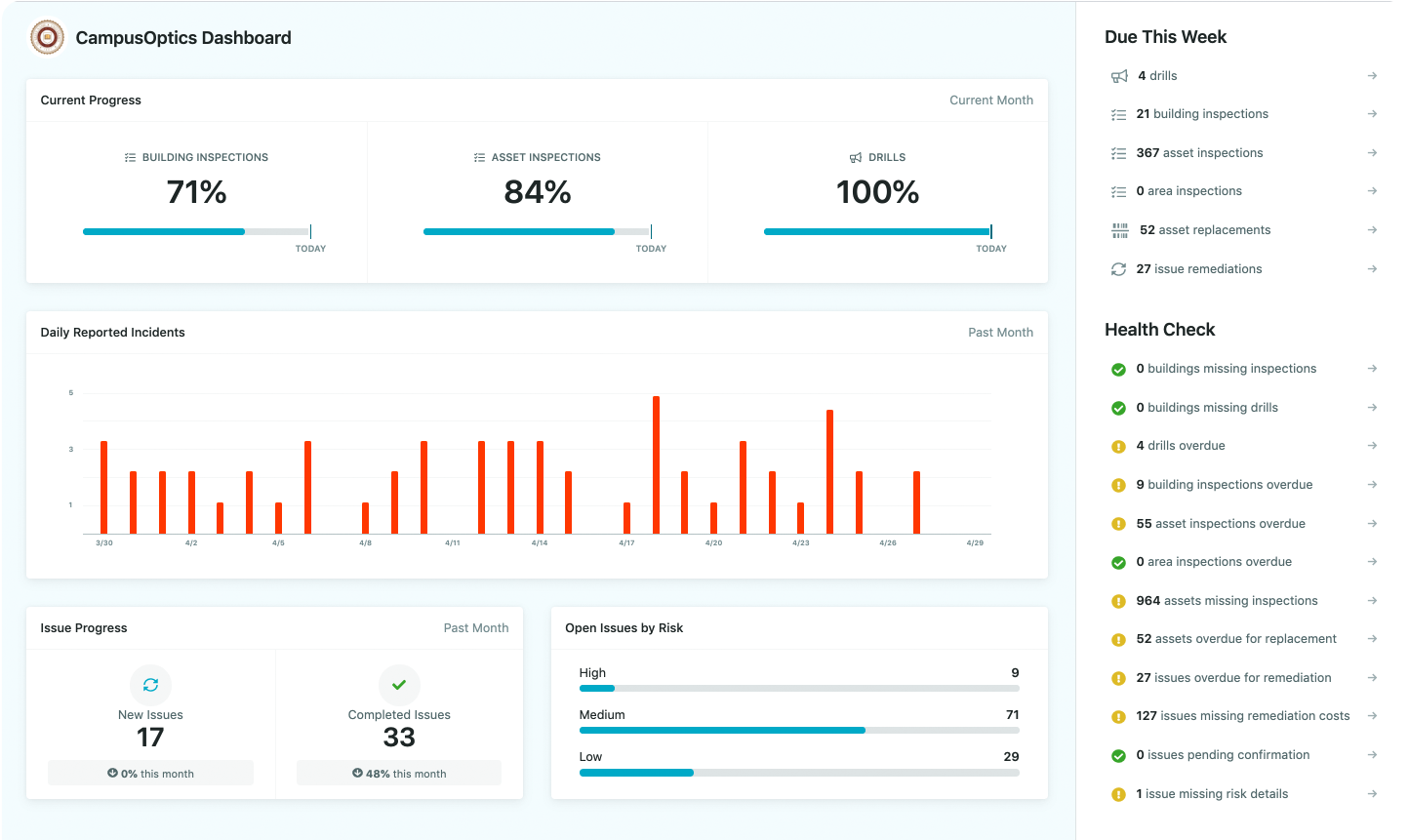
A Fire Risk Platform Born from Experience: CampusOptics
As we’ve built and refined CampusOptics, we’ve come to understand that fire risk assessment software has to do more than just check boxes. It needs to reflect how people actually manage safety – in the field, across departments, and often with limited time and resources.
Our journey started with something personal: a tragic campus fire that took the lives of three friends of one of our founders. That moment shaped everything we’ve done since. We realized that too many institutions were relying on disconnected systems, paper trails, and siloed data to manage something as critical as fire safety. So we set out to build a platform that helps teams stay ahead of risks, not just respond to them after the fact.
What makes fire risk assessment software valuable isn’t just the ability to log an inspection or generate a report. It’s how those tools support better collaboration, clearer oversight, and faster action. At CampusOptics, that’s the lens we use. We designed our system to work the way safety teams actually operate – whether they’re updating chemical inventories, reviewing emergency plans, or documenting inspections on the go. Fire safety isn’t theoretical, and the tools we use shouldn’t be either.
Wrapping Up
Fire safety isn’t something you can afford to wing, especially in environments where a missed hazard or delayed response could have serious consequences. Fire risk assessment software steps in to make the whole process more manageable, more transparent, and more reliable. It’s not just about logging inspections or printing reports. It’s about having a system that helps people actually do the work better, spot problems faster, and stay ahead of the curve when it comes to safety and compliance.
At the end of the day, it’s not about replacing people. It’s about giving safety teams the tools they need to protect what matters – and doing it in a way that feels practical, realistic, and built for how the job actually gets done. Whether you’re overseeing a single site or managing an entire campus, the right software doesn’t just save time. It supports a safer, more informed culture – one decision, one inspection, one alert at a time.
Frequently Asked Questions
What’s the main goal of fire risk assessment software?
It’s designed to help teams identify, document, and reduce fire hazards in a structured and trackable way. From inspections and emergency plans to training records and compliance reports, it pulls everything together into one place so nothing slips through the cracks.
Is this type of software only for large institutions or big facilities?
Not at all. While universities, hospitals, and manufacturing plants often rely on it because of their size, smaller organizations also use it to stay organized and compliant. It really comes down to how much risk you’re managing and how complex your safety needs are.
Can this software replace in-person inspections?
No – and it shouldn’t. You still need people walking the halls, checking equipment, and spotting real-world issues. What the software does is help those inspections get logged more consistently, tracked more effectively, and acted on without delay.
What if our team isn’t very tech-savvy?
Most modern fire risk platforms are built with usability in mind. If you can use a smartphone or a web browser, you can usually handle the basics. Many systems also offer mobile apps, simple dashboards, and support to help teams get up and running without a steep learning curve.