Keeping a school safe isn’t just about locking the doors or putting up a fire escape map in every hallway. Behind the scenes, there’s a whole system working quietly to make sure students, teachers, and staff are protected from hazards most people don’t even think about. That system is called EHS.
EHS stands for Environment, Health, and Safety. It’s not just for factories or chemical plants. In schools, it plays a key role in how the buildings operate, how emergencies are handled, and how everything from science labs to food prep areas are managed. This article takes a grounded, no-fluff look at what EHS really means in an educational setting, how it’s used, and why it matters.
What EHS Means and Why It Matters in Schools
EHS isn’t just paperwork or a checklist – it’s a framework that keeps schools running safely and smoothly. It connects three major areas: environment, health, and safety. Each part addresses a different layer of school life, but together they form a single system that protects everyone on campus.
The Environmental Side
This covers how a school manages chemical storage, air quality, waste disposal, and sustainability. From cleaning products to lab chemicals, schools handle more materials than most people realize. Managing them responsibly helps reduce risks and supports a cleaner, healthier learning space.
Health in Everyday Operations
Health focuses on how schools protect people from daily risks – food safety, sanitation, air ventilation, and ergonomics for staff all fall here. A healthy environment supports focus and attendance, while poor maintenance or hygiene can lead to illness and disruptions.
Safety as a Daily Practice
Safety is about preventing accidents before they happen. It’s as simple as fixing a broken tile before someone trips or making sure fire exits aren’t blocked. Schools may not look like industrial sites, but the mix of workshops, kitchens, and crowded halls makes attention to safety critical.
EHS programs aren’t just about compliance, they’re what keep schools running without unnecessary interruptions or risks. When systems work, classrooms stay open, labs stay safe, and people feel protected. Without them, even small oversights can turn into major problems. A good EHS culture creates trust, reduces accidents, and ensures that learning can continue without unnecessary worries.
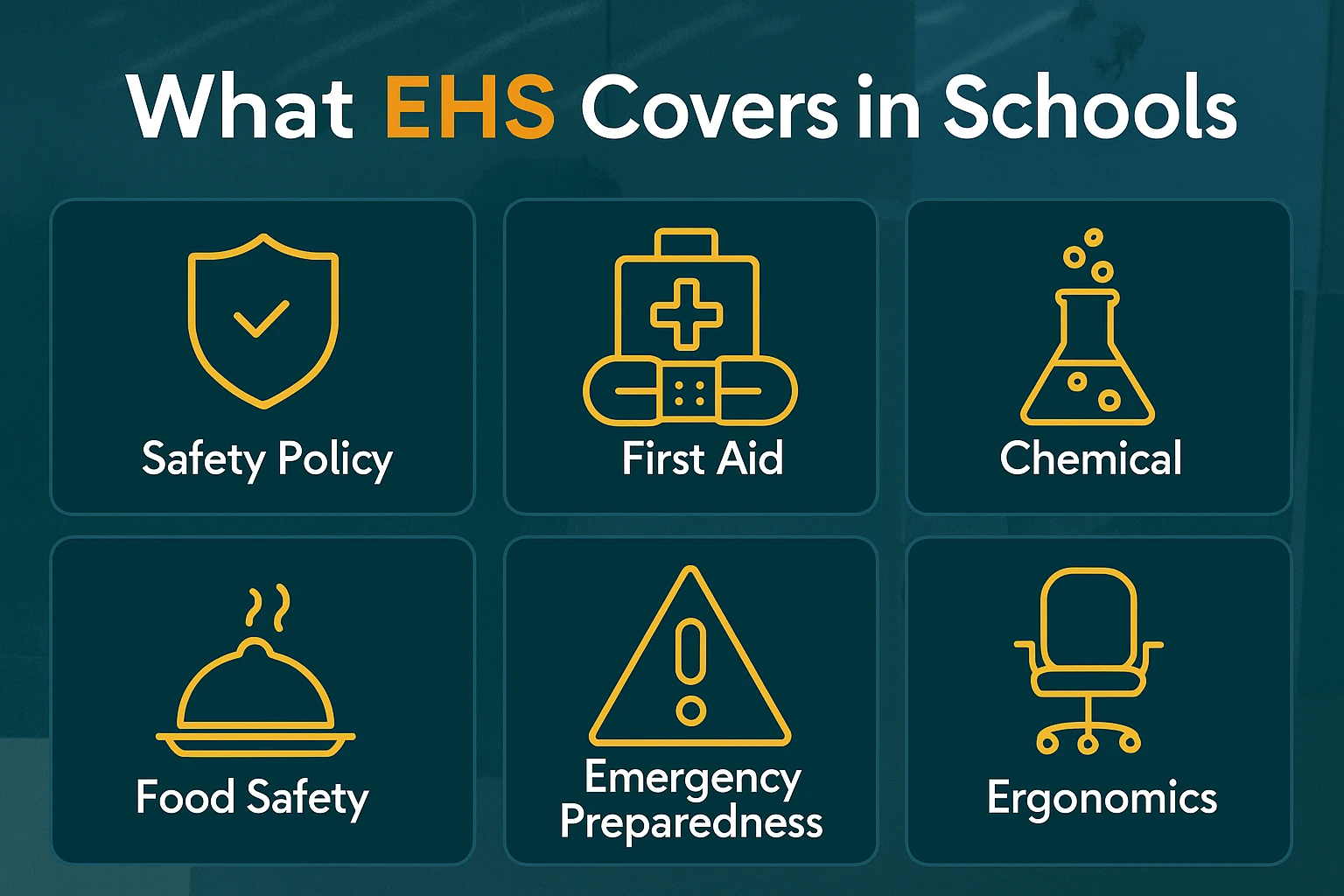
What EHS Covers in Schools: The Core Areas
Every school is different, but there are some EHS components that apply across the board. Below are the main areas most EHS programs in education focus on:
Health and Safety Policy
This is the foundation. It outlines the school’s commitment to keeping people safe and lays out procedures for:
- Risk assessments
- Emergency response
- Fire safety
- Electrical and equipment safety
- Manual handling guidelines
- Reporting incidents or near misses
First Aid and Incident Response
Things happen. Someone trips, a student faints, or a teacher gets a chemical burn. EHS makes sure there’s a clear plan:
- Trained first aiders available on-site
- Locations of first aid kits are known and accessible
- Procedures for contacting emergency services are in place
Chemical and Hazardous Material Management
In science labs, custodial closets, and even art classrooms, hazardous materials are common. EHS ensures:
- Safe storage with proper labeling
- Regular inventory checks
- Clear instructions for handling and disposal
- Emergency response in case of spills or exposure
Food Safety (Where Applicable)
For schools with kitchens or cafeterias, food safety policies include:
- Safe cooking and storage procedures
- Cleanliness standards
- Staff training on hygiene
- Regular inspections and audits
Emergency Preparedness
From a fire drill to an actual earthquake, schools need more than a plan on paper:
- Realistic evacuation procedures
- Communication systems for rapid alerts
- Emergency contact directories
- Clear leadership roles during events
Indoor Air Quality and Ergonomics
Not all hazards are visible. EHS also considers long-term health issues like:
- Poor ventilation or mold
- Inadequate lighting
- Poor workstation setups for staff
- Noise control in crowded areas
Who’s Responsible for EHS in a School?
EHS isn’t handled by one person alone. Depending on the size of the institution, responsibilities might be shared across roles:
- EHS Manager or Coordinator: Oversees policy development, training, and compliance
- Facilities or Maintenance Staff: Handle inspections, repairs, and hazard control
- Teachers and Department Heads: Especially in labs, shops, or gyms, staff must follow EHS protocols
- Administrators: Ensure policies are funded, reviewed, and enforced
In smaller schools, one person might wear several hats. In larger campuses or districts, full EHS teams exist.
How Schools Implement EHS in Practice
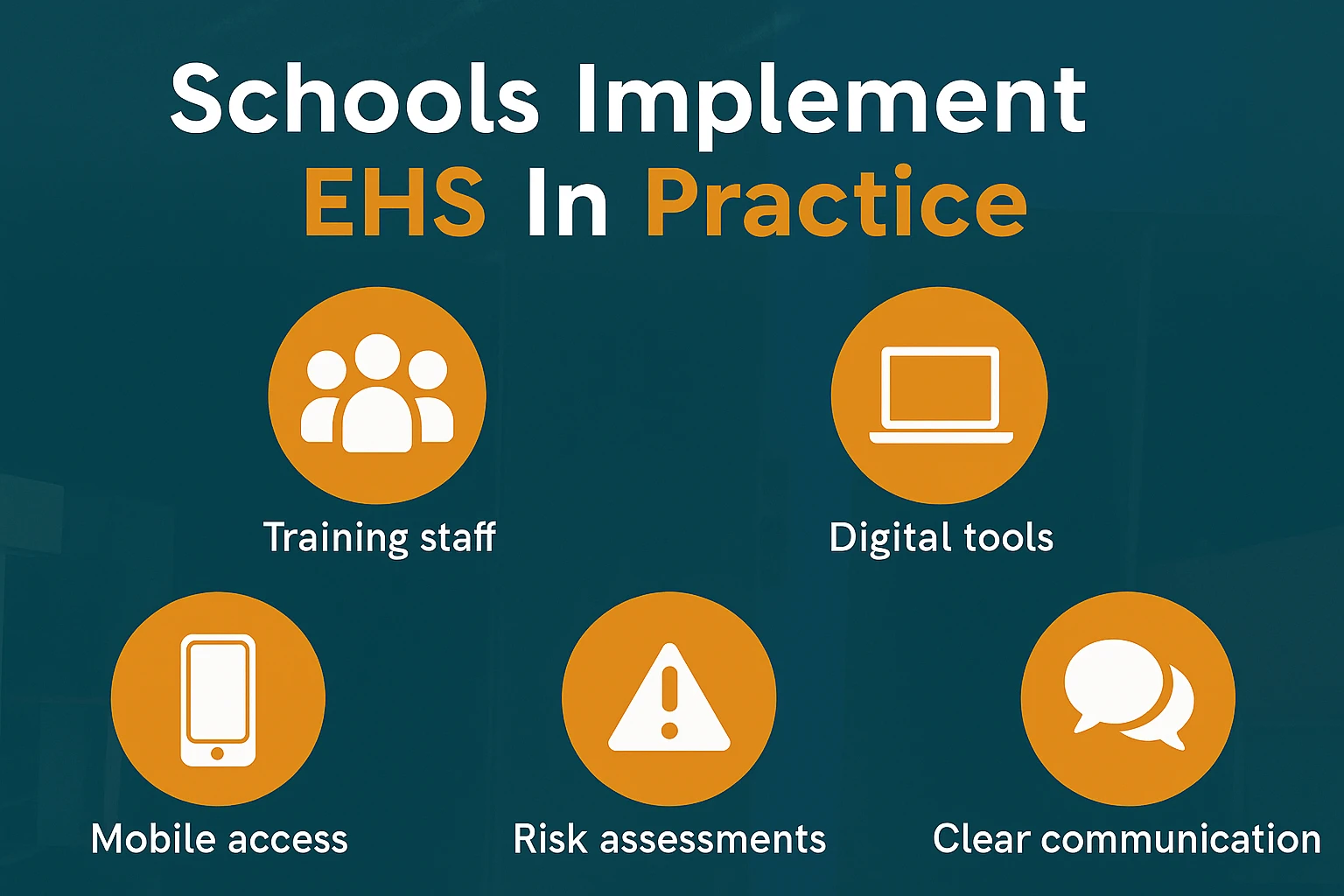
Having an EHS policy isn’t enough if it just sits in a binder on a shelf. The real challenge is turning that policy into daily habits, clear systems, and a culture people actually follow. In schools, EHS implementation happens through a mix of training, tools, and regular engagement. It has to fit into the rhythm of school life without becoming an extra burden.
One of the first steps is making sure staff know what’s expected. That usually means training teachers, custodians, lab techs, cafeteria workers, and even administrators on what to do in emergencies, how to report a hazard, and how to follow safety procedures in their area. This isn’t just a once-a-year seminar. Good programs check in regularly and provide easy-to-access updates when policies change.
Another core part of implementation is using digital tools. Schools that manage inspections, incidents, and compliance tracking through software tend to have better visibility into what’s working and what isn’t. These tools cut down on paperwork and let staff file reports or check status in real time.
It’s also worth noting that EHS teams or coordinators often aren’t sitting at desks all day. They’re moving through hallways, checking buildings, inspecting labs. That’s where mobile access becomes critical. Tools that work on a phone or tablet allow staff to flag issues on the go without needing to return to a computer.
Here’s what practical EHS implementation usually includes:
- Training for staff on safety protocols, emergency response, and reporting procedures
- Digital tools or software to manage inspections, incident logs, and compliance tracking
- Mobile access for on-the-go staff like custodians or lab techs who need to report issues instantly
- Regular risk assessments and building checks to stay ahead of potential problems
- Clear communication channels between departments and leadership so nothing gets lost or ignored
All of these systems need to work together. A training program without an easy reporting tool falls short. A compliance checklist with no follow-up creates gaps. The best results come when everyone is on the same page and has the tools they need to act quickly.
Signs of a Strong EHS Culture in a School
You can usually spot a school that takes EHS seriously, even if it’s not immediately obvious. It’s not about having the most polished policies or the fanciest equipment. It’s about behavior, attitude, and follow-through. A strong EHS culture doesn’t happen by accident, and it can’t be forced overnight.
One of the clearest signs is that people know what to do without having to think too hard. Whether it’s a fire drill or a minor chemical spill in the science lab, trained staff respond quickly and confidently. That only happens when training is clear and reinforced over time.
Another sign is visibility. You’ll see clear, updated signage for exits, first aid stations, and emergency procedures. Safety gear like gloves or eyewash stations are not just present but easy to reach and properly maintained. Chemical inventories are current, labeled, and secured. People know where things are and how to use them.
But culture isn’t just about the logistics. It’s about how people treat safety. If students and staff report concerns without hesitation, if maintenance issues get addressed promptly, and if leaders take those concerns seriously, you’re seeing a culture that values safety over convenience.
Challenges Schools Face with EHS
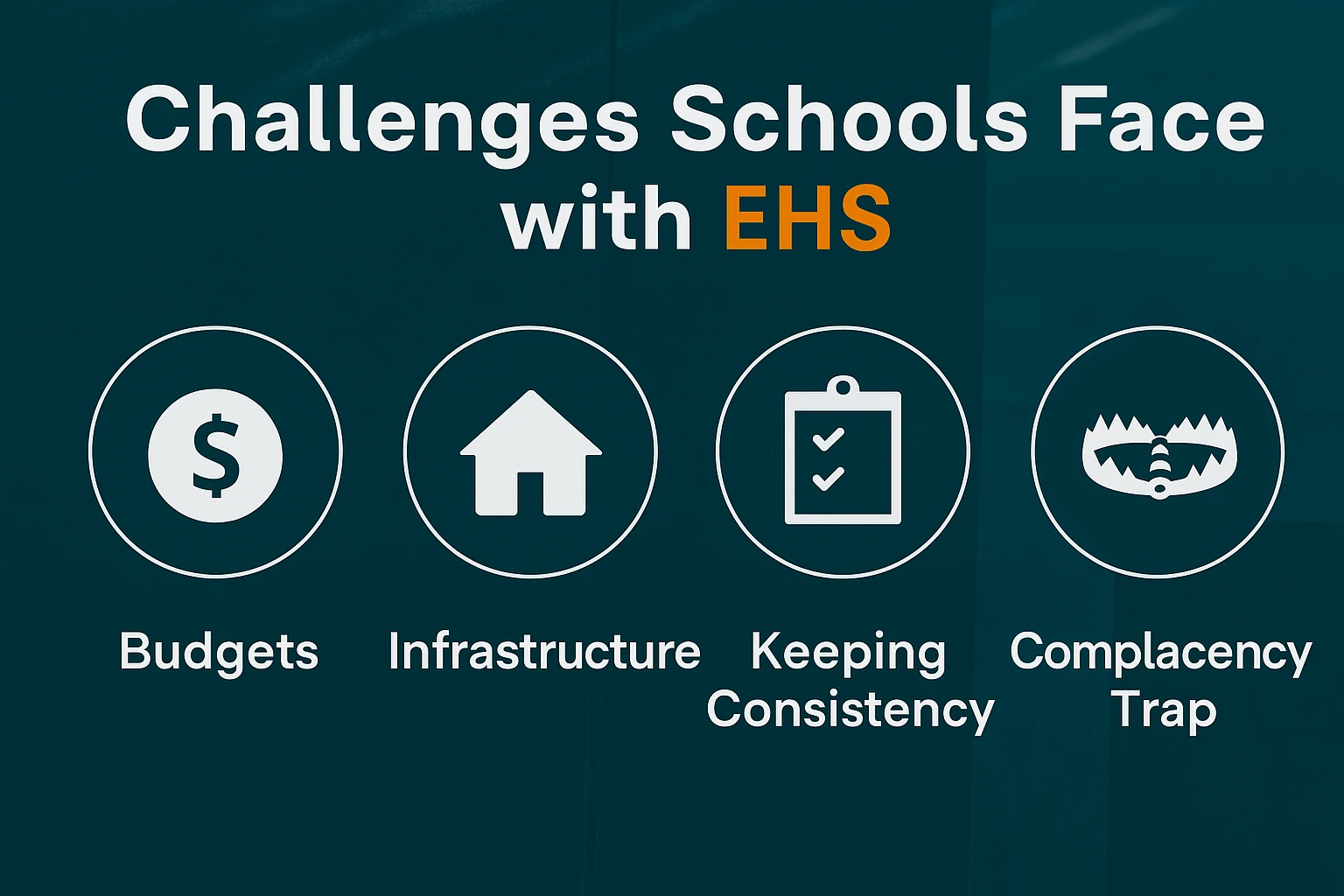
No matter how committed a school is, keeping EHS strong takes constant work. The obstacles are usually practical, not philosophical.
Budgets and Priorities
Money is always a sticking point. Replacing outdated wiring or installing new ventilation systems rarely feels urgent compared to classroom needs. But safety isn’t optional – it’s maintenance of the school’s ability to function. When it’s neglected, costs show up later as accidents, downtime, or legal issues.
Aging Infrastructure
Many schools are decades old, built before modern safety standards existed. That means asbestos in ceilings, pipes that leak, or electrical systems that struggle to keep up. Addressing those problems isn’t simple, it involves inspections, specialized contractors, and coordination that often disrupts the school schedule.
Keeping Consistency
Then there’s turnover. A new staff member might not know the procedures the last safety officer set up, and if training isn’t repeated, information slips through the cracks. This loss of continuity can undo years of progress in a matter of months.
The Complacency Trap
Perhaps the hardest challenge is complacency. When nothing bad happens for a long time, people assume the system’s fine. That’s when fire extinguishers go unchecked or evacuation maps get outdated. Complacency is subtle, it doesn’t look like neglect until it’s too late.
A strong EHS culture doesn’t mean everything runs perfectly. It means that even when problems arise, they’re noticed, discussed, and resolved before turning into crises. That ongoing awareness – combined with structure, training, and accountability, is what keeps schools safe over the long term.
Benefits of EHS for the Whole School Community
- Fewer injuries and disruptions mean less time lost to emergencies or lawsuits
- Healthier environments help reduce illness and boost learning focus
- Better preparedness can literally save lives during major incidents
- Improved trust from parents, staff, and the wider community
- Easier inspections and compliance reviews with local authorities
These are the most visible benefits of a well-run EHS program, but each of them carries real weight in everyday school life. When injuries and disruptions are kept to a minimum, learning can happen without constant interruptions or emergency closures. Teachers and staff aren’t spending their time reacting to preventable incidents, and administrators avoid the headaches and costs that come with claims or investigations.
Healthier environments go hand in hand with better focus. Good ventilation, clean drinking water, safe food handling, and pest-free buildings reduce sickness and make classrooms more comfortable. Students stay in school more consistently, staff take fewer sick days, and everyone benefits from a calmer, more productive atmosphere.
Preparedness is the area most people don’t think about until it’s too late. A fire, chemical spill, or severe weather event can turn chaotic if a plan isn’t in place. But when drills are practiced and responsibilities are clear, response times improve, panic drops, and lives can be saved. This level of readiness doesn’t happen by chance – it’s the product of ongoing effort and planning.
There’s also a strong trust factor at play. Parents notice when a school takes safety seriously, even if they don’t see every detail behind the scenes. Staff feel valued when their workplace invests in their health and well-being. Over time, that builds a culture where safety isn’t seen as an obstacle but as a shared priority.
Finally, schools with established EHS systems find inspections and compliance reviews far less stressful. Records are organized, policies are up to date, and audits go smoothly. Instead of scrambling to prove compliance, leadership can focus on improving and fine-tuning. All of these benefits add up to a school that runs more smoothly, stays safer, and earns the confidence of everyone who walks through its doors.
Simple Ways Schools Can Improve EHS Right Now
Improving EHS doesn’t always mean investing in expensive systems or major renovations. Most schools can make noticeable progress with small, steady changes that build better habits. The real challenge isn’t complexity – it’s consistency. Here are a few practical steps that make a difference almost immediately:
Quick Wins That Take Little Time
- Walk the campus with fresh eyes: Step away from the usual routine and look around like someone seeing the school for the first time. Are exits blocked? Are wires hanging loose? Are hallways cluttered? These issues blend into the background when you see them every day, but they stand out instantly during a proper walkthrough.
- Check emergency supplies: Fire extinguishers, first aid kits, and exit signs shouldn’t just exist, they should be functional, visible, and up to date. It takes minutes to check them but can save lives in a crisis.
- Inspect chemical storage: Outdated or mislabeled materials in labs or cleaning closets are accidents waiting to happen. A simple reorganization or proper labeling round can prevent chemical mishandling before it becomes an emergency.
Small Habits That Keep Safety Alive
Even small refreshers help more than most people expect. Taking ten minutes at a staff meeting to review evacuation plans, reporting procedures, or first aid contacts keeps everyone alert and confident. It’s also a good chance to make sure emergency contact information hasn’t gone stale and that it’s posted where everyone can find it – on walls, not buried in binders.
Building Momentum Over Time
One-off efforts rarely move the needle, but repeated small actions do. Schools that make safety checks and short reviews part of their normal rhythm see long-term improvement without big disruptions. It’s not about doing everything at once – it’s about staying aware, noticing problems early, and fixing them before they turn into something larger.
EHS improvement doesn’t have to feel heavy or bureaucratic. It’s more about attention than perfection, and when schools keep that mindset, the environment naturally becomes safer, healthier, and more reliable for everyone who learns and works there.

How We Support EHS Implementation at CampusOptics
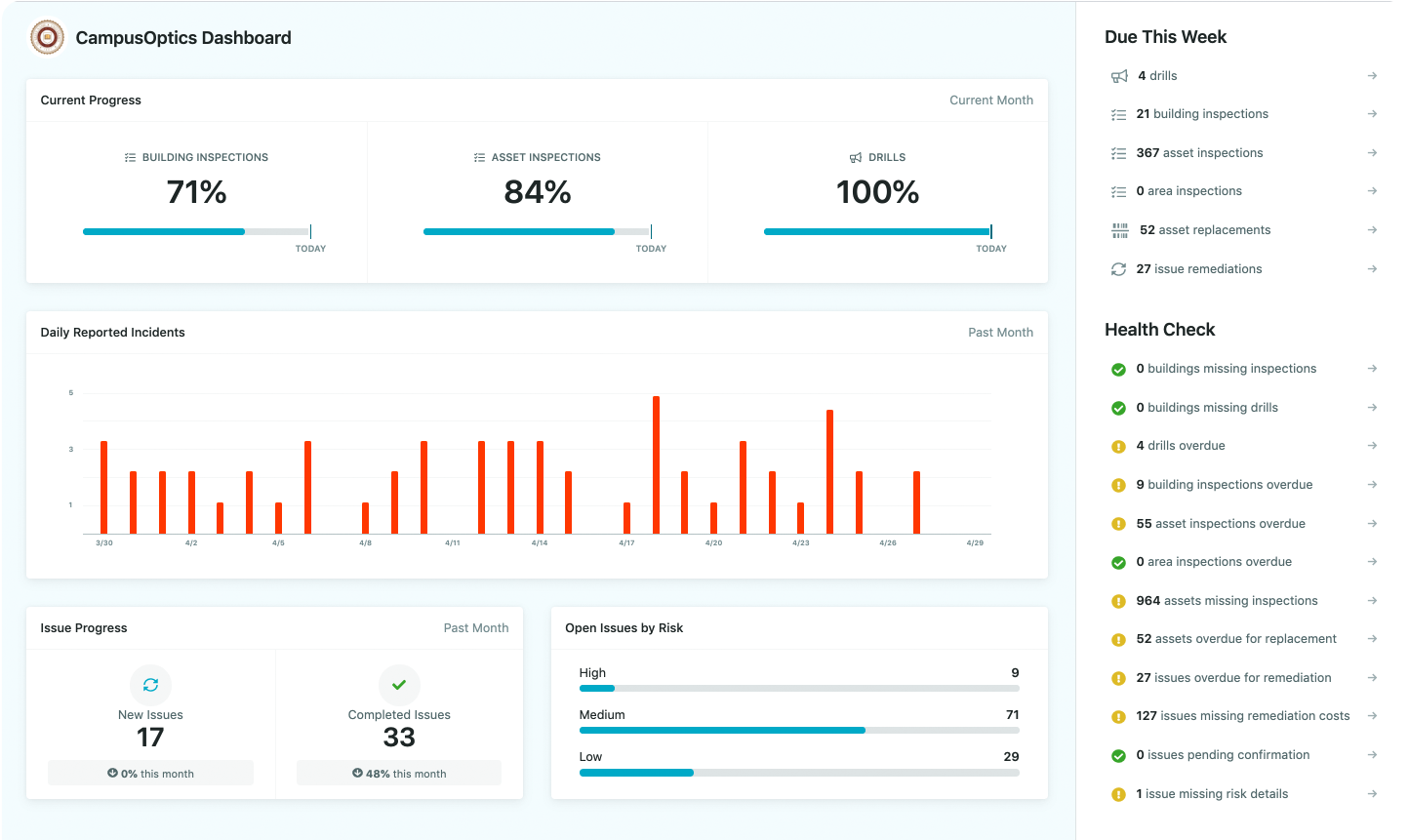
At CampusOptics, we’ve built our platform because we believe EHS in schools shouldn’t be cumbersome – it should empower safety work. We provide a unified solution for chemical inventory, inspections, incident tracking, emergency planning, and more, all tailored to higher education environments. Because we designed it with campus safety professionals in mind, it adapts to how people actually move and work on campus, not the other way around.
When a lab manager, facilities worker, or safety coordinator wants to flag an issue, they can do it immediately using mobile access. No more backlogs of paper forms or delayed follow‑ups. Data flows into one system that gives visibility across departments. That means trends become clear, risks are detected sooner, and responses are better coordinated. In short, we help schools turn good EHS intentions into real, everyday action.
Conclusion
EHS in schools isn’t a luxury or a formality, it’s what allows everything else to work. Without a safe, healthy environment, even the best teachers and most motivated students run into obstacles. What makes EHS so important is that it touches every corner of campus life, from the air we breathe to the way we respond in a crisis. And the truth is, the best EHS programs aren’t the ones that make headlines. They’re the ones quietly doing their job day in and day out, keeping people protected without needing constant attention.
We’ve seen firsthand how smart tools and shared visibility make safety feel less like a chore and more like a natural part of the school culture. It’s not about being perfect – it’s about being prepared, responsive, and clear about the role everyone plays. The schools that take that seriously are the ones where things run smoother, people feel more confident, and risks are handled before they turn into problems. That’s the future we believe in, and that’s why we built CampusOptics.
Frequently Asked Questions
What does EHS actually include in a school setting?
EHS in schools covers everything from managing chemicals and hazardous waste to emergency planning, health protocols, and building safety. It’s a mix of environmental responsibility, physical safety practices, and health awareness that applies to everyone on campus.
Is EHS required by law in schools?
Yes, in most regions schools are legally required to follow health and safety regulations. That includes having policies for risk assessment, emergency response, chemical handling, and more. But beyond compliance, EHS is just smart, preventing accidents saves time, money, and sometimes lives.
Who is in charge of EHS in a school?
It depends on the size of the institution. Larger universities may have full-time EHS teams or dedicated managers. In smaller schools, it’s often a shared responsibility across roles like facilities staff, science teachers, administrators, and even department heads.