
Not everyone in an organization thinks about chemical containers until something goes wrong. But if you’re the one responsible for managing safety in a lab, facility, or university department, you know that chemicals come with responsibilities. And not just the obvious ones like using gloves or storing flammables correctly. The bigger challenge is often just knowing what’s actually on-site, where it’s stored, and how much of it is still usable. That’s where chemical inventory comes into play.
Let’s talk plainly about what a chemical inventory is, why it’s not just a compliance checkbox, and how you can manage it without creating a giant mess of spreadsheets and sticky notes.
So, What Is a Chemical Inventory Exactly?
A chemical inventory is a complete list of the hazardous substances, mixtures, and chemical products present in a workplace, lab, or storage facility. But more than a list, it’s an active record that shows:
- What the substance is
- Where it’s stored
- How much is there
- Who is using it
- How hazardous it is
- When it expires (if applicable)
Think of it like a live map of your chemical landscape. Not just what’s on the shelves, but what’s been opened, what’s running low, and what might need safe disposal soon.
Some places manage it digitally, using specialized software. Others still rely on shared documents or handwritten logs. Either way, the purpose is the same: to maintain control over chemical materials and keep everyone informed.
Why It’s Not Just Bureaucratic Paperwork
If you’ve ever had to dig through cabinets to find a chemical you think you still have, or explain to an inspector why a bottle has no label, you already know why inventory matters. But let’s spell it out.
Safety, First and Always
Hazardous chemicals can cause burns, respiratory problems, fires, and worse if misused or stored incorrectly. An updated inventory helps prevent those accidents by ensuring:
- Everyone knows what they’re handling
- Substances are stored properly based on compatibility
- Expired materials don’t go unnoticed
- Emergency teams know what’s on-site in case something goes wrong
Compliance Without the Scramble
Regulators don’t just ask if you’re following safety protocols. They want to see proof. OSHA, REACH, CLP, and other frameworks expect businesses, schools, and labs to keep accurate records of hazardous materials. If you don’t have one ready when asked, you’re not just non-compliant. You’re also on the hook for possible fines or worse.
A good inventory means you can generate reports fast, hand them over during inspections, and move on.
Smarter Budgeting and Ordering
This one’s underrated. When you know exactly what you have, you’re less likely to:
- Order duplicates
- Miss low stock alerts
- Let expensive chemicals expire on the shelf
Inventory data helps cut waste and plan smarter purchases. If you’re managing a large department or multiple labs, this can translate to real budget savings.
What Should Be Included in a Chemical Inventory?
It depends a bit on the setting, but there’s a general rule of thumb: if it’s hazardous and it’s stored or used regularly, it should be tracked. According to regulatory guidelines and best practices, your inventory should cover:
- Flammable liquids
- Compressed gases
- Corrosives (acids and bases)
- Toxics, carcinogens, oxidizers, reactives
- Disinfectants, lab reagents, and hazardous waste
- Oils and lubricants
- Any substance with a Safety Data Sheet (SDS)
What You Don’t Need to Include
Not every chemical needs to be on the list. Here are some common exceptions:
- Sterile water or saline solution
- Non-hazardous buffers
- Retail cleaning products in small quantities
- Food-grade items like gelatin or dry milk
- Solutions that are mixed and used within a few days
If it’s something you’d keep under your kitchen sink and use once a week in small amounts, it probably doesn’t need tracking under formal chemical inventory rules.
The Backbone of a Good Chemical Inventory
Creating a chemical inventory isn’t just about filling out a table once and forgetting about it. It’s a system, and like any good system, it needs structure. The more clearly that structure is defined, the easier it becomes to maintain, scale, and use when it matters most. So what should a chemical inventory actually include?
Basic Identifiers
Every entry should start with the name of the product. This might be the commercial name you see on the label or the more technical term found in documentation. Whichever name you use, make sure it’s consistent throughout your records. Alongside that, it’s important to include a unique identifier like a CAS number or a REACH registration number. These help clarify exactly which substance you’re working with, especially when names are similar or the same chemical appears under different brands.
You’ll also want to document who supplied or manufactured the chemical. This info comes in handy for reorders, safety clarifications, or if you need to reach out about any concerns. Just as critical is the storage location. That means listing the room, shelf, or cabinet where the chemical is kept, anything that helps someone find it quickly and confidently.
Hazard and Use Info
Your inventory should explain how dangerous a substance is and how it should be handled. That includes hazard classifications and the corresponding symbols (flammable, corrosive, toxic, etc.) as well as the official hazard and precautionary statements. These give users a quick but vital understanding of the risks and how to avoid them.
It’s also a good idea to note what the chemical is actually used for in your workplace. Whether it’s part of a lab experiment, a cleaning agent, or a processing fluid, usage context adds clarity. And of course, keeping track of how much is on hand matters, record the quantity using meaningful units and update this regularly. Don’t forget to include either the expiration date or the date it was acquired to help you prioritize what needs to be used first.
Attachments and Records
A solid inventory goes beyond just tracking what’s in stock. It also links to important supporting materials. The most basic of these is the Safety Data Sheet (SDS), which should be available for every hazardous chemical. But it’s also useful to keep a record of any inspections, notes about how a substance was used, and how or when it was disposed of.
If you’re using digital tools, adding photos or connecting each entry to a barcode can simplify things even further. For example, scanning a container during an inspection can instantly pull up all relevant details without flipping through binders or spreadsheets.
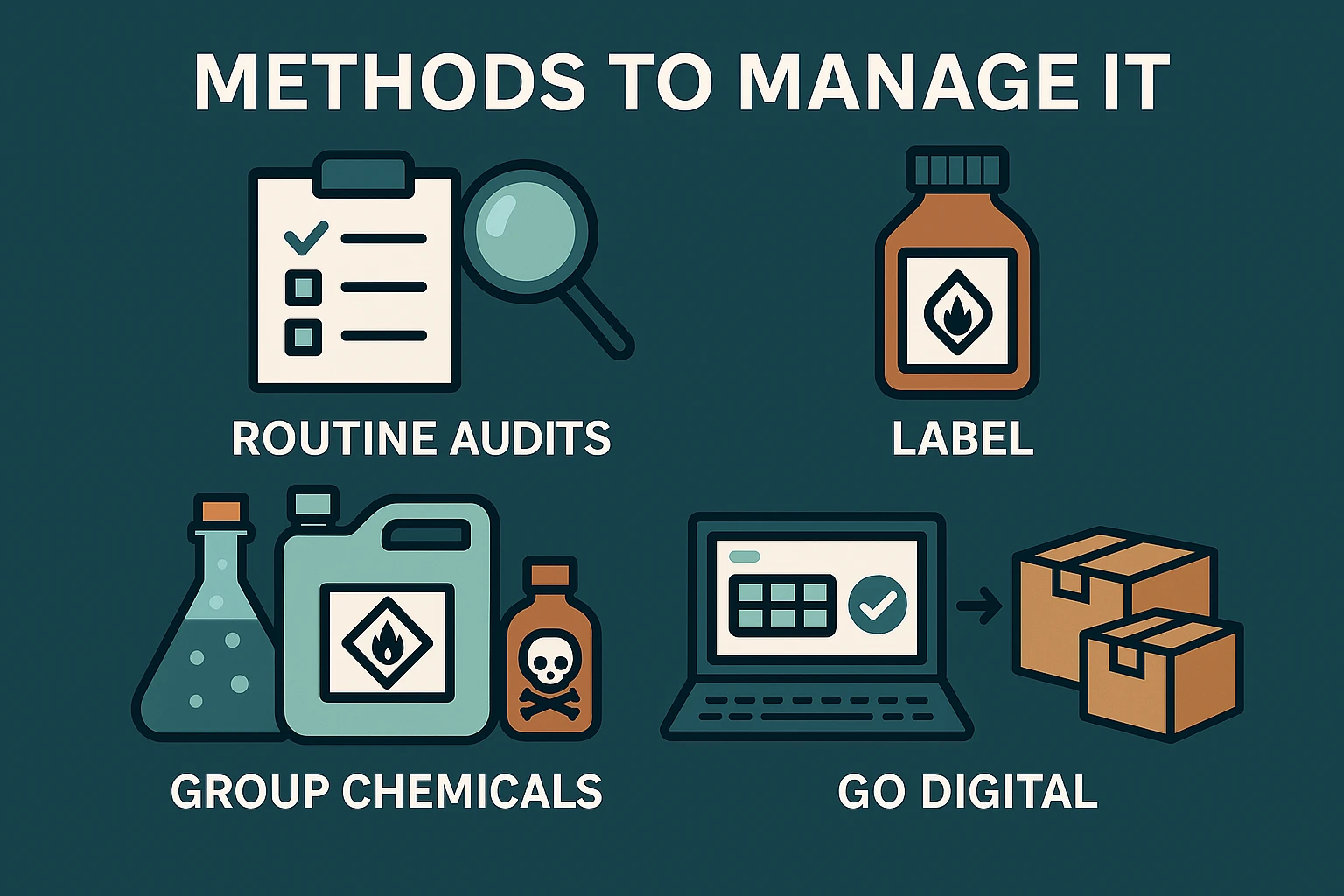
Methods to Manage It Without Losing Your Mind
There’s no single perfect way to manage chemical inventory, but there are smart methods that make the job easier and safer.
Run Routine Audits
Don’t wait for inspections to double-check your storage. Set a recurring schedule (monthly, quarterly, whatever makes sense) to verify what’s in stock, compare it to your records, and fix anything that’s outdated or mislabeled.
Label Like It Matters (Because It Does)
Every container should have a label that shows what it is, its concentration, hazard info, and when it was opened or received. No shortcuts here. Missing labels are how accidents start.
Group Chemicals by Compatibility
Acids and bases shouldn’t share a shelf. Neither should oxidizers and flammables. Organize by hazard class so you reduce the chance of dangerous reactions from accidental spills or leaks.
Go Digital if You Can
Spreadsheets work, but they can get messy fast. Inventory software helps track expiration dates, storage locations, usage patterns, and disposal timelines automatically. Bonus if it works with barcode scanners and mobile apps.
Use FIFO (First In, First Out)
Make sure older stock gets used first. This keeps your storage clean, prevents waste, and avoids unnecessary reordering of chemicals you already have.
Chemical Inventory in a University Setting
Higher education labs are one of the biggest users of chemical inventory systems. Why? Because there’s usually:
- A large number of labs across departments
- A rotating mix of students and researchers
- A mix of hazardous and non-hazardous substances
- Inspections from multiple regulatory bodies
In this environment, a centralized inventory system is essential. Not just for EH&S teams, but for lab supervisors, researchers, and even emergency responders who need to know what’s stored where, right now.
Many schools also use mobile tools for barcode scanning, talk-to-text inspection reports, and cloud-based storage of SDS documents. It’s all about saving time while keeping people safe.
What a Chemical Inventory Helps Prevent
Here’s what a well-managed inventory can help you avoid:
- Accidental mixing of incompatible substances
- Running out of critical reagents during an experiment
- Failing a regulatory audit
- Using expired or degraded materials
- Over ordering and budget waste
- Storage rooms filled with unlabeled or forgotten containers
- Safety incidents involving unknown or misused chemicals
It’s not about being perfect. It’s about being in control of your chemical environment.
Inventory as a Foundation for Safer Operations
Here’s the thing: chemical inventory management often feels like background work. It’s rarely the headline. But it quietly supports everything else – research, maintenance, compliance, budgeting, and emergency response.
If you don’t know what’s on your shelves, you’re guessing. And when it comes to hazardous substances, guessing is never a good plan.
When done right, chemical inventory doesn’t feel like another task. It becomes part of your safety culture. A tool that helps people do their jobs with fewer risks and less uncertainty.

How We Support Smarter Chemical Inventory Management
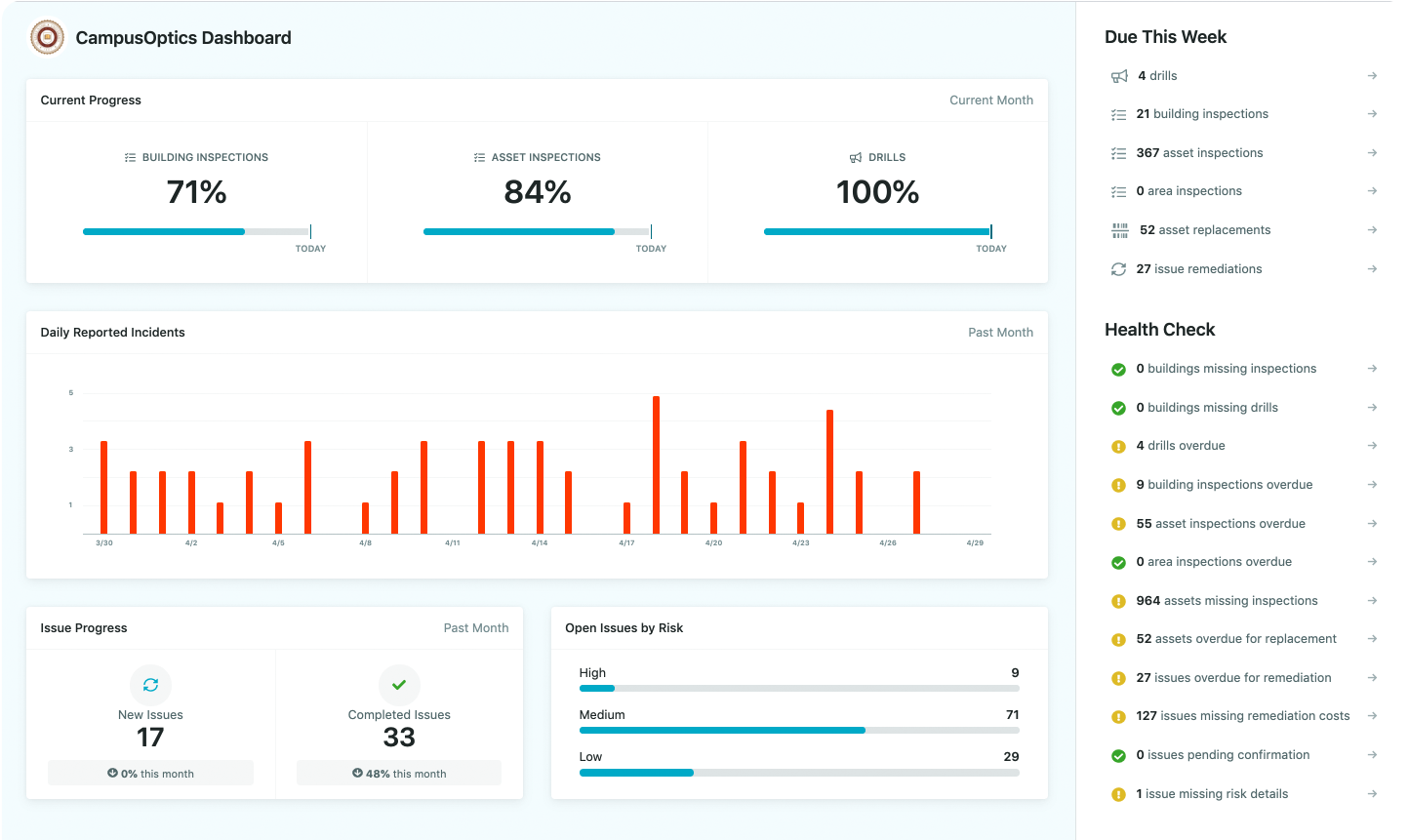
At CampusOptics, we’ve seen firsthand how hard it can be to manage chemical inventory across a university or college campus. It’s rarely just one person or one lab. You’re dealing with multiple departments, shared spaces, rotating staff, and different safety priorities. That’s why we built our platform with chemical inventory management. We wanted to make it easier for EH&S teams, researchers, and facilities staff to track what’s on hand, stay compliant, and respond quickly when something changes.
We designed our system specifically for higher education because campus safety has its own unique challenges. With mobile access, barcode scanning, and built-in support for things like Safety Data Sheets and inspection tracking, we help institutions ditch outdated spreadsheets and actually see the full picture of what’s stored where. Managing chemical inventory shouldn’t be a guessing game. We’re here to make it simpler, safer, and a whole lot more efficient for the people doing the work.
Wrapping It Up
Chemical inventory might not be the flashiest part of running a lab or managing campus safety, but it’s one of those quiet, foundational pieces that holds everything together. Without it, you’re in the dark. You’re making guesses about what’s on the shelf, what’s about to expire, and what’s safe to use. And in a space where even one mistake can lead to real consequences, that’s not a risk worth taking.
The good news is that managing it well doesn’t mean adding complexity. If anything, it’s about clearing out the noise, getting organized, and giving people the tools to do their jobs without second-guessing safety. Whether you’re responsible for one storage closet or dozens of research buildings, keeping tabs on your chemicals helps protect people, budgets, and peace of mind. And when the system works, it shows up in the details: fewer errors, better planning, and a stronger safety culture overall.
Frequently Asked Questions
What counts as a hazardous chemical that needs to be tracked?
If a chemical has a Safety Data Sheet or is classified as flammable, corrosive, toxic, or reactive, it’s usually considered hazardous. That includes lab reagents, cleaning agents, gases, and even oils used in equipment. Not every liquid or powder on a shelf qualifies, but if there’s a risk to people or the environment, it belongs in the inventory.
Do I need software to manage chemical inventory?
You don’t need software, but once your inventory grows beyond a few dozen items or spans multiple locations, digital tools make things easier. A good platform helps with tracking, alerts, reporting, and overall visibility. It also beats hunting through paper files when an auditor walks in or something needs quick disposal.
How often should we update our chemical inventory?
There’s no universal rule, but waiting a year between updates is usually too long. Monthly or quarterly reviews work well for most labs or departments. What matters most is consistency. If something new arrives or a bottle gets tossed, the system should reflect that pretty quickly.