Every organization needs someone who keeps an eye on safety, health, and environmental responsibilities. That’s where an EHS Director comes in. The title might sound a bit corporate, but the job itself is hands-on and critical. These professionals set the tone for how a company protects its people and the environment. They oversee everything from compliance and risk management to training and emergency planning. In short, the EHS Director is the person making sure that safety isn’t just a box to check but a part of everyday operations.
What Does an EHS Director Actually Do?
If you’ve ever wondered who’s behind the scenes making sure a company stays safe, healthy, and compliant, that’s usually the EHS Director. The title might sound formal, but the job is really about people. It’s about keeping workplaces safe, protecting the environment, and making sure everything runs smoothly when it comes to health and safety rules.
At its core, this role is about balance. An EHS Director has to think about both the big picture and the small details–everything from long-term sustainability goals to making sure the right safety labels are on the right containers. They’re the ones connecting leadership plans with what actually happens on the ground.

The Main Job of an EHS Director
An EHS Director wears a lot of hats, but the goal is simple: keep people safe, protect the environment, and make sure the company runs responsibly. The work shifts from planning and policy writing to field visits and problem-solving. Here’s a quick look at what that usually involves.
Creating and Updating Safety Programs
EHS Directors build safety programs that make sense in the real world, not just on paper. They make sure rules match current laws, review data when issues pop up, and adjust plans as needed.
- Write and update policies based on new regulations
- Review safety performance and fix weak spots
- Work with teams to make sure programs are practical and followed
Training and Awareness
Training is a big part of the job. The goal isn’t just to meet compliance standards but to help people stay confident and aware.
- Organize safety and emergency response training
- Keep records of who’s trained and what’s next
- Encourage open communication about safety concerns
Managing Risks and Incidents
A good EHS Director spots risks before they become problems. And when something does go wrong, they lead the investigation and focus on learning, not blame.
- Inspect workplaces and equipment for hazards
- Investigate incidents and find the root cause
- Track corrective actions until the issue is resolved
Working with Leadership
Safety has to start at the top. EHS Directors make sure leaders understand that safety isn’t just compliance–it’s part of company culture.
- Report to management on safety trends and needs
- Help leaders make informed, safe decisions
- Encourage departments to take ownership of their safety goals
What Kind of Person Fits This Role
Not everyone is cut out to be an EHS Director. The job calls for someone who’s just as comfortable talking to executives in a meeting as they are walking through a noisy factory floor. It takes a mix of technical knowledge, people skills, and a steady mindset.
Most EHS Directors come from backgrounds like environmental science, industrial hygiene, or safety engineering. They usually start in hands-on roles–doing inspections, running training sessions, or managing incidents–and move up over time. That experience gives them a practical sense of what works and what doesn’t.
Key traits for this role:
- Strong leadership and communication skills to get people on board with safety goals
- An eye for detail, because even small oversights can lead to big problems
- Calm under pressure, especially when responding to incidents or audits
- Business awareness, knowing how safety decisions connect to budgets, timelines, and operations
- Curiosity and adaptability, since safety regulations and technologies are always changing
A degree in environmental science, safety management, or a related field is pretty standard. Many EHS Directors also earn certifications like CSP (Certified Safety Professional) or CIH (Certified Industrial Hygienist). But beyond education, the job suits people who genuinely care about others and want to make workplaces safer and smarter–not just compliant.

How Technology Supports the EHS Director Role with CampusOptics
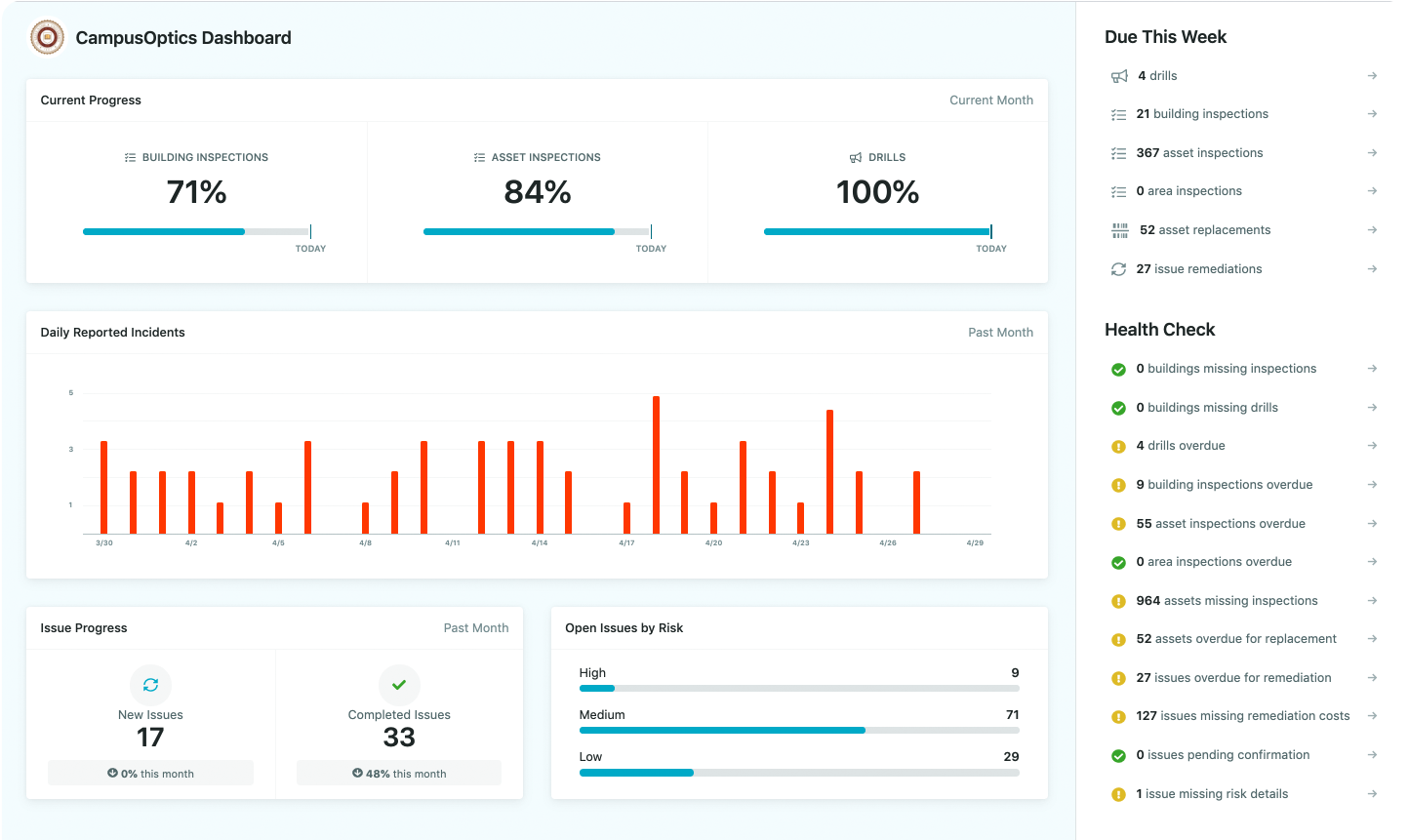
In our experience, one of the biggest challenges for any EHS Director is staying organized while juggling so many moving parts. Between inspections, reports, training, and compliance deadlines, it’s easy for information to get lost in spreadsheets or emails. That’s why technology plays such an important role in modern safety management.
At CampusOptics, we’ve seen firsthand how a single, connected platform can completely change how safety teams work. Our system was built specifically for higher education, where EHS responsibilities often spread across multiple departments. Instead of managing chemical inventories, emergency pre-plans, and incident reports in separate tools, everything lives in one place. With mobile access, EHS professionals can check data, log issues, or review inspections right from the field. It’s not about replacing people or processes–it’s about giving safety leaders the visibility and structure they need to focus on what really matters: protecting people and preventing risk.
Why This Role Matters
It’s easy to overlook the work of an EHS Director because, when they’re doing their job well, nothing dramatic happens. No accidents, no shutdowns, no headlines. But that’s exactly the point. Their success is often invisible because it shows up in what doesn’t go wrong. Behind the scenes, they’re constantly thinking ahead–spotting risks, tightening processes, and making sure safety is built into every part of the business.
The impact of this role reaches far beyond compliance. It’s about keeping people safe and giving them confidence that their workplace is looking out for them. That trust builds stronger teams and better performance. On a larger scale, it helps companies act responsibly toward the environment and the communities around them.
Why the EHS Director role really matters
- Protecting people: Preventing injuries, illnesses, and accidents isn’t just part of the job–it’s the heart of it.
- Avoiding legal trouble: Staying compliant with regulations helps avoid fines, lawsuits, and the reputational damage that can follow a single mistake.
- Reducing costs: Fewer accidents mean less downtime, lower insurance premiums, and fewer unexpected disruptions.
- Building trust: A company that genuinely prioritizes safety and sustainability earns respect from employees, clients, and the public.
A strong EHS Director turns safety from a checklist into a shared mindset. When people start to see safety as part of their daily routine instead of something they have to do, everything changes–from morale and productivity to how the company is perceived by the world.
The Challenges That Come With the Job
That said, it’s not a simple role. Being an EHS Director means constantly balancing what’s ideal with what’s realistic. Rules evolve, industries shift, and priorities compete for attention. You have to stay current with regulations while also managing people, systems, and budgets–all at once.
The biggest challenges EHS Directors face include:
- Managing limited resources: Safety programs can be expensive, and budgets don’t always keep up with the needs of growing organizations.
- Getting buy-in from leadership and staff: Convincing others that safety isn’t just a compliance issue but a core business value takes time and persistence.
- Balancing safety with productivity: There’s always pressure to move faster, produce more, or cut costs–but a good director knows where to draw the line.
- Navigating complex regulations: Environmental and safety laws can vary by state, industry, or even facility, making compliance a constant learning curve.
EHS Directors also face the ongoing challenge of culture change. Shifting how people think about safety takes patience. It means repeating the message, leading by example, and celebrating small wins until safety becomes second nature. The best leaders know it’s a long game–they stick with it because they’ve seen firsthand how one strong safety culture can transform an entire organization.
In short, the EHS Director’s job isn’t glamorous, but it’s one of the most meaningful positions in any company. It’s about taking responsibility for what matters most: people, the environment, and doing things the right way, even when it’s hard.

How to Become an EHS Director
If you’re thinking about a career in EHS, the path usually starts small. Most people begin in entry-level safety or environmental roles–jobs where you’re out in the field doing inspections, writing reports, and helping fix real issues. Over time, as you gain experience and confidence, you can move into management and eventually into a director-level position.
Steps to Get There
Get the right education
Most EHS Directors have a degree in environmental science, occupational health, or safety engineering. Some go further and earn a master’s, but what matters most is understanding both the science and the people’s side of safety.
Build hands-on experience
Try to work in different settings–manufacturing, construction, labs, or corporate offices. The more variety you have, the better you’ll understand how safety works in different environments.
Earn certifications
Credentials like CSP (Certified Safety Professional) or CIH (Certified Industrial Hygienist) can really help your career. They show employers that you’re serious and up to date on current standards.
Learn to lead
You’ll eventually be managing teams, budgets, and big projects, so leadership and communication skills are just as important as technical know-how.
Stay current
Laws, technology, and best practices in safety change fast. Keep learning, read updates, and connect with others in the field.
This is one of those careers where real-world experience counts more than anything else. People tend to stay in EHS for the long haul because the work feels meaningful–it’s about making sure others get home safe at the end of the day.
Looking Ahead
The role of an EHS Director isn’t what it used to be. It’s no longer only about compliance checklists or paperwork. Today, it’s tied to much bigger ideas like sustainability, employee well-being, and company culture. With new tools like AI, sensors, and real-time data dashboards, safety programs are becoming more proactive. Instead of reacting after an accident, leaders can spot patterns and prevent incidents before they happen.
What’s Next for EHS Directors
- Sustainability and climate impact, helping organizations reduce their footprint
- Data and analytics, using technology to predict and manage risks
- Employee wellness and mental health, expanding the definition of “safety” beyond physical hazards
- Global safety standards, especially for companies operating across multiple countries
It’s a big job with a lot of responsibility, but also one with real purpose. EHS Directors don’t just manage compliance–they shape safer, more sustainable workplaces and help build a culture where people genuinely care about doing things the right way.
Conclusion
When you really look at it, an EHS Director’s job is about much more than policies or compliance checklists. It’s about people–keeping them safe, healthy, and able to do their work without unnecessary risk. It’s also about protecting the environment and helping companies operate responsibly in a world that’s paying closer attention to sustainability every year.
The best EHS Directors know how to balance structure with empathy. They can talk about regulations one minute and listen to a worker’s concern the next. They turn safety from a rulebook into a shared mindset that shapes how everyone works. It’s not an easy job–there are long days, complex challenges, and constant change–but it’s one that has a real impact.
At the end of the day, the EHS Director is the quiet force behind safer workplaces and smarter business practices. Their work might not always make headlines, but it’s what helps people go home safe, keeps companies running smoothly, and makes a lasting difference for both employees and the planet.
Frequently Asked Questions (FAQ)
1. What does an EHS Director do on a daily basis?
An EHS Director oversees all aspects of environmental health and safety within an organization. Their day can include reviewing safety reports, planning training sessions, analyzing risk assessments, meeting with department heads, and ensuring the company stays compliant with local and federal regulations.
2. What’s the difference between an EHS Manager and an EHS Director?
The main difference is scope and responsibility. An EHS Manager usually handles specific programs or departments, while an EHS Director leads the entire EHS strategy, supervises managers, and often reports directly to senior leadership or the executive team.
3. What qualifications are needed to become an EHS Director?
Most EHS Directors have a degree in environmental science, safety engineering, or occupational health. Many also hold certifications like CSP (Certified Safety Professional) or CIH (Certified Industrial Hygienist). Leadership experience and strong communication skills are essential too.
4. Why is the role of an EHS Director so important?
Because they help prevent accidents, protect employees, and ensure compliance with environmental and safety laws. Their work reduces risk, saves money, and builds a stronger safety culture within the organization.
5. What industries employ EHS Directors?
EHS Directors work in nearly every industry, including manufacturing, construction, healthcare, education, energy, and research. Any organization that handles people, equipment, or hazardous materials benefits from having an EHS leader.
6. How does technology like CampusOptics help EHS Directors?
Platforms like CampusOptics make it easier for EHS leaders to manage inspections, training, and compliance in one place. Instead of tracking everything manually, they can use mobile tools, dashboards, and automated workflows to stay on top of safety tasks and see what needs attention in real time.