If you’ve ever wondered whether Environmental Health and Safety is a good career, you’re not alone. More people are paying attention to how companies protect their employees and the planet, and that’s exactly where EHS professionals come in. It’s a field that blends purpose with practicality – you’re solving real problems, not just sitting behind a desk. But beyond the feel-good factor, EHS is also growing fast, pays well, and offers opportunities across nearly every industry.
What Exactly Is EHS?
EHS stands for Environmental Health and Safety. It’s a broad professional field focused on protecting people, workplaces, and the environment from harm. EHS professionals manage safety systems, handle incident investigations, monitor compliance, and promote sustainable operations.
Depending on where you work, your day might include checking chemical inventories in a lab, updating risk assessments at a construction site, or helping a corporation cut its carbon emissions. The goal is simple: prevent accidents, protect public health, and reduce environmental impact.
It’s one of those behind-the-scenes professions that quietly keep things running safely in hospitals, factories, offices, and universities.
Why EHS Matters More Than Ever
A few decades ago, “safety officer” might have sounded like a checklist job. Today, it’s strategic. Organizations now view EHS as essential to business continuity, employee wellbeing, and brand reputation.
From global health crises to climate change, the demand for professionals who can manage risk and build safer systems is growing fast. The International Labor Organization reports that nearly 3 million people die each year from work-related illnesses or accidents. Those numbers highlight just how important EHS work is, and why governments and corporations continue to strengthen safety standards.
EHS professionals sit at the intersection of business, science, and human welfare. They help companies navigate strict environmental laws, improve workplace conditions, and adopt technologies that prevent harm before it happens.
The Job Market: Demand Keeps Climbing
According to the U.S. Bureau of Labor Statistics, occupational health and safety specialists are projected to see about 12% job growth from 2024 to 2034 – a much faster rate than the average for most careers. Data from EHS Careers 2026 Salary Guide confirms that there are tens of thousands of openings globally, from entry-level safety coordinators to senior directors overseeing multinational programs.
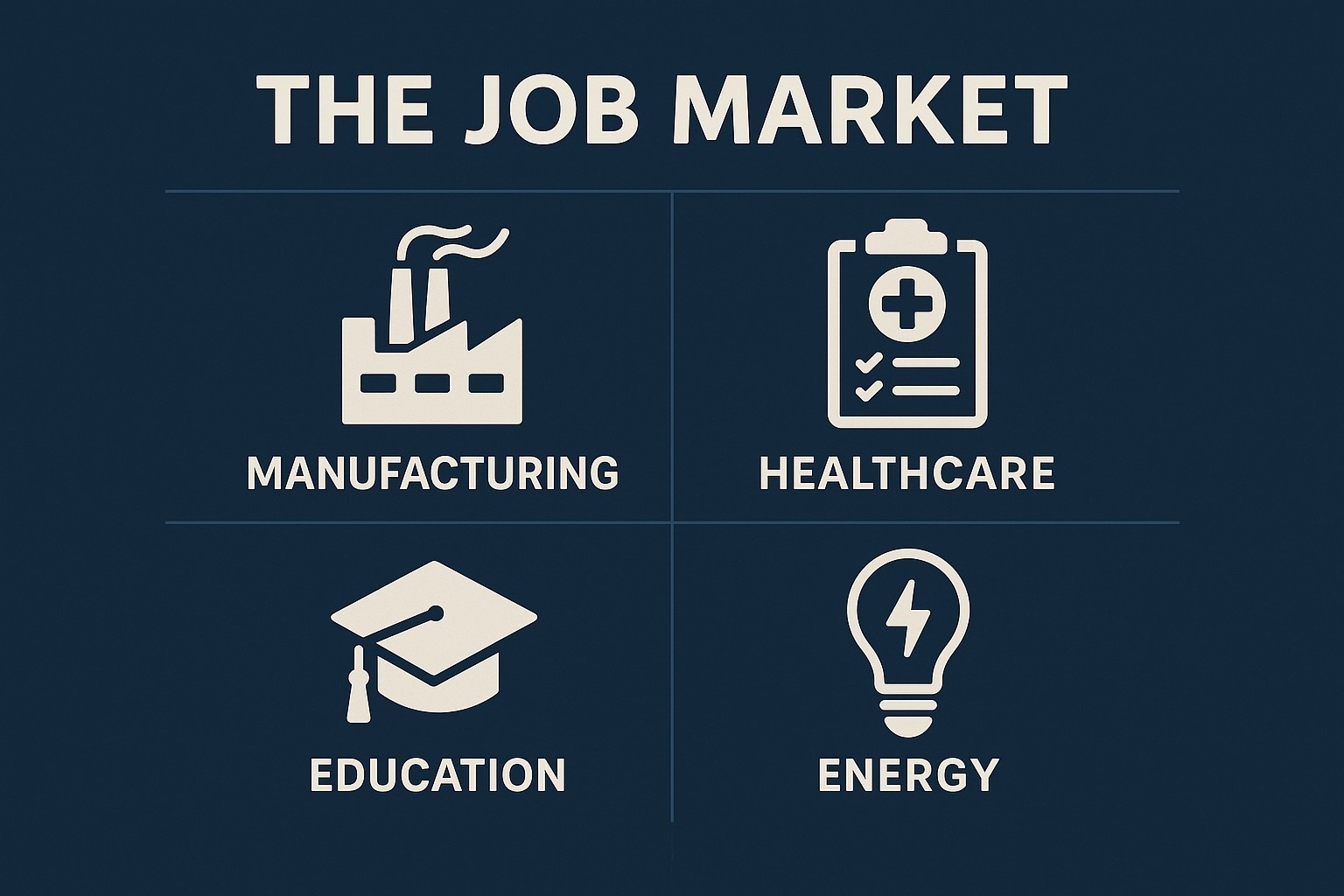
EHS roles exist across almost every industry, including:
- Manufacturing and construction
- Healthcare and pharmaceuticals
- Education and research institutions
- Energy, oil, and gas
- IT, logistics, and corporate environments
Wherever there are people, equipment, and potential hazards, there’s a need for EHS expertise.
This versatility makes it a stable and flexible career path. You can work locally, travel internationally, or even shift industries without starting over.

Supporting the Next Generation of EHS Leaders at CampusOptics
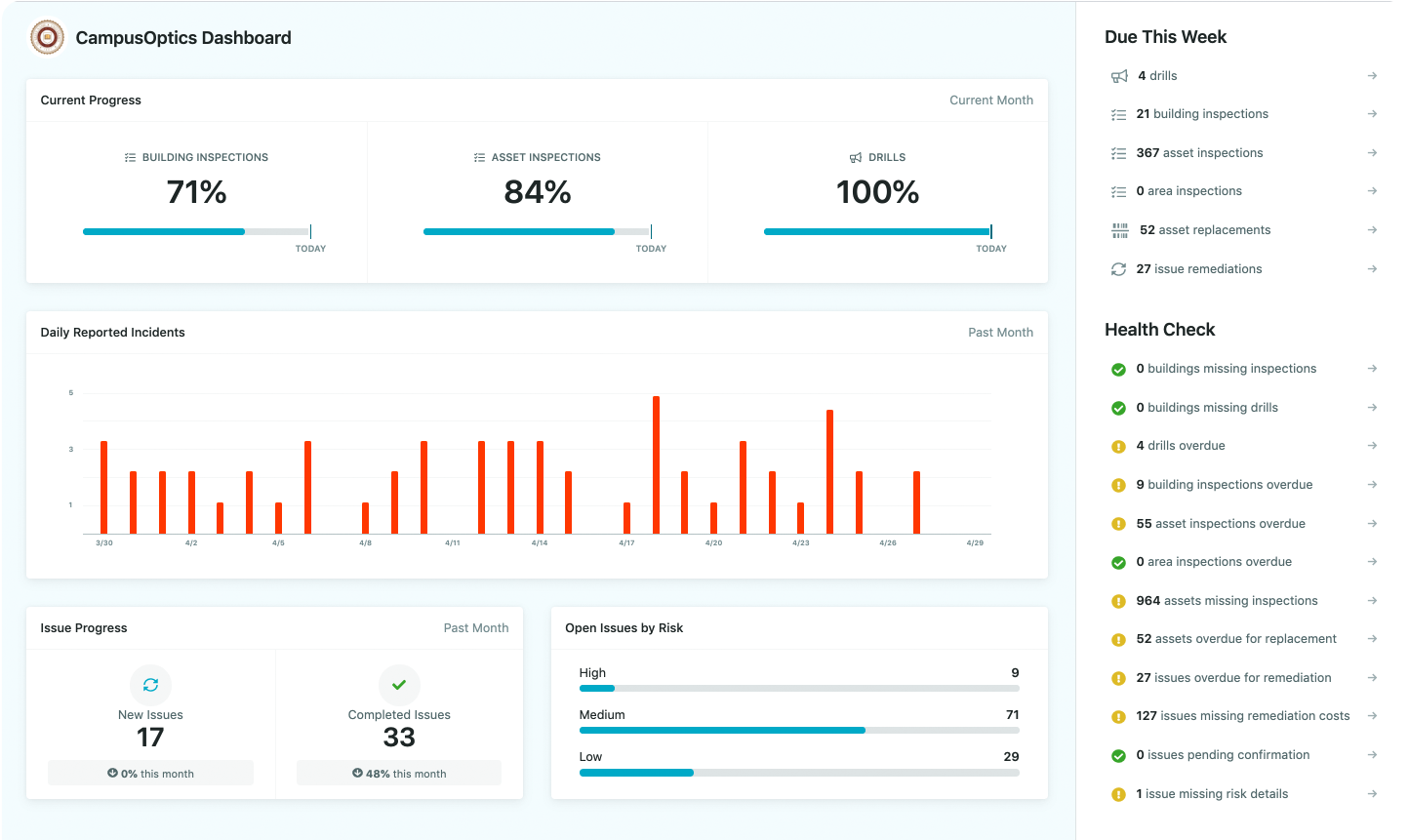
At CampusOptics, we’ve spent years talking to the people who live and breathe Environmental Health and Safety every day. Most of them don’t sit behind desks or work fixed hours. They’re walking buildings, checking labs, reviewing permits, or responding to a call about a spill or inspection. That’s why we built our platform the way we did – to make their jobs easier, safer, and more connected.
We believe EHS is more than compliance; it’s culture. Every university, research center, or administrative office has its own rhythm, and safety has to move in sync with it. Our goal is to help campus safety teams do what they do best – protect people and property, without getting buried in paperwork or fragmented systems.
Through one centralized platform, we bring together everything EHS professionals need: chemical inventory tracking, hazardous waste management, inspection tools, emergency planning, and training dashboards. Whether you’re updating a compliance calendar or logging an incident report, you can do it from your phone in seconds.
What makes us proud isn’t just the technology, but the impact. Every time a campus uses CampusOptics to prevent a lab accident, speed up a response, or share an emergency plan, it reinforces what makes this field so meaningful. For us, EHS isn’t just a career – it’s a commitment to creating safer environments for students, staff, and the communities they serve.
What Makes It a Rewarding Career
There’s something deeply satisfying about work that protects lives and the planet. For many professionals, that’s what keeps them in EHS for decades.
1. You See Real Impact
EHS isn’t theoretical. The results of your work show up in fewer injuries, safer processes, and cleaner environments. You can see the difference your programs make every single day.
2. Purpose Meets Paycheck
Unlike some “helping professions” that sacrifice financial stability, EHS offers both meaning and solid pay. Entry-level positions typically start around $55,000-$70,000, and experienced managers or directors can make well over $120,000 per year, depending on location and sector.
3. Global Relevance
Safety and sustainability are universal. Whether you work in the U.S., Europe, or Asia-Pacific, the principles are the same. Certifications and best practices often transfer easily across borders, which is why many EHS specialists use their expertise to work abroad.
4. A Career That Keeps You Learning
New technologies and evolving regulations mean EHS professionals never stop developing. From AI-driven hazard detection systems to advanced environmental analytics, the field rewards curiosity and adaptability.
The Human Side of the Job
One of the most refreshing things about EHS is how human it is. The role isn’t just about policies or equipment – it’s about people.
You’ll talk to everyone from executives to maintenance crews, learning how to communicate serious information in ways that resonate. Successful EHS specialists are often great listeners, patient teachers, and calm problem solvers.
Of course, it can be challenging. Convincing leadership to invest in preventive measures or dealing with human error requires diplomacy and persistence. But most professionals describe the work as genuinely fulfilling because it blends technical skill with empathy and leadership.
What Kind of Person Succeeds in EHS
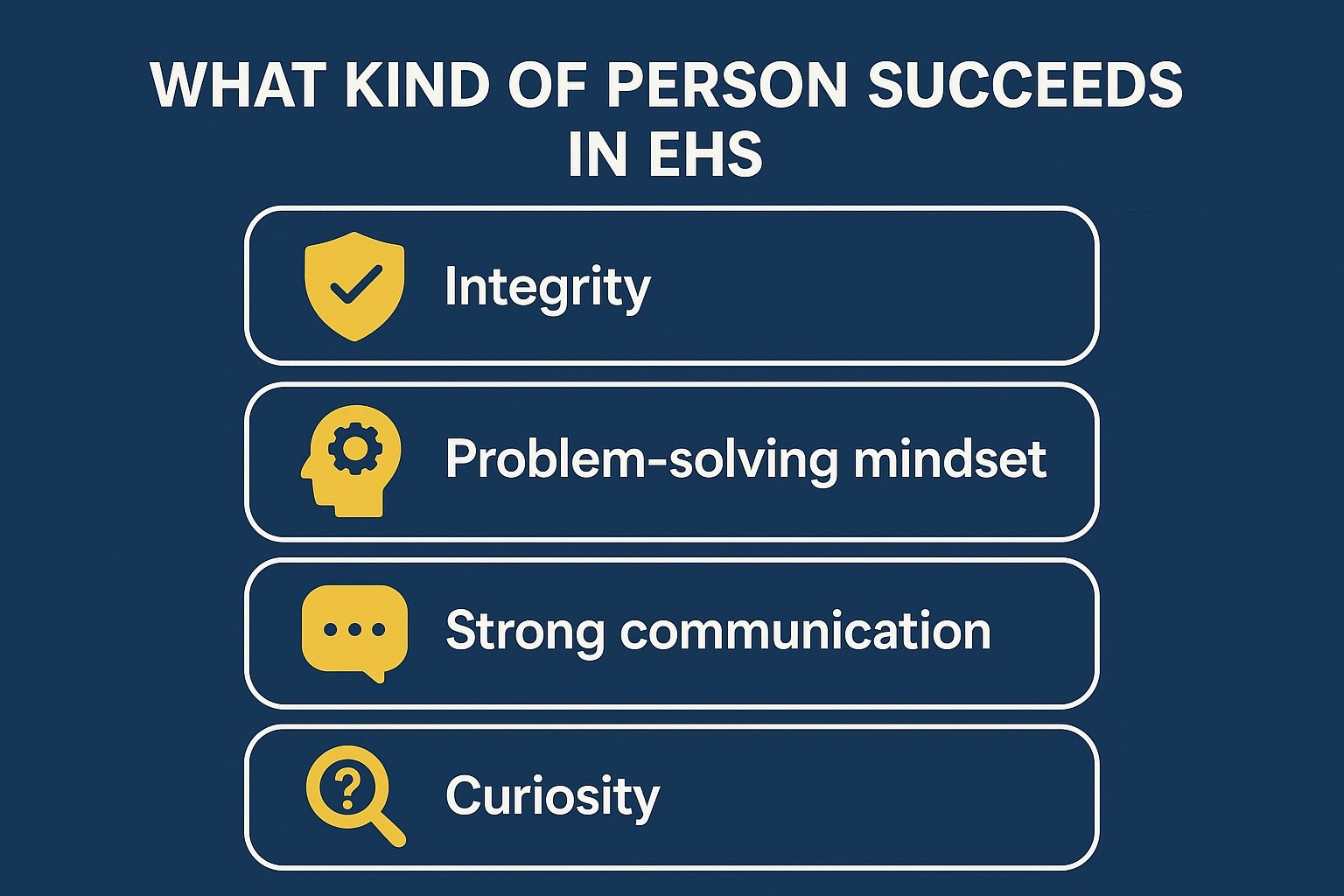
You don’t need to be a scientist or engineer to work in EHS, but a few traits help you thrive:
- Integrity and honesty: You’ll often be the person pointing out uncomfortable truths.
- Problem-solving mindset: EHS is about identifying risks and finding practical solutions fast.
- Strong communication: You have to translate complex regulations into clear, everyday actions.
- Curiosity: The field constantly changes, and those who stay curious grow quickly.
- Resilience: Accidents, audits, and emergencies can be stressful – staying level-headed is key.
If you’re someone who likes meaningful work and real-world problem solving, EHS can be incredibly rewarding.
Education and Qualifications
While entry-level roles may only require a bachelor’s degree in a relevant field such as environmental science, engineering, or occupational health, formal education is just the start. Continuous learning defines the profession. Many EHS specialists choose to pursue additional credentials, including certifications like the Certified Environmental and Safety Compliance Officer (CESCO), Registered Environmental Manager (REM), Certified Safety Professional (CSP), and internationally recognized programs such as NEBOSH or IOSH.
Courses from institutions like UniAthena, Cambridge International Qualifications, and Coursera also provide strong starting points for newcomers. These programs are typically flexible, short in duration, and affordable, making them ideal for professionals from other industries who want to transition into EHS without committing to full-time study.
Growth Opportunities and Career Paths
EHS careers don’t follow a single route. You can start in a technical role and move into management or specialize in niche areas like sustainability, industrial hygiene, or risk analysis.
A typical progression might look like this:
- EHS Technician or Coordinator: Handles inspections, data collection, and reporting.
- EHS Specialist or Analyst: Develops safety programs and conducts audits.
- EHS Manager: Oversees teams, policies, and compliance systems.
- Director or VP of EHS: Shapes strategy and aligns EHS goals with business objectives.
There’s also room to branch out. Many EHS professionals transition into sustainability consulting, operations leadership, or ESG compliance.
Challenges You Should Know About
No job is perfect, and EHS comes with its own set of challenges. It’s a career that demands focus, patience, and adaptability. The work is meaningful, but it’s not without pressure. Here are a few realities worth understanding before you dive in.
- Regulations keep changing: Staying compliant is never a one-time task. Safety laws, environmental standards, and reporting requirements evolve constantly. EHS professionals need to keep up with new regulations, attend training sessions, and interpret policies for their teams.
- High responsibility: When you work in EHS, you’re not just managing paperwork, you’re accountable for people’s lives and the organization’s environmental footprint. Decisions you make can prevent injuries, avoid fines, and save lives. That responsibility is both rewarding and heavy at times.
- Convincing others: Even when you know the right safety steps to take, not everyone will immediately agree. Building a safety culture often means influencing leadership, explaining compliance costs, and helping staff see why prevention matters more than quick fixes.
- Emotional load: Some days are tough. Investigating accidents, handling emergencies, or responding to incidents can be emotionally draining. The best professionals learn to process these moments, support their teams, and move forward with lessons learned.
Despite these challenges, most EHS specialists say the rewards far outweigh the stress. There’s a deep sense of pride that comes with knowing your work genuinely protects people, supports sustainability, and makes a lasting impact on how organizations operate.
Future Outlook: Stability and Purpose
The future for EHS looks bright. With growing environmental challenges, stricter workplace laws, and rising ESG expectations, companies need professionals who can navigate complex safety and sustainability issues.
Demand is especially strong in sectors like renewable energy, healthcare, construction, and tech manufacturing. As automation and AI reshape industries, the human oversight provided by EHS professionals remains indispensable.
In short: EHS is one of those rare careers that’s both future-proof and meaningful. It combines stability, variety, and purpose in ways few other professions do.
Final Thoughts
So, is EHS a good career? Absolutely, but not because it’s trendy or lucrative (though it can be both). It’s good because it matters. It’s for people who care about doing work that protects lives, prevents harm, and improves the way organizations operate.
If you’re curious, empathetic, and driven by purpose, EHS isn’t just a good career. It’s a life-long calling that keeps you learning, growing, and making a difference every single day.
FAQ
What does an EHS professional actually do?
EHS professionals focus on keeping people safe, protecting the environment, and ensuring that organizations follow health and safety regulations. They conduct risk assessments, develop safety programs, manage environmental compliance, and respond to incidents when things go wrong. Their work bridges the gap between business operations, employee wellbeing, and sustainability.
Do I need a specific degree to start a career in EHS?
Most EHS specialists start with a bachelor’s degree in environmental science, engineering, occupational health, or a related field. However, many people enter the profession from other backgrounds through certifications and short courses. Continuous learning is key, and programs like NEBOSH, IOSH, or certifications such as CESCO and CEHSS can make you more competitive.
Is EHS a high-paying job?
Yes, EHS careers typically pay well. Entry-level salaries often start around $55,000 to $70,000 per year, while mid-career professionals can earn $80,000 to $100,000. Senior managers and directors frequently make between $120,000 and $150,000, depending on their experience, industry, and region.
What industries hire EHS professionals?
Almost every industry needs EHS expertise. The most common sectors include construction, manufacturing, healthcare, education, energy, and technology. Even corporate offices and research institutions hire EHS specialists to handle compliance, sustainability, and workplace safety programs.
Is EHS a stressful career?
Like any role that involves responsibility for safety, EHS can be demanding. Regulations change often, emergencies happen, and convincing others to follow procedures can be challenging. But for most professionals, the rewards outweigh the stress. The knowledge that your work genuinely protects people and improves workplaces brings strong purpose and job satisfaction.