Every workplace, from universities to hospitals, has someone quietly making sure things don’t go wrong. They’re the ones who notice what others miss, who keep people safe without making it feel like a burden. That person is often an Environmental, Health, and Safety (EHS) Specialist. It’s a job that blends science, responsibility, and real-world impact. An EHS specialist helps companies protect employees, the public, and the planet. It’s not about paperwork or ticking boxes; it’s about preventing harm before it happens. Let’s look closer at what this role involves, the skills it takes, and why it’s become so essential today.
Understanding EHS: More Than Just Safety Rules
EHS stands for Environmental, Health, and Safety. It’s an integrated approach that ensures workplaces protect both people and the environment while maintaining compliance with regulations.
- Environmental involves reducing pollution, managing waste, and keeping the company’s ecological footprint in check.
- Health focuses on preventing illness and promoting well-being, not just treating problems when they appear.
- Safety means protecting employees and the public from injury, accidents, and exposure to hazards.
EHS specialists work at the intersection of these three areas. Their job is to make sure everything runs smoothly and responsibly, whether in a hospital, factory, or construction site.
What Does an EHS Specialist Actually Do?
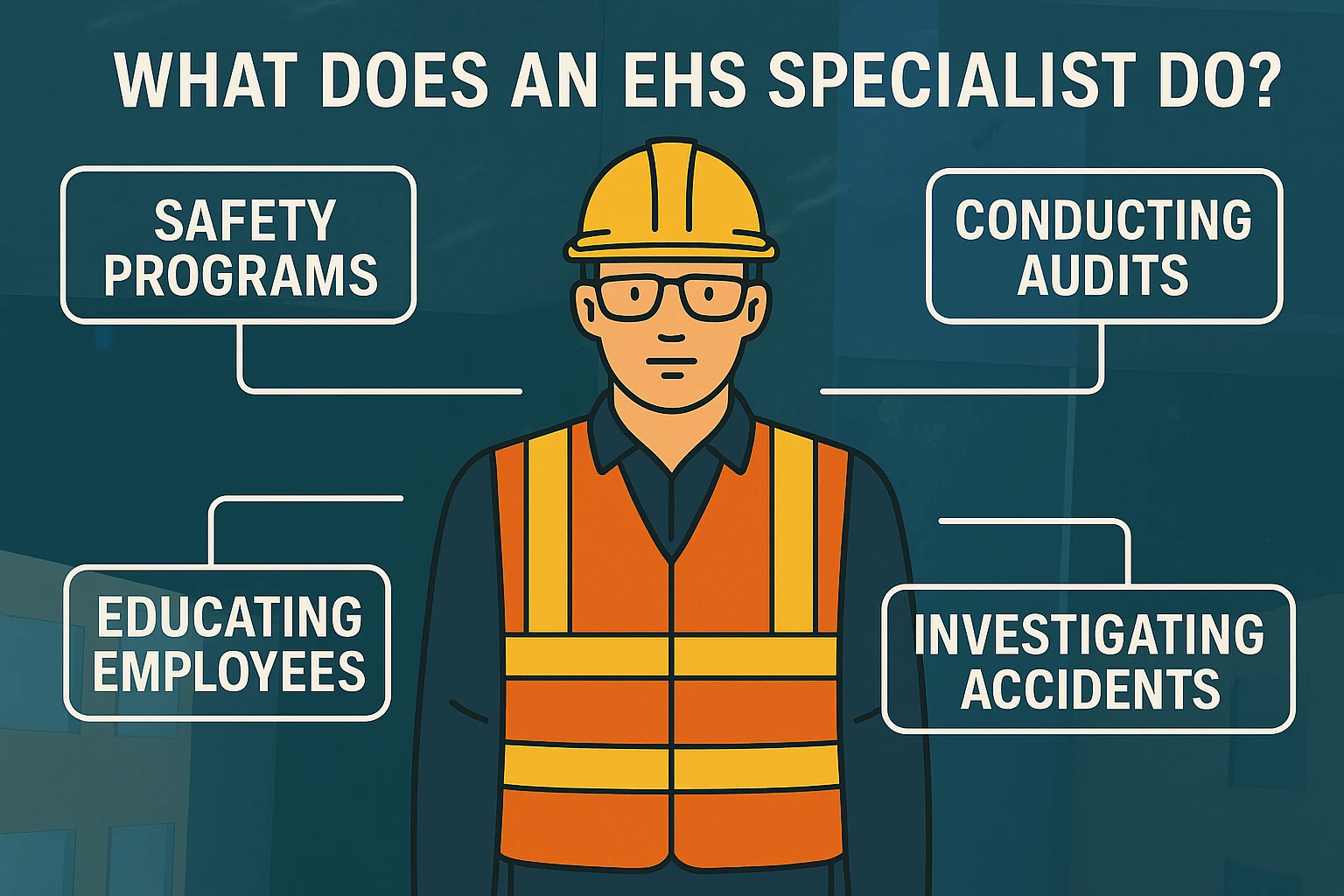
The day-to-day work of an EHS specialist is far from routine. Depending on the industry, they might be inspecting a plant one day, writing safety policies the next, and leading emergency drills after that. But at the core, the responsibilities generally fall into a few main categories:
1. Developing and Implementing Safety Programs
An EHS specialist creates safety procedures and guidelines that fit the specific operations of a company. These programs outline how to handle chemicals, operate machinery, respond to emergencies, or dispose of waste properly.
They also make sure these programs align with local and international standards like OSHA (Occupational Safety and Health Administration), EPA (Environmental Protection Agency), or ISO safety frameworks.
2. Conducting Audits and Risk Assessments
Regular inspections and audits are a big part of the job. Specialists evaluate whether the workplace meets safety standards, identify potential risks, and recommend solutions before problems escalate.
For instance, in a manufacturing setting, they might review noise levels, air quality, or ergonomics. In construction, they check scaffolding, equipment, and personal protective gear.
3. Training and Educating Employees
EHS specialists spend a lot of time helping others understand the importance of safety. They design and lead training sessions that teach workers how to recognize hazards, respond to emergencies, and follow regulations.
Good training isn’t just about slides and checklists. The best specialists turn it into something practical, like showing workers how to spot issues in real scenarios.
4. Investigating Accidents and Incidents
When something goes wrong, the EHS specialist is often the one who steps in to figure out why. They analyze the incident, gather data, interview witnesses, and identify root causes.
The goal isn’t to assign blame but to prevent future issues. After every incident, they develop corrective actions to ensure similar events don’t happen again.
5. Managing Regulatory Compliance
Every country and industry has its own safety regulations, and it’s the EHS specialist’s job to stay up to date with them. They monitor new laws, handle permits, prepare documentation, and make sure audits go smoothly.
Compliance work may sound tedious, but it’s what keeps companies from facing penalties and reputational damage.

Why EHS Specialists Are Essential in Higher Education
Universities and colleges are unique. They combine laboratories, dorms, classrooms, clinics, machine shops and offices – all in one place. That complexity makes safety management incredibly challenging.
EHS specialists are at the heart of keeping it all running safely. They understand the nuances of handling chemicals in research labs, coordinating fire drills in residence halls, and maintaining transparency across departments that often use different systems.
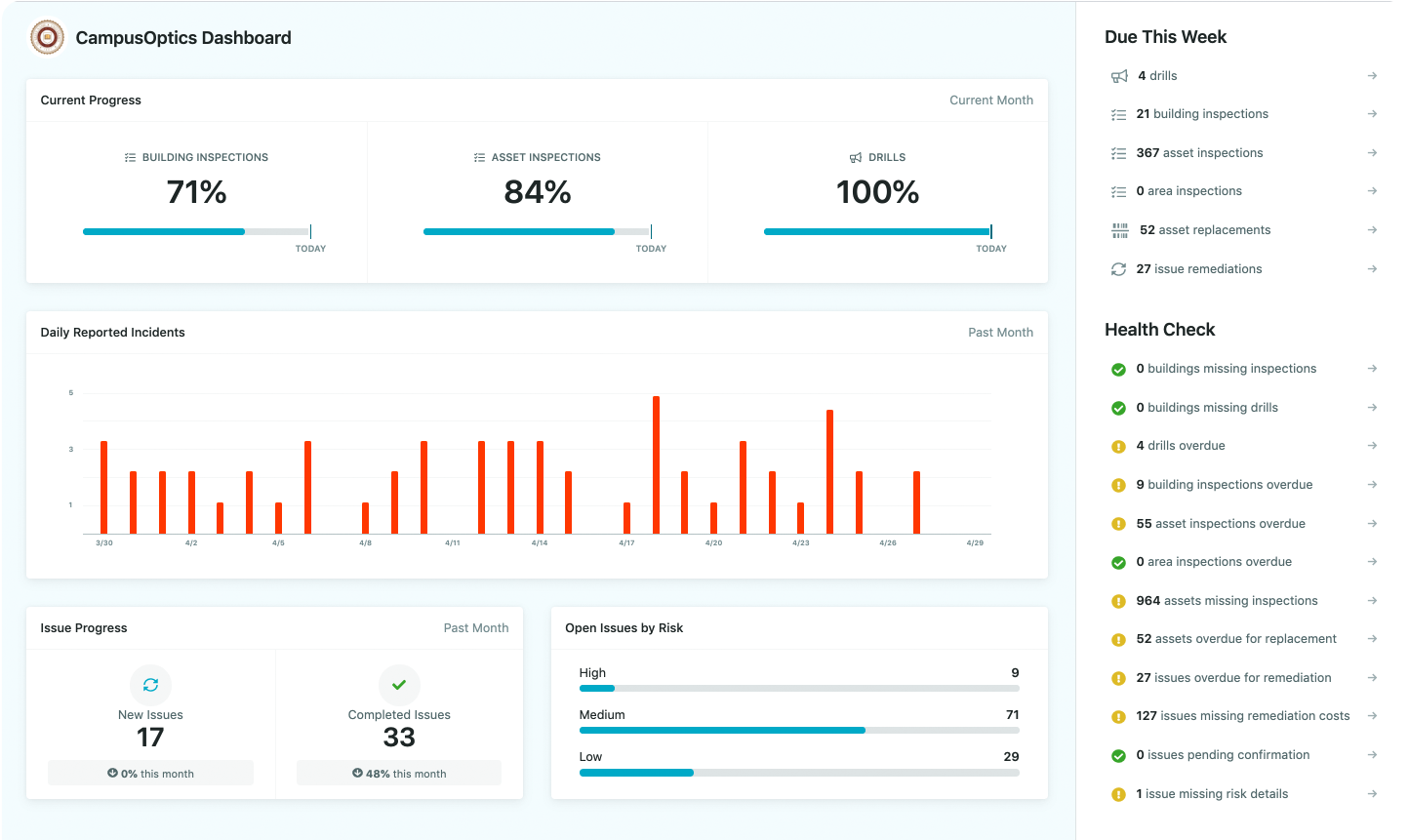
But here’s the reality we’ve seen firsthand: many institutions still rely on spreadsheets, paper forms, or disconnected systems to manage it all. This patchwork approach can hide risks instead of preventing them. That’s exactly why we built CampusOptics – to help safety professionals replace those outdated tools with one connected, transparent platform.
How We Support EHS Specialists at CampusOptics
Our mission grew from something deeply personal. One of our founders lost three friends in a campus fire, an event that changed his life and inspired the creation of CampusOptics. Since then, our team has been dedicated to helping educational institutions prevent tragedies like that from happening again.
We’ve built our platform specifically for higher education because campus safety isn’t the same as workplace safety in other industries. Every university has different systems, departments, and data, and we believe technology should bring them together, not separate them.
Here’s how our platform supports EHS specialists day to day:
- Comprehensive visibility: All EHS data in one place, accessible across departments.
- Automated compliance tracking: From chemical inventory to permit renewals, everything is organized and easy to manage.
- Incident and issue management: Report, route, and resolve safety issues without losing track of follow-up actions.
- Safety training and reminders: Assign, track, and verify completion through one dashboard.
- Emergency pre-plans: Keep all building data and contacts ready in case of a crisis.
- Mobile flexibility: Conduct inspections, access reports, or log issues right from the field.
With tools like these, EHS specialists can spend less time chasing paperwork and more time preventing problems.
The Skills That Make an EHS Specialist Effective
Technical knowledge is only part of the equation. Successful EHS specialists also bring a mix of analytical, leadership, and interpersonal skills.
Here are some of the most valuable ones:
- Risk assessment: The ability to analyze situations and spot potential hazards before they cause harm.
- Regulatory knowledge: Familiarity with local, national, and international safety standards.
- Communication: The capacity to translate complex safety requirements into simple, actionable instructions.
- Attention to detail: Small oversights can lead to big problems.
- Problem-solving: Turning audit findings or incidents into clear, effective improvement plans.
- Leadership: Inspiring others to take safety seriously, not just comply out of obligation.
- Emergency response skills: Many specialists are trained in CPR, first aid, and crisis management.
It’s also worth mentioning empathy. The most respected EHS professionals genuinely care about the people they protect, which makes them trusted voices in their organizations.
Education and Certifications
Most EHS specialists hold at least a bachelor’s degree in a related field such as:
- Environmental Health and Safety
- Occupational Health
- Industrial Hygiene
- Environmental Science
- Engineering
While formal education lays the groundwork, certifications help professionals stand out. Common credentials include:
- CSP (Certified Safety Professional)
- CIH (Certified Industrial Hygienist)
- NEBOSH Certification
- OSHA Safety Certification
- ISO 45001 Lead Auditor Certification
Many specialists also pursue advanced degrees or continuing education to stay current with new

Career Path and Growth Opportunities
Starting Out in EHS
For many professionals, the journey into EHS begins in entry-level positions such as safety coordinator or assistant. These roles provide a close-up look at how safety systems actually function — conducting field inspections, maintaining reports, and assisting with training sessions. It’s the stage where you learn how regulations translate into real-world actions and where the balance between compliance and practicality becomes clear. This hands-on experience helps form a strong foundation for advancing into leadership and strategy-focused roles later on.
Moving Into Leadership
As professionals gain experience, they often move into positions with greater responsibility, such as EHS specialist, senior safety manager, or EHS director. Each step up the ladder involves a wider scope of influence – managing entire programs, developing safety policies, or guiding multiple departments through audits and compliance reviews. Some choose to pivot into corporate sustainability roles, integrating environmental and safety objectives under one strategy. Others find their niche in consulting, advising different organizations on regulatory requirements, risk assessment, and sustainable operations.
Long-Term Outlook and Salary Potential
The demand for skilled EHS specialists continues to grow as organizations put more focus on employee well-being, environmental responsibility, and transparent operations. According to the U.S. Bureau of Labor Statistics, the field is expected to grow about 6 percent from 2022 to 2032, faster than most professions. Salaries reflect this upward trend – the average annual pay for an EHS specialist sits around $83,000, with higher earnings for senior positions or consultants. Beyond the numbers, though, the real reward lies in knowing that your work protects people, strengthens communities, and helps build safer, more sustainable workplaces.
Challenges EHS Specialists Face
Like any vital profession, being an EHS specialist comes with its share of challenges. Regulations and standards are constantly evolving, and what’s compliant today may not meet tomorrow’s requirements. Specialists must stay updated on new laws and guidelines, which can differ not only from country to country but even between regions within the same nation. This constant need to adapt keeps the work dynamic but also demands sharp focus and continuous learning.
Another major challenge lies in balancing compliance with business realities. Companies often face tight deadlines, limited budgets, or competing priorities, and safety initiatives can sometimes be seen as slowing things down. EHS professionals need to navigate these pressures tactfully, finding practical ways to maintain high standards without disrupting operations. This means being persuasive, data-driven, and able to communicate the long-term value of proactive safety management.
Some of the most common challenges EHS specialists face include:
- Constantly changing regulations: Keeping up with local, national, and international safety and environmental standards.
- Business constraints: Balancing compliance with productivity goals, budget limitations, and tight timelines.
- Building a safety culture: Encouraging employees and leadership to treat safety as a shared responsibility.
- Administrative overload: Managing inspections, audits, and reports while staying proactive about prevention.
- Incident follow-up: Investigating accidents, implementing corrective actions, and ensuring accountability.
Despite these challenges, most professionals find the work deeply rewarding. They can see the real-world impact of their efforts – fewer injuries, safer communities, and healthier workplaces. It’s a career where every improvement makes a visible difference in people’s lives and the environment.
How to Know If This Career Is Right for You
If you’re the kind of person who enjoys solving problems, values structure, and cares deeply about people’s well-being, the EHS field might feel like a natural fit. It’s a career that blends analytical thinking with genuine empathy – a mix of technical precision and human understanding. The work can shift from desk-based planning to on-site inspections in a single day, so adaptability and curiosity go a long way. EHS specialists often thrive in roles where they can see the direct results of their actions, whether it’s preventing an accident, improving air quality, or helping an organization meet sustainability goals.
You’re likely well suited for this path if you tend to notice small details others miss and find satisfaction in keeping things organized, safe, and efficient. It also helps if you enjoy collaborating with different types of people: from technicians and researchers to executives and maintenance crews. The role demands accountability, calm decision-making under pressure, and a strong sense of purpose. Above all, it’s a career for those who want to make a real difference – protecting lives, improving workplaces, and shaping a safer, more sustainable future.
The Bigger Picture: EHS as a Cornerstone of Responsible Business
The EHS field is not just about preventing accidents. It’s about building cultures where safety and sustainability become second nature.
In an age where environmental and social responsibility shape public perception, the EHS specialist plays a crucial role in bridging business goals with ethical operations. They’re not just compliance officers; they’re advocates for safer, smarter, and more humane workplaces.
Companies that invest in strong EHS programs often see long-term benefits: fewer injuries, higher employee satisfaction, lower insurance costs, and stronger reputations.
Final Thoughts
An EHS specialist is much more than a safety monitor. They’re educators, analysts, and leaders who help organizations grow responsibly. The job demands both technical expertise and human understanding.
If you’re drawn to meaningful work that blends science, people, and purpose, this could be one of the most fulfilling careers out there. And as industries evolve toward cleaner, safer, and more sustainable practices, EHS specialists will continue to be at the heart of that progress.
Frequently Asked Questions (FAQ)
What does an EHS specialist do on a daily basis?
An EHS specialist works to ensure that workplaces are safe, compliant, and environmentally responsible. Their day often involves conducting inspections, leading safety training, managing compliance records, investigating incidents, and collaborating with different departments to reduce risk. In short, they’re the link between regulations, people, and practical safety practices.
Is EHS a good career choice?
Yes, it’s a rewarding career for people who want to make a tangible difference. EHS specialists help protect employees, communities, and the environment. The field also offers strong job stability and room for growth, with opportunities to move into management, sustainability leadership, or consulting roles.
What qualifications do you need to become an EHS specialist?
Most EHS specialists have a bachelor’s degree in Environmental Health and Safety, Occupational Health, Industrial Hygiene, or a related field. Certifications such as Certified Safety Professional (CSP), Certified Industrial Hygienist (CIH), or NEBOSH credentials can strengthen career prospects and open doors to higher-level positions.
What industries hire EHS specialists?
EHS professionals are needed in nearly every sector, including manufacturing, construction, healthcare, higher education, government, and energy. Any organization that prioritizes workplace safety and compliance relies on their expertise.
What skills are most important for success in this field?
Strong analytical thinking, attention to detail, and communication skills are essential. EHS specialists must understand complex regulations but also explain them clearly to others. Leadership, empathy, and problem-solving abilities are equally important for building trust and driving long-term safety improvements.
How much does an EHS specialist earn?
According to Indeed, the average salary for an EHS specialist is around $83,000 per year, though this varies based on experience, education, and industry. Senior managers, consultants, or specialists working in high-risk sectors can earn significantly more.