When people talk about EHS certification, they’re referring to professional training that ties together three big responsibilities at work: environment, health, and safety. It’s about knowing how to protect people, stay compliant with regulations, and keep operations running without unnecessary risk. Whether you work in construction, manufacturing, or corporate compliance, EHS certification shows that you understand how to manage hazards, follow OSHA and EPA standards, and build a safer workplace. It’s not just another credential on paper – it’s proof that you know how to keep both people and the planet safe.
What EHS Certification Really Means
An EHS certification is a professional qualification that proves you understand the principles of environmental protection, occupational health, and workplace safety. It’s often offered by accredited organizations such as the National Association of Safety Professionals (NASP) or the Board of Certified Safety Professionals (BCSP).
The goal is to give you a practical understanding of how to meet regulatory requirements from agencies like OSHA (Occupational Safety and Health Administration), EPA (Environmental Protection Agency), and DOT (Department of Transportation). These agencies have overlapping rules that can be confusing to navigate, especially if you’re new to the field. EHS certification simplifies this by breaking down what you need to do, why it matters, and how to apply it in your daily work.
Why EHS Certification Matters
Every company has legal and ethical responsibilities to keep workers safe and to reduce environmental harm. EHS certification helps bridge the gap between regulations and real-world operations.
Here’s why it matters:
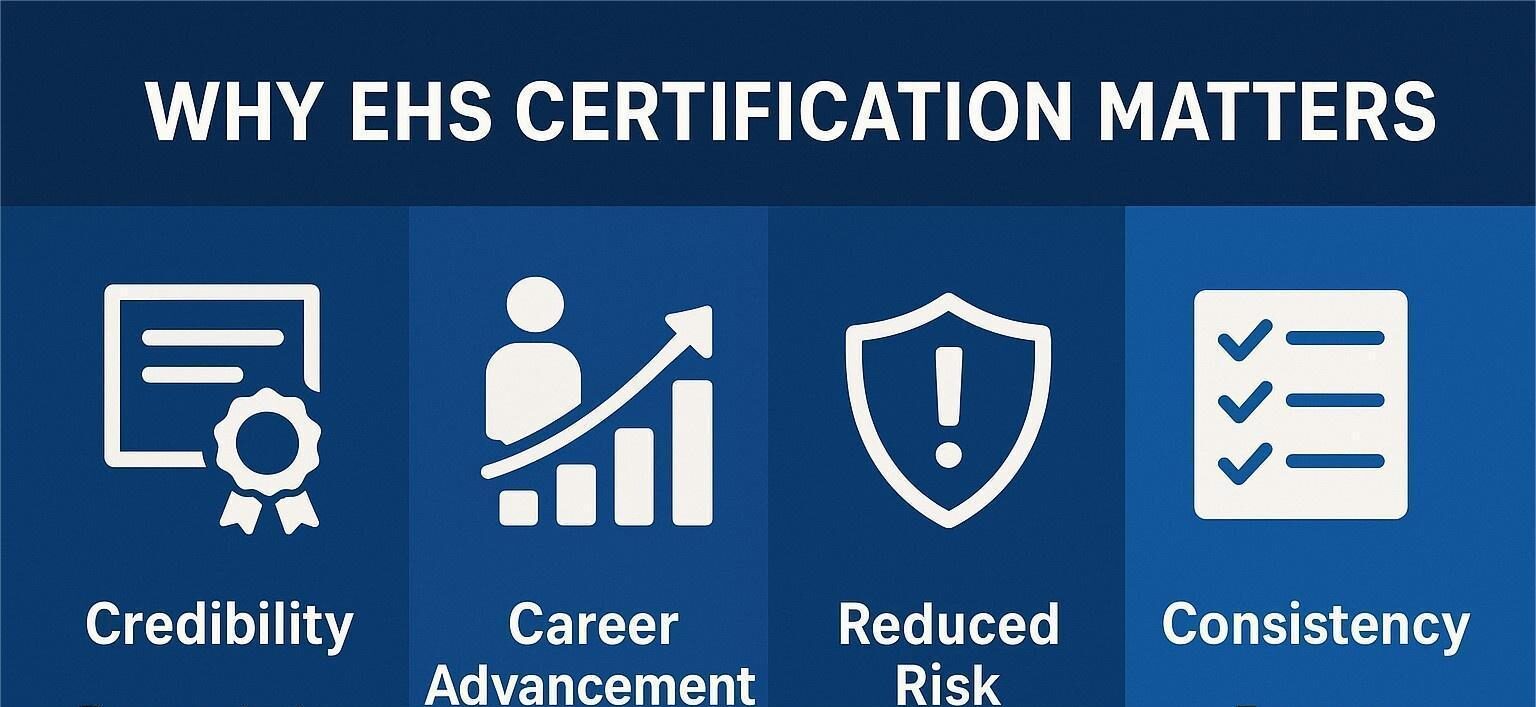
- Credibility and trust: Certified professionals show they understand compliance and risk management.
- Career advancement: Employers value certifications that prove practical competence.
- Reduced risk: Well-trained professionals help prevent accidents, fines, and environmental incidents.
- Consistency: Certification programs teach standardized methods for audits, reporting, and inspections.
- Better safety culture: EHS-trained staff are more likely to identify hazards and correct them early.
For companies, having certified EHS professionals can also reduce insurance costs, improve regulatory relationships, and make compliance audits much smoother.

How We Use CampusOptics to Simplify EHS Management
While EHS certification gives professionals the knowledge to manage compliance and safety, we’ve seen that applying that knowledge across a large organization can still be complicated. That’s where tools like CampusOptics come in.
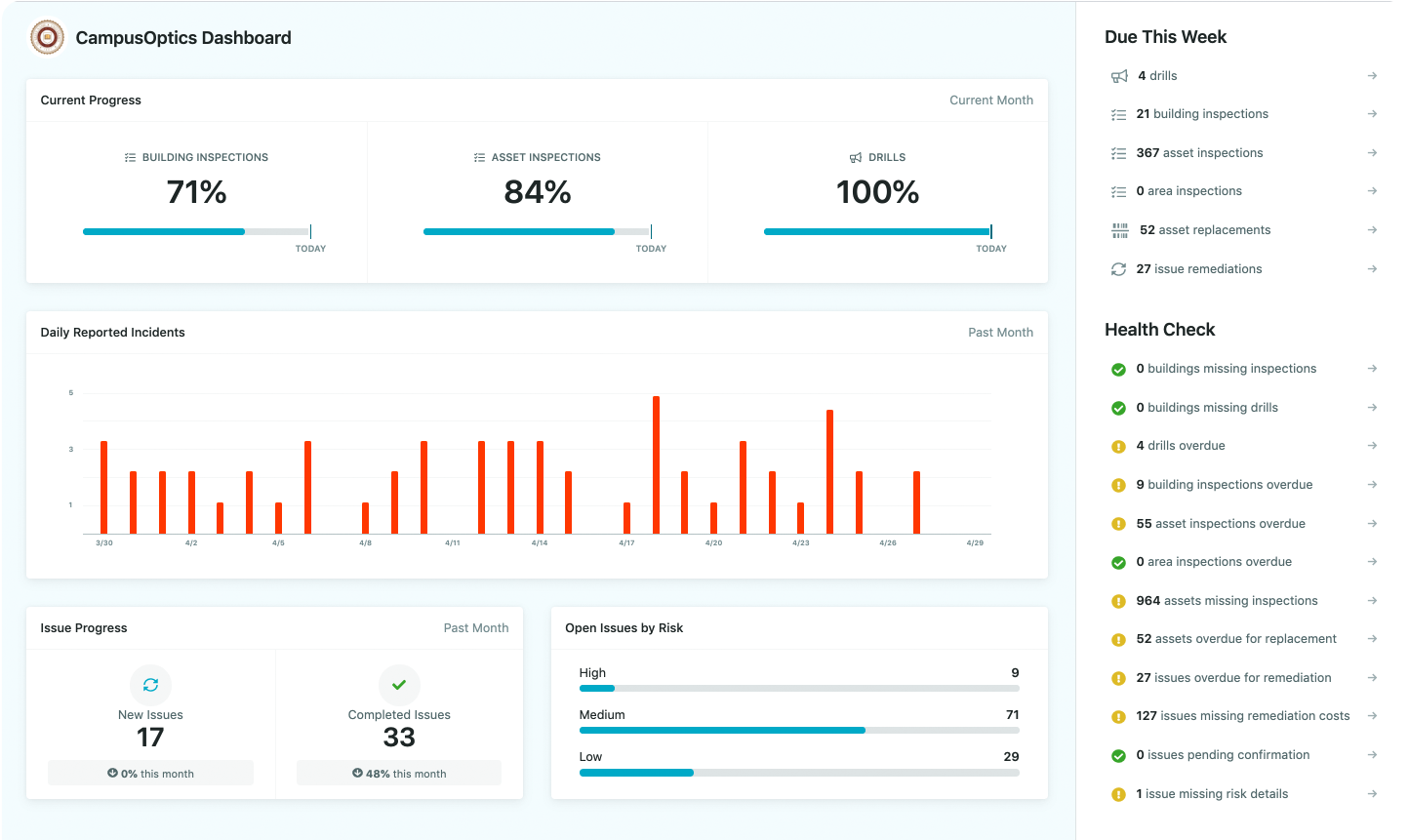
At CampusOptics, we’ve built an EH&S and Fire & Life Safety platform specifically for higher education institutions, but the same principles apply to any organization that needs to manage multiple safety processes at once. Our goal is to help safety teams move from scattered spreadsheets and manual reports to one connected system where everything from chemical inventories to incident tracking happens in one place.
We designed CampusOptics after listening to hundreds of campus safety professionals who wanted a better way to keep people safe and stay compliant without drowning in paperwork. Through our platform, teams can:
- Conduct inspections and log safety issues from mobile devices
- Manage hazardous waste, assets, and chemical data sheets in one dashboard
- Generate compliance calendars and track permit approvals
- Create emergency pre-plans with instant access to floor layouts and safety systems
In other words, EHS certification gives you the knowledge, and CampusOptics helps you put that knowledge into action. For universities, research centers, and large facilities, this combination creates a stronger safety culture and reduces institutional risk – without adding more administrative complexity.
How Long Does It Take to Get Certified
The time it takes to earn an EHS certification really depends on your background and the type of program you choose. Some courses are designed for newcomers who want a fast, practical foundation, while others are structured for seasoned professionals aiming to formalize years of hands-on experience.
Self-paced online courses, such as the Environmental Health and Safety Professional Certificate from NASP, can usually be completed in about 24 hours of total study time. Because they’re flexible, you can spread that work over several weeks or months -most programs allow up to six months to finish. This format makes it easier for working professionals to learn at their own pace without disrupting their schedule.
More advanced certifications, like the Associate Safety Professional (ASP) or Certified Safety Professional (CSP) offered by BCSP, take longer. These require not only coursework but also relevant education, documented field experience, and exam preparation. They’re typically pursued by those looking to step into EHS leadership roles, specialize in compliance consulting, or advance toward director-level positions in safety and environmental management.
What You Learn During EHS Certification
Most EHS certification programs cover a mix of core safety and environmental topics. For example, NASP’s Environmental Health and Safety Professional Certificate includes modules like:
- Introduction to occupational safety and environmental protection
- Hazardous materials and waste identification
- Spill containment and emergency response
- OSHA-required plans and programs
- Advanced OSHA compliance and inspections
- Managing citations, penalties, and safety audits
Beyond memorizing regulations, these programs teach you how to think critically about safety systems – how to spot risks, document incidents properly, and respond to emergencies with confidence.
Different Types of EHS Certifications
EHS certification isn’t a single path or a one-size-fits-all solution. Depending on your background, goals, and the type of organization you work for, there are several respected programs to choose from. Some focus on building a foundation in compliance and safety management, while others go deeper into specialized fields such as hazardous materials or occupational hygiene.
NASP Environmental Health & Safety Professional Certificate (EHS)
This certification from the National Association of Safety Professionals (NASP) is a great starting point for new or mid-level managers who handle safety or environmental responsibilities. It covers the essentials of OSHA, EPA, and DOT regulations, giving participants a strong grasp of compliance standards and risk management practices. The program is self-paced and ideal for professionals who want to gain practical knowledge without stepping away from their current jobs.
Associate Safety Professional (ASP)
The Associate Safety Professional (ASP) credential is offered by the Board of Certified Safety Professionals (BCSP) and serves as a bridge to more advanced certifications like the CSP. It’s designed for mid-career safety professionals who already have some experience in the field. The ASP focuses on applied safety principles, regulatory knowledge, and analytical skills needed to manage day-to-day compliance programs effectively.
Certified Safety Professional (CSP)
The Certified Safety Professional (CSP) is one of the highest-level EHS credentials available. It’s recognized internationally and demonstrates deep expertise in risk management, safety leadership, and occupational health. Candidates need a bachelor’s degree and several years of experience to qualify. This certification is best suited for professionals overseeing large-scale safety programs or working in EHS consulting and leadership roles.
Certified Hazardous Materials Manager (CHMM)
The Certified Hazardous Materials Manager (CHMM) certification focuses on the identification, handling, storage, and disposal of hazardous substances. It’s valuable for professionals in industries like manufacturing, energy, and environmental services where chemical management plays a major role. The CHMM credential signals that you understand how to manage hazardous waste safely while staying compliant with EPA and DOT guidelines.
Occupational Hygiene and Safety Technician (OHST)
The Occupational Hygiene and Safety Technician (OHST) certification is aimed at those who manage or perform daily safety inspections, incident reporting, and employee training. It emphasizes hands-on safety practices, workplace monitoring, and exposure control. This certification is often a good fit for supervisors, coordinators, or technicians who play a direct role in maintaining safe operations on-site.
Some certifications lean more toward environmental compliance, while others focus on occupational health or emergency management. Many EHS professionals choose to earn multiple credentials over time to create a broader, more adaptable skill set – one that allows them to move between industries and take on higher levels of responsibility.
Who Needs EHS Certification
EHS certification is valuable for anyone involved in managing or enforcing workplace safety standards. Common roles include:
- Safety or environmental managers
- Compliance officers and risk specialists
- Facility or plant supervisors
- Construction site coordinators
- University or laboratory safety officers
- Industrial hygienists
Even if you’re not in a dedicated EHS position, certification can help if you’re part of operations, human resources, or project management teams. These departments often share responsibilities for compliance, documentation, and employee training.
Benefits for Employers
Companies gain significant advantages from having certified EHS professionals on their teams. Certification ensures that safety policies are not only written but also implemented, monitored, and improved over time. When trained experts lead compliance programs, it becomes easier to identify risks early, reduce accidents, and maintain alignment with both federal and state regulations.
Beyond regulatory benefits, EHS certification helps build a stronger workplace culture. Employees feel more confident when they know that safety isn’t left to chance, and this often leads to higher morale and lower turnover. Certified professionals bring structure to audits, inspections, and training, creating smoother workflows and fewer disruptions to daily operations.
In addition, certified EHS specialists can train internal teams, reducing the reliance on external consultants and keeping institutional knowledge within the company. Over time, this approach leads to consistent safety performance, better environmental accountability, and a more resilient organization overall.
The Role of EHS Certification in Career Growth
For individuals, earning an EHS certification can completely shift the trajectory of their career. It signals to employers that you not only understand the theory behind workplace safety and environmental management but also know how to apply it in real-world situations. Certified professionals are often viewed as proactive leaders who can identify risks, manage compliance systems, and influence company-wide safety culture. That reputation alone can open doors to new roles, consulting projects, or leadership positions that might otherwise be out of reach.
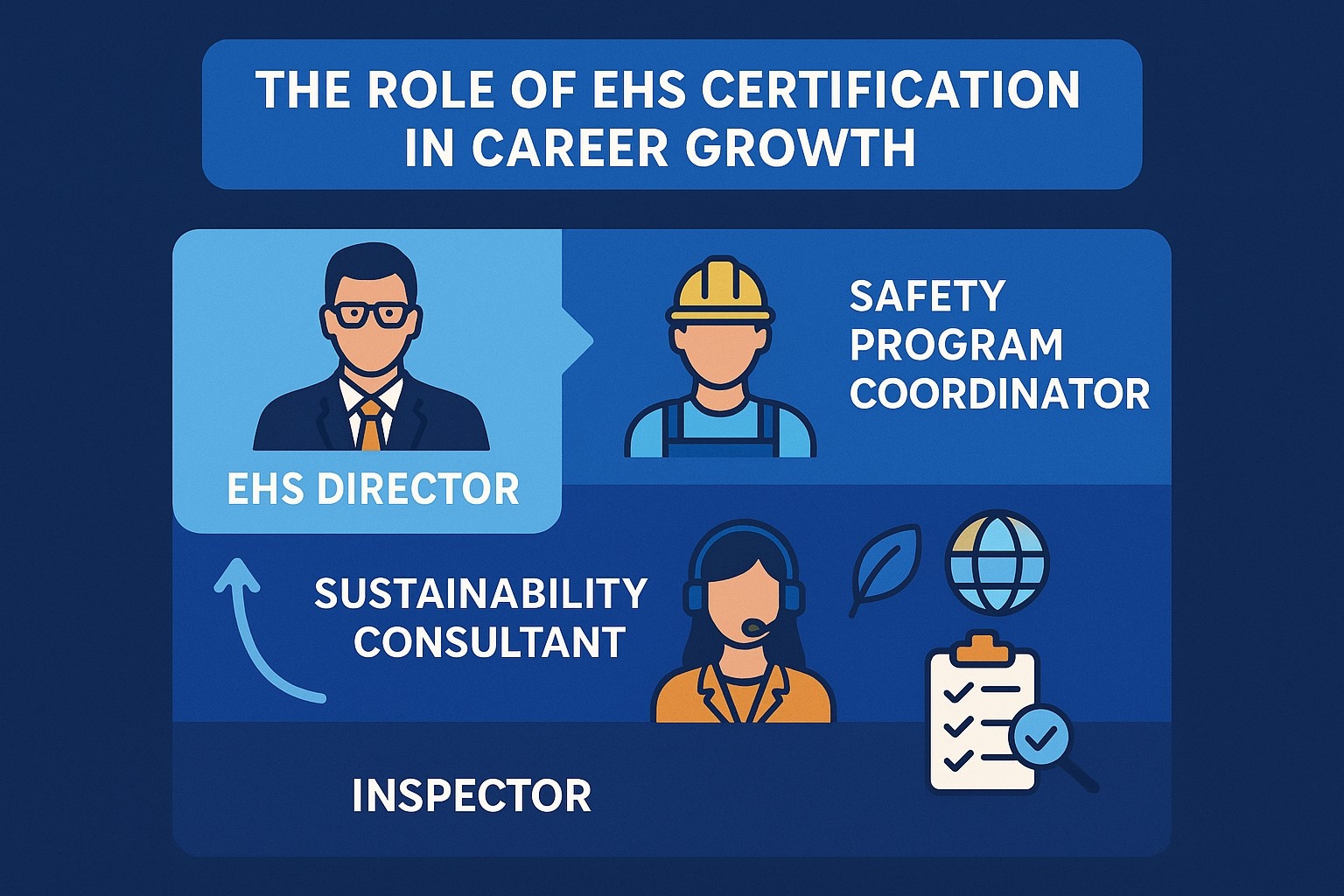
Many safety professionals use EHS certification as a stepping stone to move into more strategic or senior roles, such as:
- EHS Director or Compliance Manager
- Safety Program Coordinator
- Risk and Sustainability Consultant
- Environmental Auditor or Inspector
Beyond titles, certification helps you stand out when competing for roles in organizations where compliance and accountability are tightly regulated. Government agencies, large corporations, and educational institutions often prioritize candidates with certified experience because it reduces training time and ensures a baseline level of technical knowledge.
According to industry surveys, certified EHS professionals tend to earn higher salaries compared to those without credentials, partly because of the trust and responsibility these roles demand. But the benefits go beyond compensation – certification builds long-term career stability in a field that continues to grow as companies strengthen their focus on environmental responsibility and workplace safety.
Common Myths About EHS Certification
Myth 1: It’s Only for Large Organizations
A common misconception is that EHS certification only makes sense for big corporations with entire departments dedicated to safety and compliance. In reality, even small and mid-sized businesses can benefit tremendously. Certification gives smaller organizations the tools to build simple but effective safety systems without unnecessary bureaucracy. It helps them prevent accidents, avoid regulatory penalties, and improve employee confidence. For small teams where every person plays multiple roles, certified safety knowledge can make a real difference in daily operations.
Myth 2: It’s Too Technical
Another myth is that EHS programs are filled with complex terminology and technical material that only engineers or scientists can understand. While regulations can sound intimidating, modern EHS courses are intentionally designed to be accessible and practical. They break down complex rules into clear steps that anyone can follow. You don’t need a science background to succeed – what matters is curiosity, attention to detail, and a commitment to learning how to keep people safe. Most programs focus on real-world applications rather than heavy theory, making them approachable for professionals from any field.
Myth 3: Once Certified, You’re Done
EHS certification isn’t a one-and-done milestone. The field evolves constantly as new technologies, materials, and environmental standards emerge. Certified professionals are expected to stay up to date through refresher courses, continuing education, and periodic recertification exams. This ongoing learning ensures that safety practices remain relevant and aligned with current laws. In many ways, certification marks the beginning of a professional journey – one where continuous improvement and adaptability are key to maintaining excellence in workplace safety and environmental responsibility.
Final Thoughts
EHS certification isn’t just a checkbox for compliance – it’s an investment in safety, professionalism, and long-term career growth. It teaches you how to make smarter decisions in environments where mistakes can have real consequences.
For professionals, it means more confidence and credibility. For organizations, it means fewer risks and stronger performance.
In a world where workplace safety and environmental responsibility are under constant scrutiny, EHS-certified individuals help turn rules into real action. Whether you’re just starting out or looking to advance your career, this certification is one of the smartest steps you can take toward a safer, more sustainable future.
Frequently Asked Questions
What does EHS stand for?
EHS stands for Environmental Health and Safety. It’s a field focused on protecting people, property, and the environment by managing workplace risks, ensuring compliance with safety regulations, and promoting sustainable practices.
Why should I get EHS certified?
Getting certified shows that you understand how to handle environmental, health, and safety responsibilities professionally. It helps you build credibility, qualify for higher-level positions, and contribute to a safer workplace. Employers often prefer or require certification because it proves you can apply regulations and best practices effectively.
Who can apply for EHS certification?
Anyone involved in safety, compliance, or environmental management can apply. This includes safety officers, plant managers, risk consultants, HR professionals, and facility supervisors. Most programs don’t require prior certification – just an interest in improving safety and compliance skills.
How long does EHS certification take?
The timeline varies depending on the course. Foundational programs, like NASP’s Environmental Health and Safety Professional Certificate, can take around 24 hours of study and be completed within six months. Advanced certifications, such as the ASP or CSP, may take longer due to experience and exam requirements.
Is EHS certification available online?
Yes, many organizations offer online EHS courses that you can complete at your own pace. These include video lectures, reading materials, quizzes, and final exams. Online learning makes it easier for busy professionals to gain credentials without interrupting their work schedule.
Do EHS certifications expire?
Most certifications require renewal every few years to ensure professionals stay current with new laws and safety standards. Renewal usually involves completing a refresher course or earning Continuing Education Units (CEUs).