You’ve probably seen them before – tall blue poles with a glowing light on top, usually near walkways, parking lots, or dorm entrances. They’re called blue light phones, and for decades, they’ve been a familiar part of campus life. At first glance, they might seem outdated in a world where everyone has a smartphone, but their role in keeping students safe hasn’t disappeared. In fact, many universities still rely on them as a visible, reliable safety net, the kind you hope you’ll never need, but you’re glad it is there when it matters.
What Exactly Are Blue Light Phones?
Blue light phones are outdoor emergency communication devices typically installed on college campuses, in parking lots, parks, and other public spaces. The design is hard to miss: a vertical post painted in a bright color (often blue or red), topped with a blue light that glows continuously and flashes when the emergency button is pressed.
The idea is simple: push one button, and you’re instantly connected to help. That help might come from campus security, local police, or emergency dispatchers, depending on how the system is set up. The phone automatically transmits the location of the caller, so even if the person can’t speak, responders can still find them.
While these phones are now equipped with advanced technology, like cameras, Wi-Fi, and wireless connectivity, their core purpose hasn’t changed since the 1980s: to provide immediate, reliable access to emergency assistance.
A Brief History of Blue Light Phones
The rise of blue light phones can be traced back to a tragic event in 1986 at Lehigh University, when a student named Jeanne Clery was murdered in her dormitory. Her death led to the creation of the Clery Act, a federal law requiring colleges to report campus crimes and improve security.
In response, universities began installing blue light phones across their campuses. They provided a way for students to reach help instantly, especially in a time before mobile phones were common. By the mid-2000s, more than 90% of U.S. colleges receiving federal aid had some form of blue light system in place.
Over time, the technology evolved. Early models were hardwired and required trenching for cables. Today’s versions can be completely wireless, solar-powered, and integrated into digital security networks.
How Do Blue Light Phones Work?
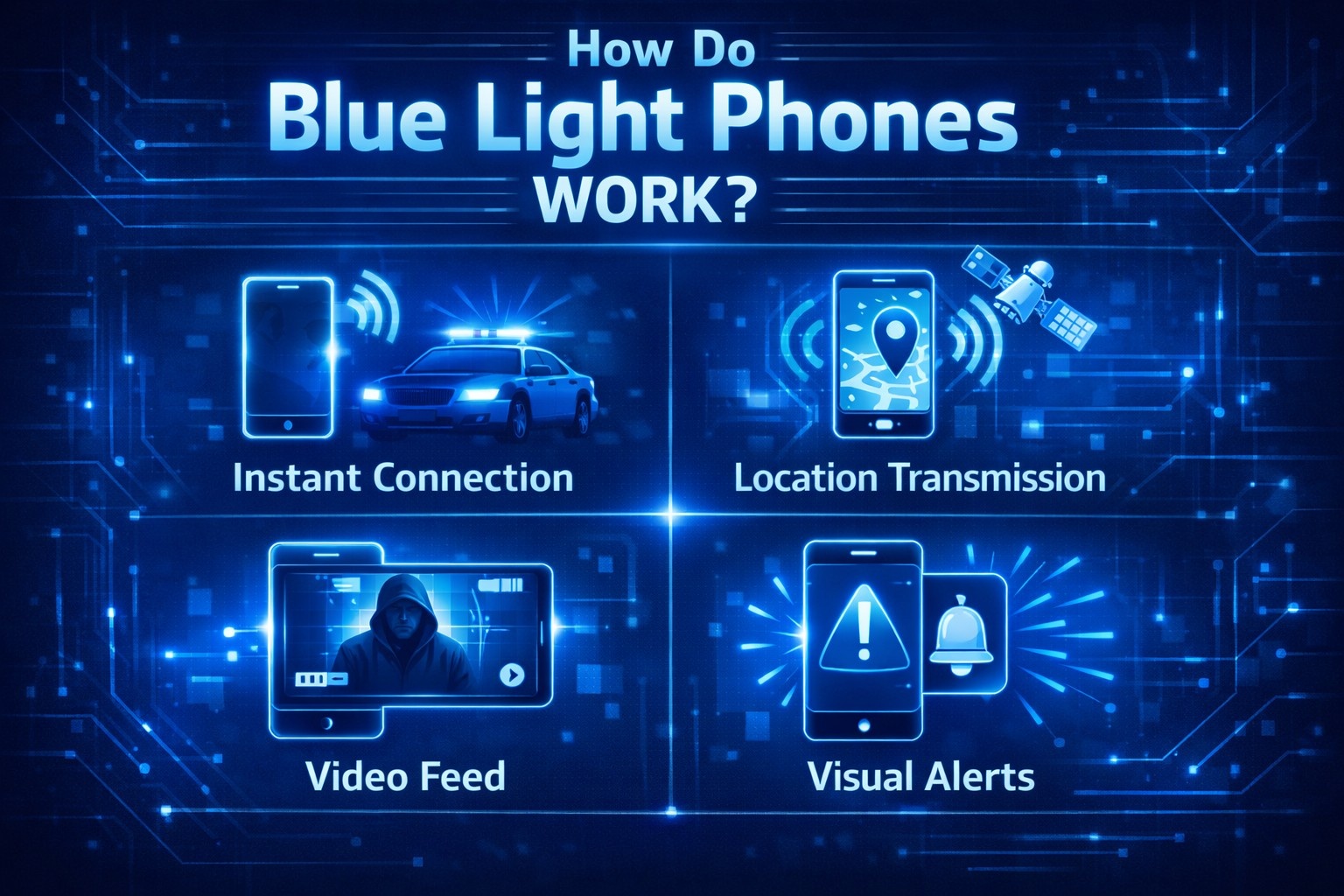
The principle behind these systems is simplicity. A user presses the clearly marked emergency button, and within seconds, the call connects to the appropriate security office. Here’s what typically happens:
- Instant Connection: The phone automatically dials a pre-set emergency line—usually campus security or 911.
- Location Transmission: The system sends the caller’s exact location to the dispatch center.
- Audio or Video Feed: Some models include microphones, speakers, and even cameras for real-time monitoring.
- Visual Alerts: The blue beacon flashes when activated, helping responders locate the caller quickly.
Unlike mobile phones, these devices don’t depend on battery life, user signal, or GPS accuracy. They’re always ready, which is crucial during panic situations or power outages.

How We Support Safer Campuses at CampusOptics
At CampusOptics, we’ve spent years working with campus safety professionals who face the same question every day: how do we make sure students, faculty, and visitors are protected everywhere on campus? Blue light phones are part of that answer, but safety doesn’t stop there.
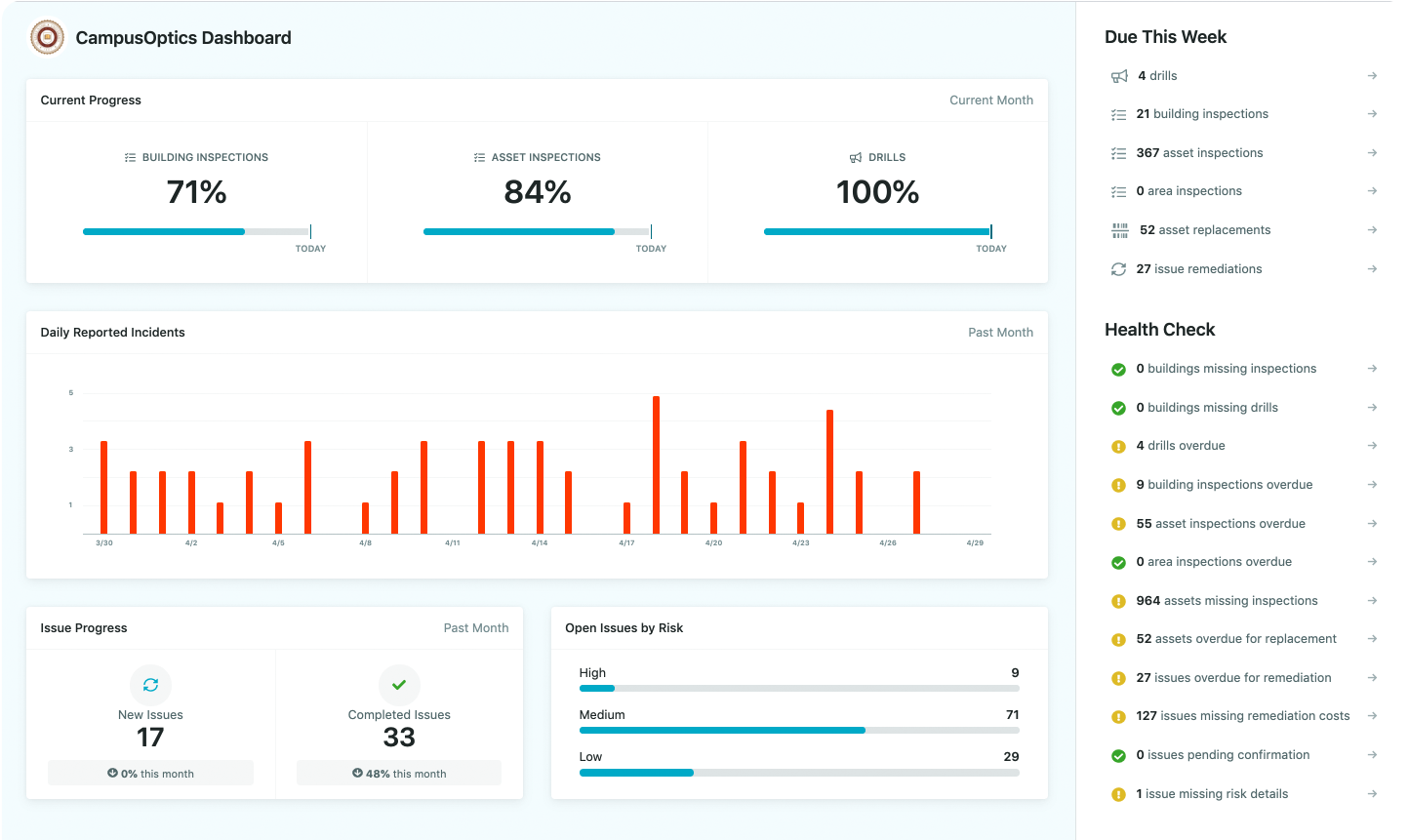
Our platform was built specifically for higher education to connect everything that supports safety: environmental health, fire and life safety, emergency planning, and risk management, into one place. We make it easier for teams to track assets like blue light phones, AEDs, and fire systems through an interactive map that’s accessible on both web and mobile. If a safety issue is reported or a phone isn’t working, it can be logged, routed, and resolved quickly with full visibility for everyone involved.
We started this work because campus safety is personal to us. One of our founders lost friends in a campus fire, and that experience shaped our mission: to use technology to prevent tragedies before they happen. By helping colleges visualize and manage every safety component, from blue light phones to chemical inventories, we’re helping campuses stay ready, connected, and confident in their emergency response systems.
When Should You Use a Blue Light Phone?
These phones are there for emergencies, situations where safety is threatened, or help is needed immediately. Common examples include:
- Assaults or suspicious activity
- Fires or explosions
- Car accidents or medical emergencies
- Someone being followed or harassed
- Unresponsive individuals or injury in public areas
At universities like UC Irvine and Loyola University Chicago, campus safety teams encourage anyone who feels unsafe to use these phones without hesitation. Even if you’re not sure it’s a “real emergency,” it’s better to press the button and get help on the way.
Why Do We Still Need Blue Light Phones in the Smartphone Era?
It’s a fair question. With smartphones in every pocket, why keep physical emergency phones on campus? The answer comes down to reliability and visibility.
- No signal or battery issues: A phone that’s dead or out of range won’t help in an emergency.
- Instant, location-based connection: There’s no need to describe where you are—the system already knows.
- Visibility: The blue light acts as both a beacon for those in distress and a deterrent for would-be criminals.
- Simplicity: In high-stress moments, pushing one button is often easier than unlocking a phone, finding 911, and explaining your situation.
At Rice University, for example, on-campus burglaries dropped by nearly 68% after installing a network of blue light phones. Even if the phones are rarely used, their presence alone increases the sense of safety and discourages crime.
Blue Light Phones Beyond College Campuses
Although blue light phones are most often associated with universities, their usefulness extends well beyond higher education. They’ve become a familiar part of safety infrastructure in airports, transit stations, parking garages, corporate campuses, hospitals, city parks, and even rural areas where cell coverage is unreliable.
Each of these environments shares one thing in common: the need for quick, reliable communication during emergencies. In airports and large public spaces, blue light phones help travelers reach security without searching for staff. In parking garages or remote parks, they serve as both deterrents to crime and instant lifelines for anyone in distress. Even in corporate or hospital settings, they offer reassurance that help is always within reach.
A good example comes from the George Bush Intercontinental Airport in Houston, where blue light phones are integrated with security cameras. When someone presses the emergency button, nearby cameras immediately focus on that location, and responders are alerted in real time. It’s a seamless blend of visibility, technology, and fast response, exactly what these systems were designed for.
The Cost and Maintenance Question
Installing a blue light phone system isn’t cheap. Depending on the setup, colleges can expect to spend between $5,000 and $10,000 per unit, plus maintenance fees. Still, most institutions see the investment as worthwhile.
Surveys at the University of Delaware found that while students rarely used the phones, 90% said they felt safer knowing they were there. That perception of safety matters. It builds trust and reassures students, parents, and staff that the institution takes security seriously.
Modern wireless and solar models are reducing both installation time and cost. Instead of months of trenching and wiring, new systems can be deployed within days.
Challenges and Criticisms
Despite their benefits, blue light phones do face criticism. Detractors argue that they’re outdated in a mobile-first world or that maintenance costs outweigh their usage rates. Occasionally, poorly maintained systems become nonfunctional, which can undermine trust.
However, the majority of safety experts still see them as a vital safety net. They’re part of a layered security approach that combines visibility, technology, and human response. Even if rarely used, they fill an important gap when other systems fail.
The key challenge for institutions is keeping them functional, well-lit, and integrated with broader emergency management systems. A neglected phone helps no one, but a properly maintained one can save lives.
The Psychological Impact: Safety You Can See
One of the most underrated aspects of blue light phones is their psychological effect. Seeing those glowing blue towers spaced across a campus creates a feeling of security. It tells students, “You’re not alone here. Help is close.”
That visible reassurance matters. According to studies, perceived safety strongly influences how comfortable students feel walking alone at night or choosing where to study and live on campus. So even when the phones go unused, their mere presence plays a quiet but powerful role in shaping campus culture.
The Future of Blue Light Phones
As campus safety technology continues to evolve, blue light phones are becoming smarter, more connected, and better integrated into wider emergency systems. The focus now is on adding intelligence and connectivity rather than replacing what already works.
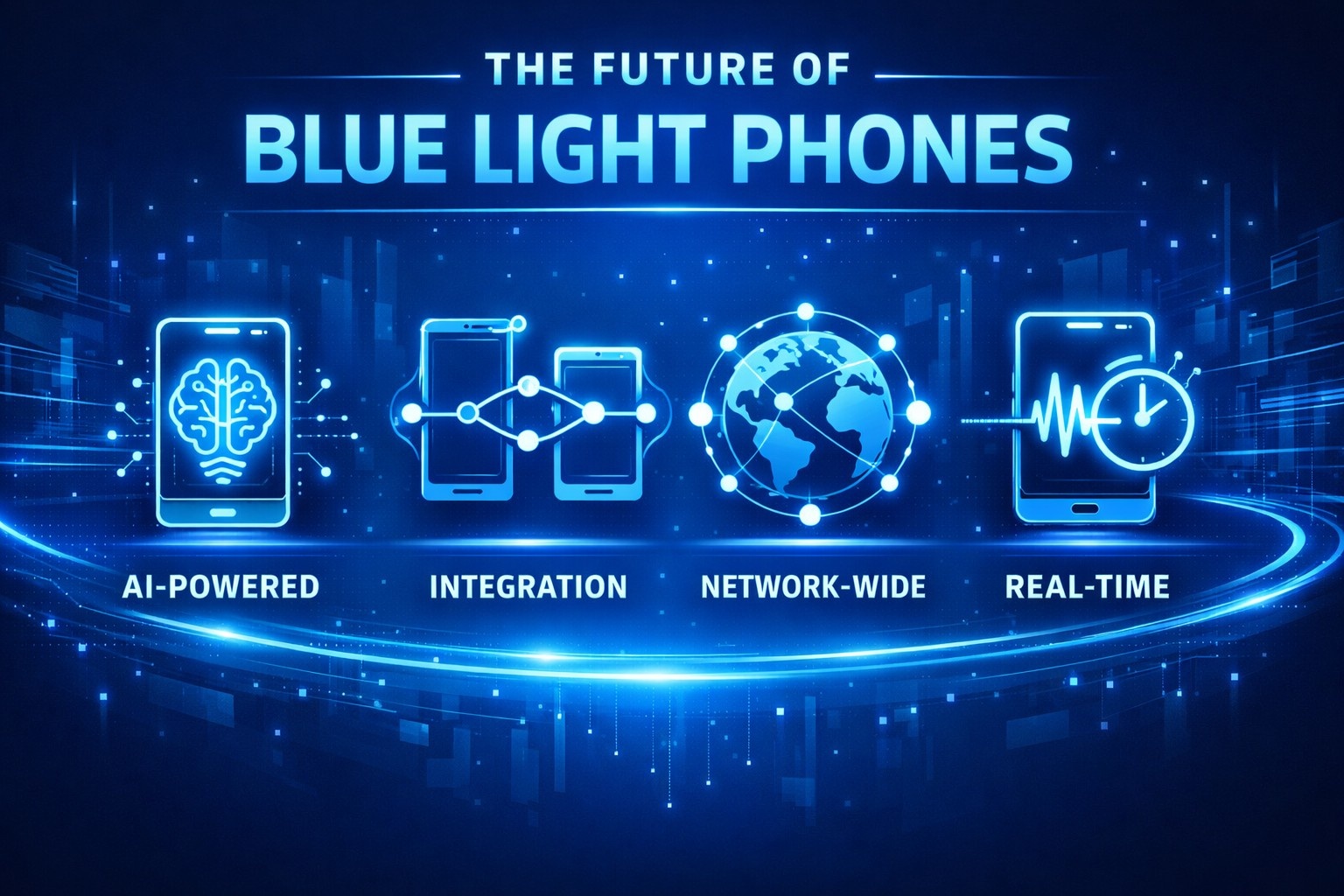
The next generation of blue light phones may include:
- AI-powered monitoring, capable of detecting distress sounds, unusual activity, or suspicious behavior automatically.
- Integration with mobile safety apps, creating hybrid systems that connect physical call stations with digital alerts and GPS tracking.
- Network-wide analytics, allowing universities to identify safety trends, monitor response times, and plan resource allocation more effectively.
- Real-time video and audio feeds, enabling dispatchers to assess emergencies before responders arrive.
- Smart connectivity features, such as integration with security cameras, lighting systems, or door access controls for faster, coordinated response.
In the future, pressing a blue light button could automatically activate nearby cameras, trigger area lighting, and share live location data with first responders. These systems are moving toward full interoperability, an ecosystem where hardware, software, and people work together to protect lives.
The mission remains the same: to provide immediate, reliable help when it’s needed most. What’s changing is how seamlessly that help can be delivered.
Final Thoughts
Blue light phones might seem like relics from another era, but they continue to earn their place in modern safety strategies. They’re visible, durable, and simple to use in moments when clarity is everything.
For universities, parks, and public facilities, these devices represent more than technology. They’re a promise, a visible sign that safety is taken seriously, and help is always within reach.
Even if most students never need to press that red button, the knowledge that it’s there provides peace of mind. And when emergencies happen, that single push can make all the difference.
Frequently Asked Questions
What is a blue light phone?
A blue light phone is an outdoor emergency call station that connects users directly to security or emergency services. It’s usually a tall pole with a glowing blue light on top and a single button that instantly alerts campus safety teams or local authorities when pressed.
Why are they called “blue light” phones?
They get their name from the bright blue beacon that stays lit on top of the phone tower. The light makes it easy to spot the device from a distance, even at night, and flashes when the phone is activated so responders can quickly locate the caller.
Do campuses still need blue light phones now that everyone has a smartphone?
Yes. Blue light phones remain valuable because they work even when cell service drops, batteries die, or users panic and can’t describe their location. They’re reliable, visible, and instantly connect to the right emergency channel without dialing or waiting.
How do blue light phones work?
When someone presses the emergency button, the phone immediately calls a pre-set number, usually campus security or 911. Dispatchers can hear the caller through a built-in speaker and microphone, and many systems automatically send the location of the phone so responders know exactly where to go.
When should someone use a blue light phone?
You should use one any time you feel unsafe or witness an emergency. That includes crimes in progress, medical incidents, fires, suspicious activity, or accidents. Even if you’re unsure whether it’s serious, it’s better to press the button and get help.