If you’ve been thinking about getting certified in Environmental Health and Safety (EHS), you’re probably the kind of person who values structure, prevention, and purpose. EHS professionals don’t just check boxes, they help organizations keep people safe and operations compliant. Whether you’re just starting out or looking to advance your career, becoming EHS certified can open real opportunities. Let’s break down what it takes, how to choose the right certification, and what each path can mean for your future.
Why EHS Certification Matters
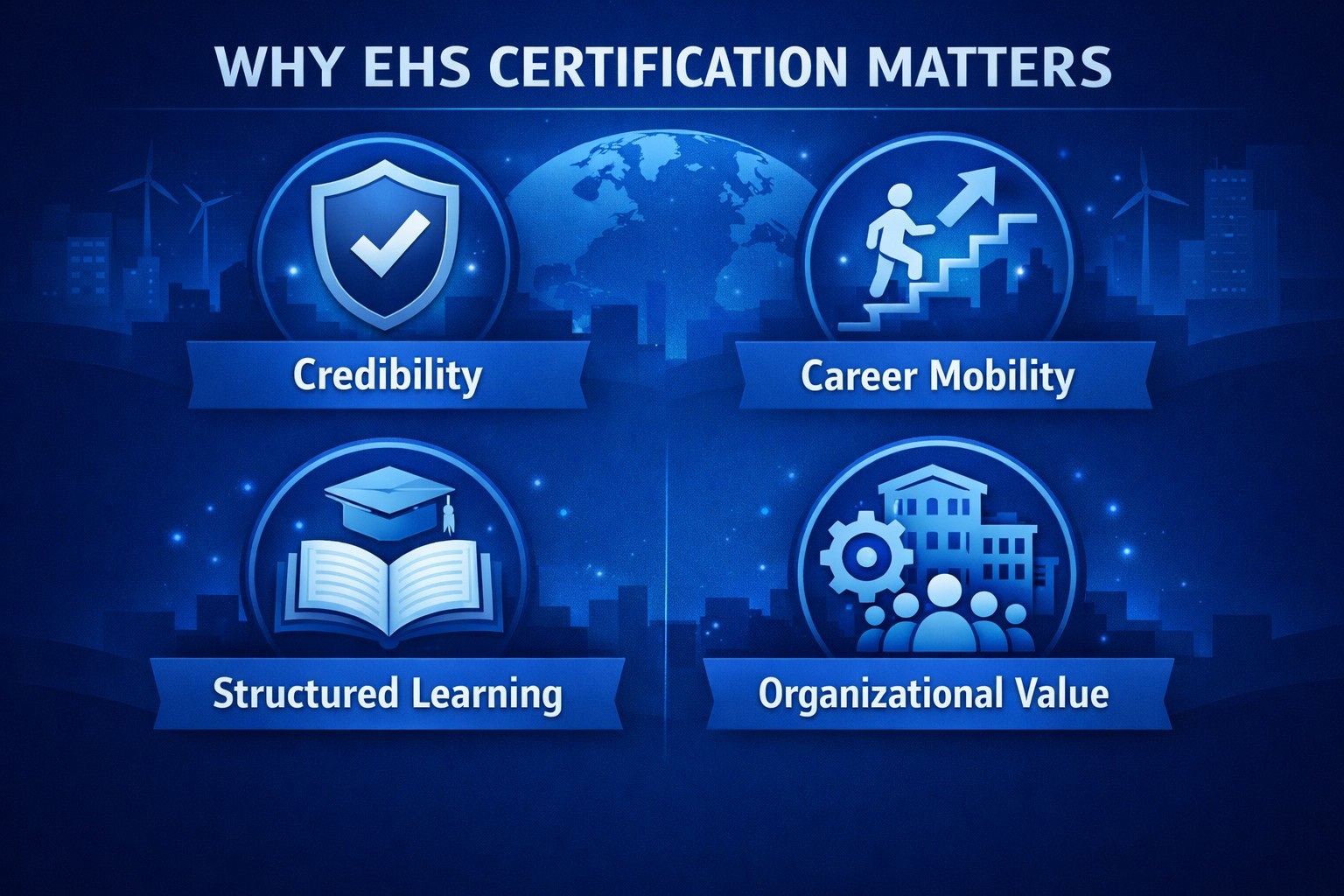
Certification in the EHS field matters for a few key reasons:
- Credibility and trust: A recognized credential shows employers that you understand safety, compliance, and risk management. It signals that you take the work seriously.
- Career mobility and pay: Certified professionals often qualify for better roles and higher salaries. Employers see credentials like CSP or CHMM as proof of skill and reliability.
- Structured learning and growth: Certification programs keep your knowledge fresh. Most require continuing education, which ensures you stay current with new regulations and best practices.
- Organizational value: Certified EHS specialists help their companies prevent incidents, meet compliance goals, and strengthen workplace culture.
You can technically work in EHS without certification, but getting certified helps you stand out and grow faster in a competitive field.
Understand the Difference: Certificate vs Certification
Before you pick a path, it’s important to understand the difference between a certificate and a certification.
- Certificate: You earn this after completing a training program or course. It’s education-based and typically doesn’t require an exam or ongoing renewal.
- Certification: This is awarded by a professional board after you meet education and experience requirements and pass an exam. It often needs renewal or continuing education.
For example, a certificate course in EHS management can help you learn the fundamentals, but a certification like CSP (Certified Safety Professional) shows you’ve proven your expertise at a professional level.

How We Support EHS Professionals at CampusOptics
At CampusOptics, we’ve spent years working with campus safety professionals who manage some of the most complex safety environments in the country. We understand that earning an EHS certification is only part of the journey – applying that knowledge every day takes the right tools, teamwork, and visibility across your organization.
Our platform was built specifically for higher education to make safety management easier, faster, and more connected. Through CampusOptics, environmental health and safety teams can:
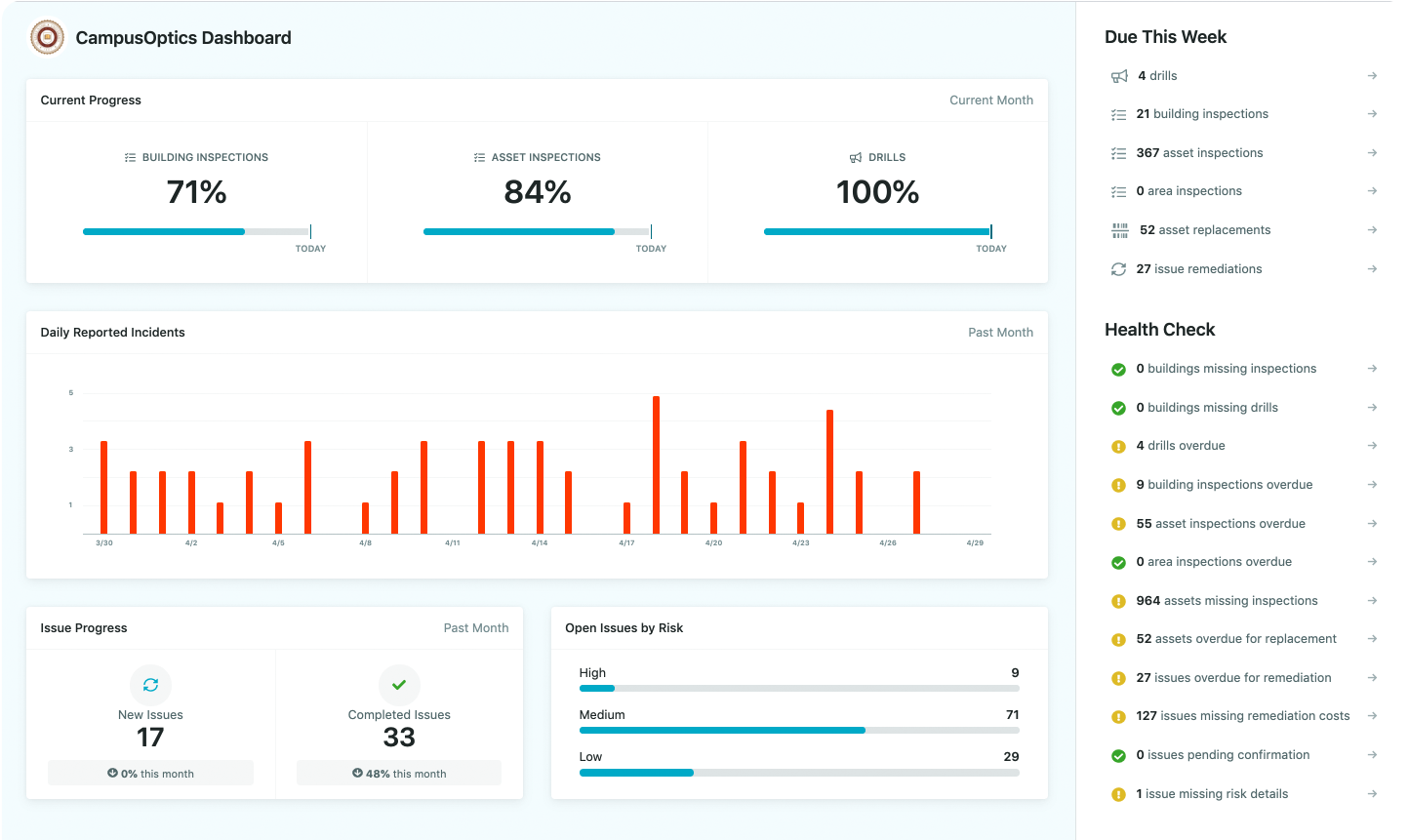
- Track chemical inventory, inspections, and hazardous waste in one unified system.
- Conduct on-site assessments using our mobile app for iOS and Android.
- Log incidents, route issues for remediation, and document every step for compliance.
- Create and share emergency pre-plans with campus stakeholders.
- Manage permits, assets, and safety training requirements through one dashboard.
We believe technology should simplify your work, not add complexity. That’s why we designed CampusOptics to reduce manual data entry, improve collaboration, and help you focus on what really matters – protecting people and creating a safer campus environment.
Whether you’re just starting your career in EHS or leading a campus-wide safety program, we’re here to help you connect your certification knowledge with the systems and insights that make it all work in practice.
The Typical Path to Certification
Becoming certified isn’t complicated once you break it down into clear steps:
Step 1 – Education
Most major certifications require at least a bachelor’s degree in a related field like safety, environmental science, or engineering. Some accept associate degrees combined with relevant coursework. If you’re just starting, focus on programs that include subjects like industrial hygiene, occupational safety, or environmental management.
Step 2 – Experience
Real-world experience matters. Most certifications ask for 1 to 4 years of full-time work in a safety or environmental role. Internships, entry-level EHS positions, and volunteer projects can all count toward this. Look for roles where you’re exposed to inspections, audits, or safety training.
Step 3 – Foundational Training
Courses like OSHA 10 or OSHA 30 aren’t certifications, but they’re respected and help you gain hands-on familiarity with workplace safety standards. They’re also great resume builders when you’re trying to meet experience requirements.
Step 4 – Choosing the Right Certification
This is the most important part. The right credential depends on your background, your industry, and your career goals.
Common options include:
- Certified Safety Professional (CSP) – The top credential for advanced professionals.
- Associate Safety Professional (ASP) – A good first step toward the CSP.
- Occupational Hygiene and Safety Technician (OHST) – Ideal for those working at the technician level.
- Construction Health and Safety Technician (CHST) – Best for construction safety specialists.
- Certified Hazardous Materials Manager (CHMM) – For professionals who manage hazardous materials and waste.
Each credential has its own eligibility rules, exams, and renewal cycle.
Step 5 – Take the Exam
Once you meet the requirements, you’ll apply for the exam, prepare through study guides or review courses, and take the test. Most exams include scenario-based questions covering safety management systems, risk assessment, regulations, and leadership.
Step 6 – Maintain Your Credential
After certification, you’ll need to keep it current. Most programs require periodic recertification or continuing education. Attending conferences, completing short courses, or contributing to safety initiatives can help you earn renewal credits.
Choosing the Certification That Fits You
Picking the right credential isn’t about prestige – it’s about finding the one that truly matches your work and long-term goals. Start by thinking about the industry you’re in or want to enter. Construction, manufacturing, healthcare, and higher education all tend to value different types of certifications. It’s also worth checking which credentials are most recognized and respected within your specific field so that your effort pays off in visibility and credibility.
Experience level plays a big part too. If you’re just getting started, it makes sense to aim for an entry-level option like the ASP or OHST before pursuing the more advanced CSP. On the other hand, if your interests lean toward environmental compliance or hazardous materials management, programs such as CHMM or CIH may be a better fit.
Don’t overlook practical factors like cost and renewal. Every certification comes with exam fees, membership dues, and continuing education requirements, so make sure it fits your budget and schedule. Finally, think about the direction you want your career to take. Some credentials are better suited for technical specialists, while others are designed for people who plan to move into leadership or program management.
Taking the time to research your options helps ensure you invest in a certification that supports your goals instead of one that simply looks good on paper.
What the Most Common Certifications Require
| Certification | Requirements | Focus Area |
| Certified Safety Professional (CSP) | Bachelor’s degree, 4 years of safety experience, prior credential like ASP | Comprehensive safety leadership |
| Associate Safety Professional (ASP) | Bachelor’s or associate degree, 1 year of experience | Core safety and health fundamentals |
| Occupational Hygiene and Safety Technician (OHST) | 3 years of health and safety experience, exam | Industrial hygiene and technician roles |
| Construction Health & Safety Technician (CHST) | 3 years of construction experience, 30 hours of safety training | Construction-specific safety |
| Certified Hazardous Materials Manager (CHMM) | Bachelor’s degree, 4 years of hazmat experience, exam | Hazardous materials management |
These are the most widely recognized and transferable certifications across industries.
How to Prepare for EHS Certification
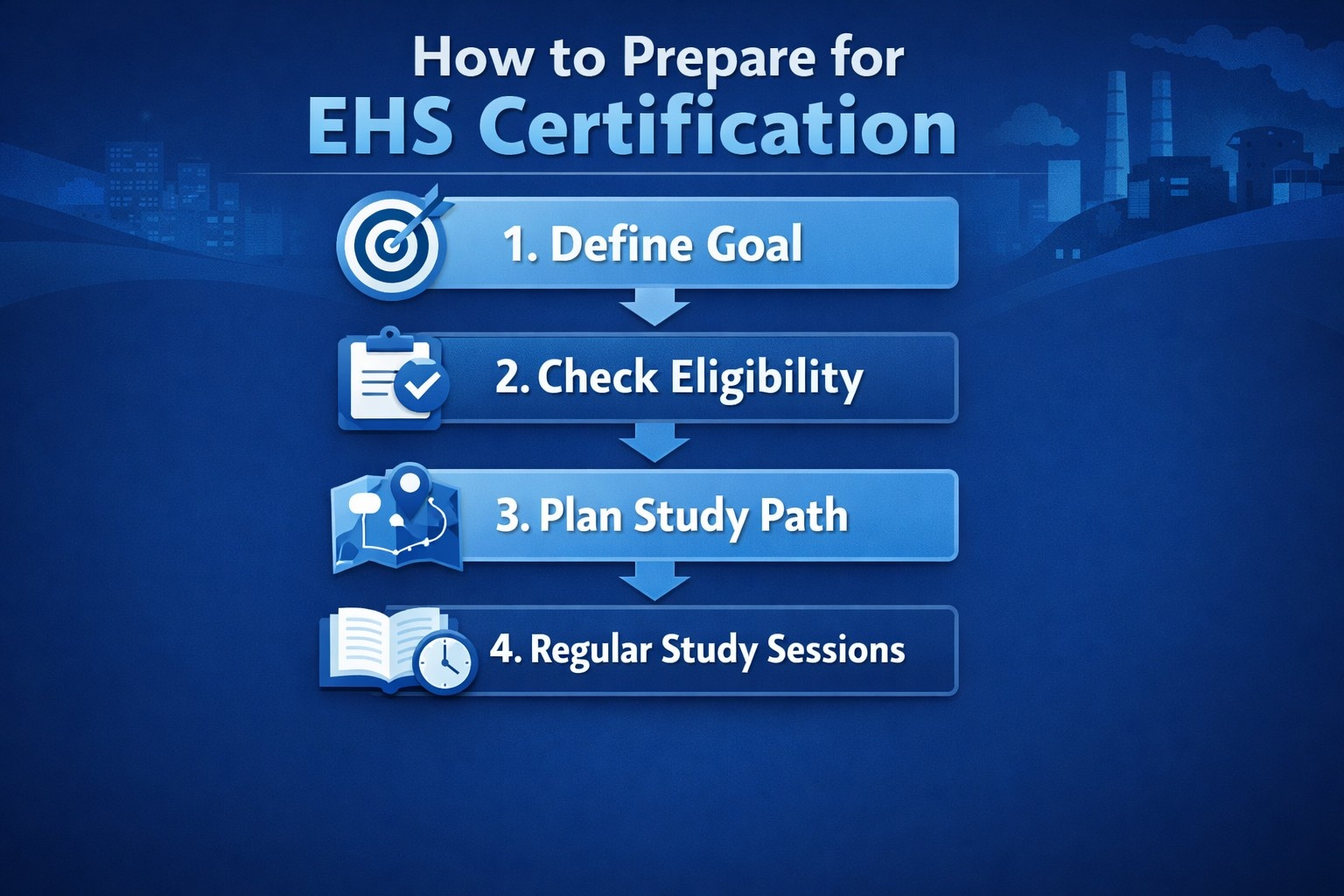
Earning certification takes time, focus, and a bit of strategy. It’s not something you can rush through in a weekend, but it’s entirely manageable if you take a structured approach. Here’s a realistic way to make the process smoother and more effective:
- Define your goal: Start by being clear about which credential you’re aiming for and why it matters to your career. Maybe you’re trying to meet a requirement for a new role, or perhaps you’re ready to prove your experience through a recognized credential. Knowing your “why” helps you stay committed.
- Check eligibility early: Before you invest in materials or prep courses, make sure your degree, experience, and training hours match the certification requirements. It’s common for applicants to overlook a small detail, like a missing prerequisite, which can delay the process.
- Plan your study path: Don’t leave it to guesswork. Use official study guides, online prep courses, or structured review programs. Some professionals form small study groups, which can keep motivation high and make the material easier to digest.
- Schedule regular study sessions: Even five focused hours a week can go a long way. Block time on your calendar, minimize distractions, and stick to the routine. Slow, steady preparation beats last-minute cramming every time.
- Document your experience: Keep a detailed record of the safety projects, audits, and training sessions you’ve worked on. Many certification applications require proof of your professional experience, and organized documentation saves time when you’re ready to apply.
- Join professional groups: Surround yourself with others who are preparing for the same exams. Networking with safety professionals can help you exchange insights, learn about upcoming workshops, and stay motivated.
- Practice with mock exams: Practice tests do more than check your knowledge; they help you get comfortable with the exam format and timing. Try to simulate real test conditions to build confidence for the big day.
- Stay consistent: Think of certification as a project with milestones. Review your progress each month, adjust your study plan if needed, and avoid long breaks. Consistency builds both knowledge and confidence.
In the end, the best candidates aren’t always the ones with the longest résumés. They’re the ones who prepare with purpose, understand the practical side of safety work, and take the process seriously from start to finish.
Career Benefits of EHS Certification
Once you earn your certification, you’ll start to see the difference it makes almost immediately. It’s not just about adding new letters after your name – it’s about how people perceive your expertise and the kind of opportunities that start to open up.
Better Job Prospects
Certifications often unlock access to higher-level positions like EHS Officer, Safety Manager, or Compliance Director. Employers recognize certified professionals as individuals who understand both the technical and strategic sides of workplace safety. If you’re competing for a promotion or switching industries, that credential gives you a clear edge.
Higher Earning Potential
Salaries tend to reflect skill and trust. Certified EHS specialists typically earn more because their qualifications reduce risk for employers and demonstrate a commitment to professional standards. Over time, this increase can far outweigh the cost of exam fees and preparation.
More Influence At Work
With certification, you’re no longer just part of the safety team – you’re a trusted advisor. Certified professionals often lead inspections, design compliance programs, and help shape safety culture across departments. When you speak, leadership tends to listen, because your knowledge carries weight.
Flexibility Across Industries
EHS skills are universal. Whether you work in construction, healthcare, manufacturing, or higher education, certified expertise travels well. If you decide to change industries later, your credential remains valid and respected. That kind of mobility can be a huge advantage in a changing job market.
Personal Confidence And Credibility
Earning certification isn’t easy, and that’s exactly why it matters. It confirms that your skills meet professional benchmarks and that you can handle the real-world challenges of safety management. The process itself also builds discipline, deeper understanding, and pride in your work.
When you add it all up, the benefits are clear. Certification opens doors, boosts your income potential, and strengthens your voice in safety decisions. The investment of time and effort pays off not only in your career but in the confidence that you’re making a measurable difference wherever you work.
Final Thoughts
Becoming EHS certified isn’t just about checking a career box. It’s about building the kind of knowledge and judgment that keeps people safe and workplaces running smoothly. Whether you start with an entry-level credential or go straight for the gold-standard certifications, what matters most is consistency.
Pick the certification that matches your current level, study with purpose, and view it as part of a long-term professional journey. The process takes effort, but it’s a rewarding investment in both your career and your ability to make a real difference in how organizations protect people and the environment.
When you’re ready, start small, plan smart, and commit to seeing it through. Certification isn’t a finish line – it’s the start of becoming a true safety professional.
Frequently Asked Questions (FAQ)
What does it mean to be EHS certified?
Being EHS certified means you’ve earned a recognized credential that proves your knowledge and skills in environmental, health, and safety management. It shows employers that you understand how to keep workplaces compliant, reduce risks, and promote a strong safety culture.
Do I need a certification to work in EHS?
Not always. Some entry-level EHS jobs don’t require certification, but having one makes you a stronger candidate and can help you advance faster. Most professionals eventually pursue credentials like ASP, CSP, or CHMM to move into leadership or specialized roles.
What’s the difference between a certificate and a certification?
A certificate is awarded after completing a course or training program, while a certification is earned through an official organization after meeting education, experience, and exam requirements. Certifications also require renewal or continuing education to stay valid.
How long does it take to get EHS certified?
It depends on your background and the specific certification you choose. Most people spend several months preparing for the exam after meeting education and experience requirements. On average, the full process can take one to two years from start to finish.
Which EHS certification is best?
There isn’t one “best” certification for everyone. The right choice depends on your career goals, experience, and industry. For example, the CSP is ideal for advanced professionals, while the ASP or OHST may suit those just starting out. Specialized paths like CHMM or CIH work well for environmental or hazardous materials roles.