The role of an Environmental Health and Safety (EHS) specialist is critical in ensuring workplaces and public environments comply with regulations that protect workers, communities, and the environment. This career path involves assessing risks, enforcing safety standards, and developing protocols to mitigate hazards. For individuals interested in a profession that combines technical expertise with a commitment to public welfare, becoming an EHS specialist offers a structured yet dynamic career trajectory. This article outlines the steps to enter this field, drawing on industry-standard practices and requirements.

What Does an EHS Specialist Do?
An EHS specialist ensures organizations operate safely and comply with environmental, health, and safety regulations. They protect workers, the public, and the environment by identifying risks and implementing preventive measures. Their work spans multiple industries, including manufacturing, construction, healthcare, government, and consulting.
Core Responsibilities
- Conduct safety audits and facility inspections
- Identify hazards and recommend corrective actions
- Develop and deliver employee safety training
- Investigate incidents to determine root causes
- Collaborate with management to integrate safety into operations
Key Industries
- Manufacturing – machinery and process safety
- Construction – site compliance and risk monitoring
- Healthcare – infection control and staff protection
- Government – public facility inspections
- Consulting – regulatory guidance for clients
Work Environment
EHS specialists split time between office and field settings. They draft plans and reports at desks but regularly visit sites for inspections, audits, and training. Work locations include factories, construction zones, laboratories, and public buildings. The role requires mobility, protective gear in industrial areas, and adaptability to both controlled and high-risk environments.
Career Outlook and Compensation
The EHS field continues to grow due to stricter regulations and heightened focus on workplace safety. Demand remains strong across industries, with steady job openings projected in the coming years.
Compensation varies by sector and location. Higher-paying industries include natural gas, oil extraction, and technical consulting. Government and engineering services also employ large numbers of EHS professionals, offering stable roles with competitive benefits.
Educational Pathways
A solid educational foundation is essential for entering the EHS field. Most positions require at least a bachelor’s degree, with specific coursework tailored to the technical demands of the role.
Bachelor’s Degree Requirements
A bachelor’s degree in a relevant field is typically the minimum requirement for EHS specialist roles. Common disciplines include environmental health, occupational safety, industrial hygiene, environmental science, or engineering. These programs provide foundational knowledge in areas such as biology, chemistry, microbiology, and environmental law. Coursework often covers topics like hazard identification, risk assessment, ergonomics, and regulatory compliance.
For students whose institutions do not offer specialized EHS programs, degrees in natural sciences or engineering can serve as viable alternatives. These programs should include laboratory work or practical training to build hands-on skills applicable to EHS roles.
Advanced Degrees for Career Advancement
While a bachelor’s degree is sufficient for entry-level positions, a master’s degree can enhance career prospects, particularly for senior or specialized roles. Options include a Master of Science in Environmental Health or a Master of Public Health with a concentration in environmental health. These programs delve into advanced topics such as epidemiology, environmental risk assessment, and waste management.
Master’s programs often require a thesis or research project, which allows students to explore specific areas of interest, such as air quality monitoring or occupational safety protocols. Online programs are available for working professionals, offering flexibility to balance education with employment.
Gaining Practical Experience
Education alone is not enough to succeed as an EHS specialist. Employers value hands-on experience, which demonstrates the ability to apply theoretical knowledge in real-world settings.
Internships and Entry-Level Roles
Internships are a critical stepping stone for aspiring EHS specialists. They provide exposure to workplace safety practices, regulatory inspections, and risk assessment processes. Organizations like the National Environmental Health Association, Centers for Disease Control and Prevention, and American Public Health Association offer internship opportunities that align with EHS objectives.
Entry-level roles, such as safety technicians or junior EHS coordinators, also provide valuable experience. These positions often involve assisting senior specialists with tasks like:
- Conducting safety audits and inspections
- Delivering training on safety protocols
- Investigating incidents to identify root causes
Gaining experience in these roles can make candidates more competitive for advanced positions.
Specialized Training Programs
In addition to internships, specialized training programs accredited by organizations like OSHA, the National Examination Board in Occupational Safety and Health (NEBOSH), or the Institution of Occupational Safety and Health (IOSH) can enhance practical skills. These programs cover critical areas, including:
- Emergency response protocols
- Hazardous material handling
- Workplace safety assessments
Completing such training demonstrates a commitment to professional development and regulatory compliance.
Steps to Start Your EHS Career
- Earn a bachelor’s degree in environmental health, occupational safety, or a related field.
- Gain practical experience through internships or entry-level roles.
- Pursue specialized training programs accredited by OSHA, NEBOSH, or IOSH.
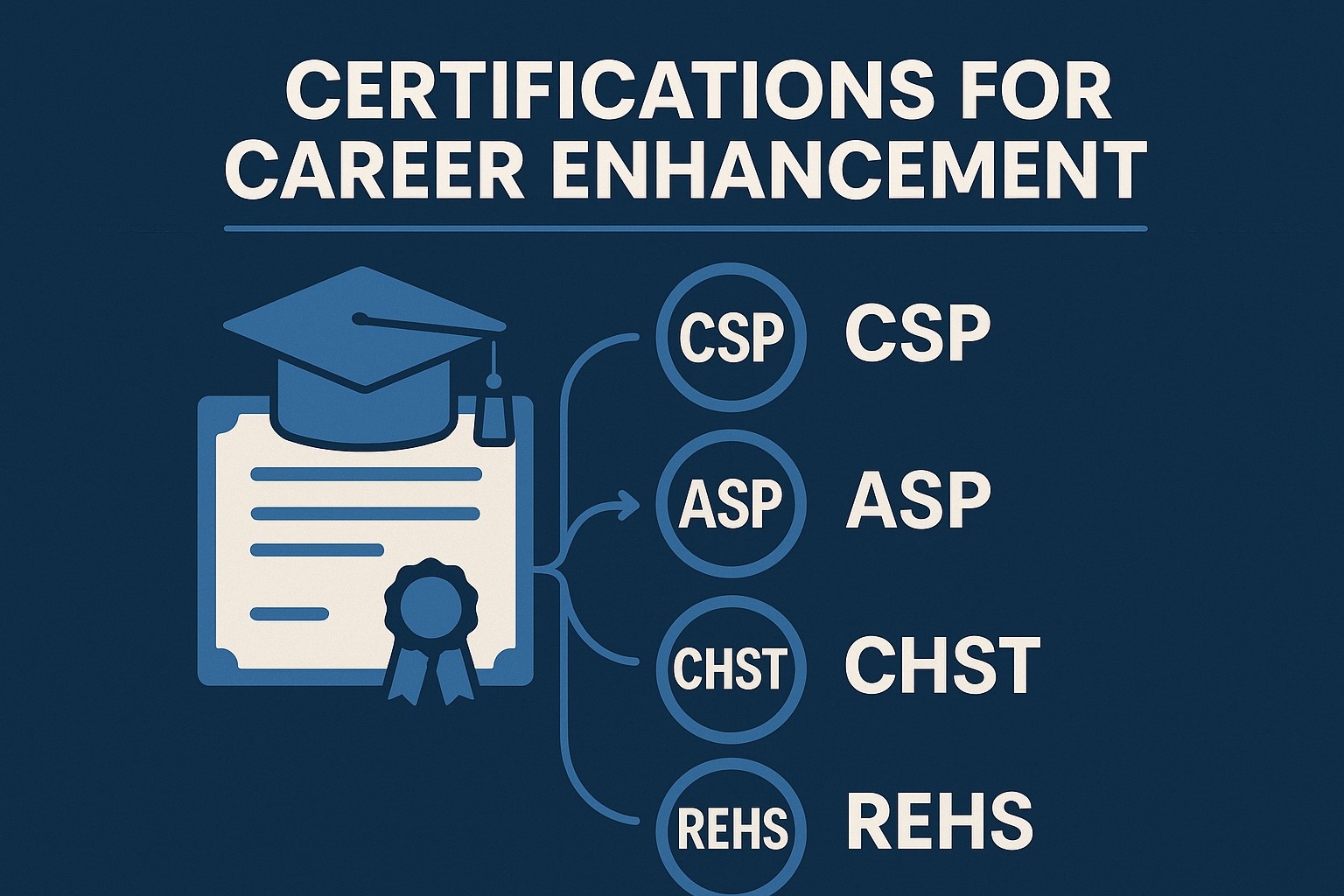
- Obtain relevant certifications, such as CSP, ASP, or REHS.
- Explore specializations like industrial hygiene or sustainability to focus your career.
- Network with industry professionals to stay informed and access job opportunities.
- Apply for EHS roles in industries or organizations that align with your skills and interests.
These steps provide a clear path to entering and advancing in the EHS field.
Certifications for Career Enhancement
Certifications are not always mandatory but can significantly improve employability and credibility. They validate specialized knowledge and skills, making candidates stand out in a competitive job market.
Several certifications are recognized in the EHS field, each with specific eligibility requirements. Key certifications include:
- Certified Safety Professional (CSP): Requires a bachelor’s degree, another approved credential (e.g., Associate Safety Professional), and four years of relevant experience.
- Associate Safety Professional (ASP): Requires a bachelor’s degree or an associate degree in a related field, plus one year of experience where safety is a primary responsibility.
- Construction Health and Safety Technician (CHST): Requires three years of experience with at least 35% of duties focused on safety.
- Registered Environmental Health Specialist (REHS): Administered by the National Environmental Health Association, this credential involves passing an exam on environmental health competencies.
These certifications demonstrate proficiency in safety, health, or environmental management and are often preferred by employers.
Benefits of Certification
Pursuing certifications can provide several advantages. They validate technical expertise, enhance job applications, and may lead to higher earning potential. Certifications also require ongoing education, ensuring professionals stay updated on industry trends and regulations.

Leveraging Tools and Technology in Your EHS Career
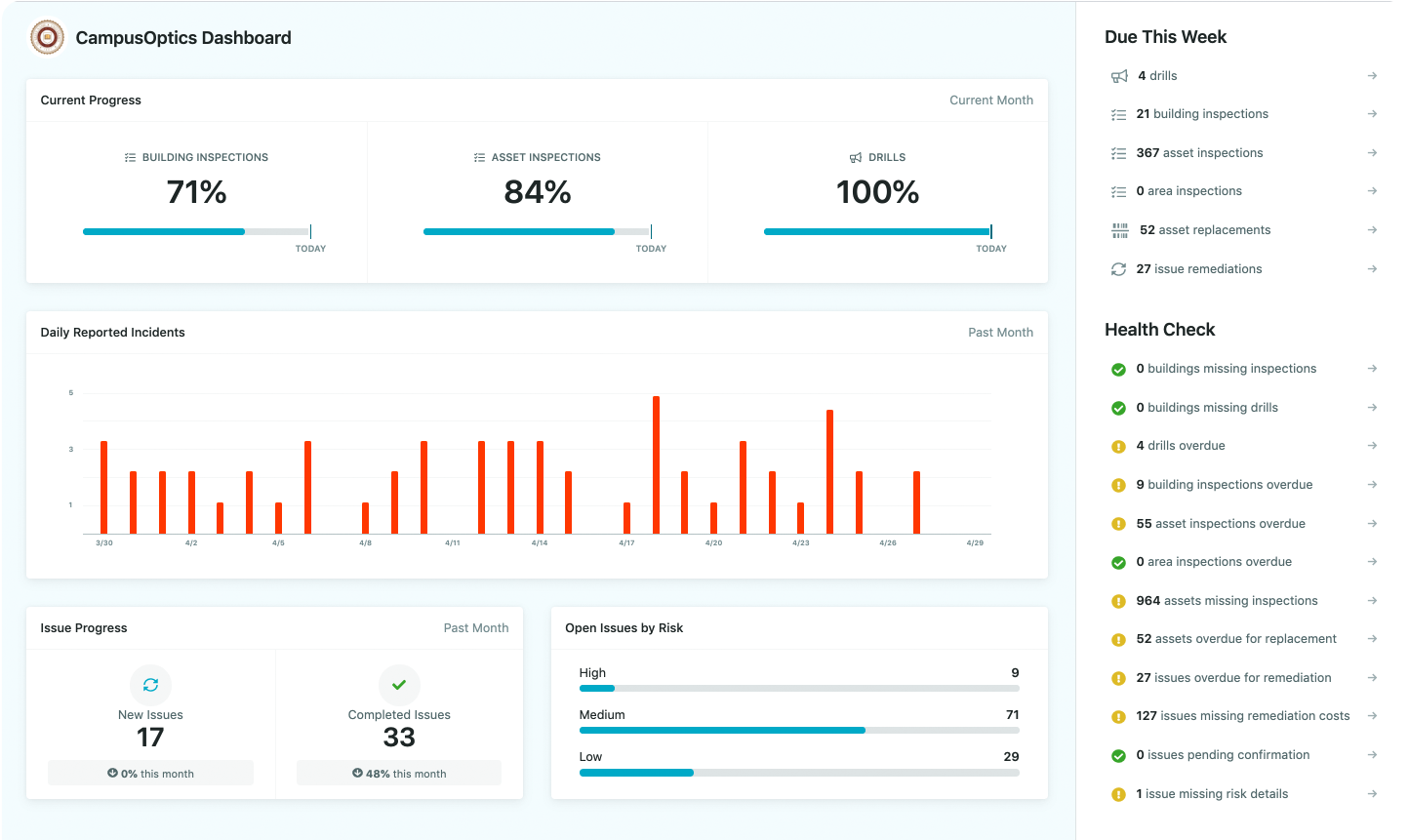
At CampusOptics, we understand the demands of managing environmental health and safety in complex settings like higher education institutions. Our cross-functional EH&S platform is designed to support aspiring EHS specialists by streamlining critical tasks and enhancing safety outcomes. By integrating our platform into your career early, you can develop the technical proficiency needed to excel in the field. It centralizes processes like tracking chemical inventories, conducting inspections, and maintaining incident records, while fostering collaboration across campus teams to reduce institutional risks.
We know technology is only part of the equation, but tools like CampusOptics can enhance your ability to handle the diverse challenges of an EHS career. With customizable permissions for secure team access and rapid implementation, our platform supports the practical demands of the role. For those aiming to specialize in higher education safety, adopting our solution can help you stay organized and prepared, aligning with the skills gained through education, internships, and certifications.
Specializing in the EHS Field
The EHS profession offers opportunities for specialization, allowing professionals to focus on specific areas of interest or industry needs. Specializations within EHS include:
- Industrial Hygiene: Focusing on workplace hazards like chemical exposures or air quality.
- Environmental Science: Addressing environmental impacts, such as pollution control or waste management.
- Sustainability: Developing strategies to reduce environmental footprints.
- Safety Engineering: Designing systems to prevent workplace accidents.
Each specialization may require additional training or certifications, such as those in industrial hygiene or environmental compliance.
Importance of Networking
Networking is a valuable tool for career growth in the EHS field. Connecting with industry professionals through conferences, professional associations, or online platforms provides insights into emerging trends and job opportunities. Organizations like the Board of Certified Safety Professionals (BCSP) or the National Environmental Health Association offer networking events and resources for professionals.
Challenges and Rewards of the EHS Profession
The EHS role comes with unique challenges and benefits that professionals should consider before entering the field.
Challenges
EHS specialists often face resistance when enforcing safety protocols, as some organizations prioritize productivity over compliance. They may need to issue fines or recommend operational changes, which can lead to difficult conversations. Additionally, addressing workplace accidents or environmental incidents requires emotional resilience and objectivity.
Rewards
The role offers a sense of purpose by protecting workers, communities, and the environment. The growing demand for EHS professionals provides ample career opportunities across industries. The integration of technologies like artificial intelligence in safety management also makes the field dynamic and innovative.
Conclusion
Becoming an Environmental Health and Safety (EHS) specialist requires a structured approach that combines education, practical experience, and professional certifications. A bachelor’s degree in a relevant field, such as environmental health or occupational safety, provides the foundational knowledge necessary to understand regulatory frameworks and hazard mitigation. Hands-on experience through internships or entry-level roles is critical for applying theoretical concepts in real-world settings. Certifications, such as the Certified Safety Professional or Registered Environmental Health Specialist, enhance credibility and employability, while specializations like industrial hygiene or sustainability allow professionals to tailor their careers to specific interests. Networking with industry experts further supports career growth by providing access to trends and opportunities. Despite challenges, such as resistance to safety protocols or handling serious incidents, the role offers a meaningful opportunity to protect workers, communities, and the environment. By following these steps, individuals can build a successful career in the dynamic and growing field of EHS.
Frequently Asked Questions
What is an EHS specialist?
An EHS specialist ensures workplace and environmental safety by conducting audits, developing safety plans, and enforcing regulatory compliance.
What degree is required to become an EHS specialist?
Most positions require a bachelor’s degree in environmental health, occupational safety, or a related field like engineering or natural sciences.
Are certifications necessary for EHS roles?
Certifications like CSP, ASP, or REHS are not always mandatory but enhance employability and demonstrate expertise.
What industries employ EHS specialists?
EHS specialists work in manufacturing, construction, healthcare, government, and consulting services, among others.
What skills are essential for an EHS specialist?
Key skills include knowledge of safety regulations, risk assessment, communication, critical thinking, and technical proficiency.
How can I gain experience as an EHS specialist?
Internships, entry-level roles, and specialized training programs provide practical experience for aspiring EHS specialists.
What is the career outlook for EHS specialists?
The demand for EHS specialists is growing due to increased focus on safety and environmental regulations, with opportunities across various industries.