Buying EHS software isn’t like picking out an office app or a monthly subscription tool. There’s no simple price tag, no “Buy Now” button, and definitely no one-size-fits-all package. The reason is pretty straightforward: every organization’s safety and compliance needs are different. A small manufacturer might only need a basic platform for incident tracking, while a large university system could require a full suite that manages labs, hazardous waste, and fire safety protocols across dozens of buildings.
So, how much does EHS software really cost? Let’s unpack what drives those numbers, what you’re actually paying for, and how to make sure you get the best value for your investment.
Why EHS Software Prices Vary So Much
The main reason you rarely see prices listed on vendor websites is that EHS software is almost always customized. It’s built to match how your organization operates, how many users you have, and which tools you need. Think of it like building a safety management system out of Lego blocks. The more blocks you add, the more it costs.
Some companies only need a few tools for tracking incidents or inspections. Others want a full ecosystem that includes chemical inventory, compliance calendars, training management, and sustainability reporting. The bigger your wish list, the higher the quote.
But there’s more to it than just features. The way vendors price, package, and support their software also plays a huge role.
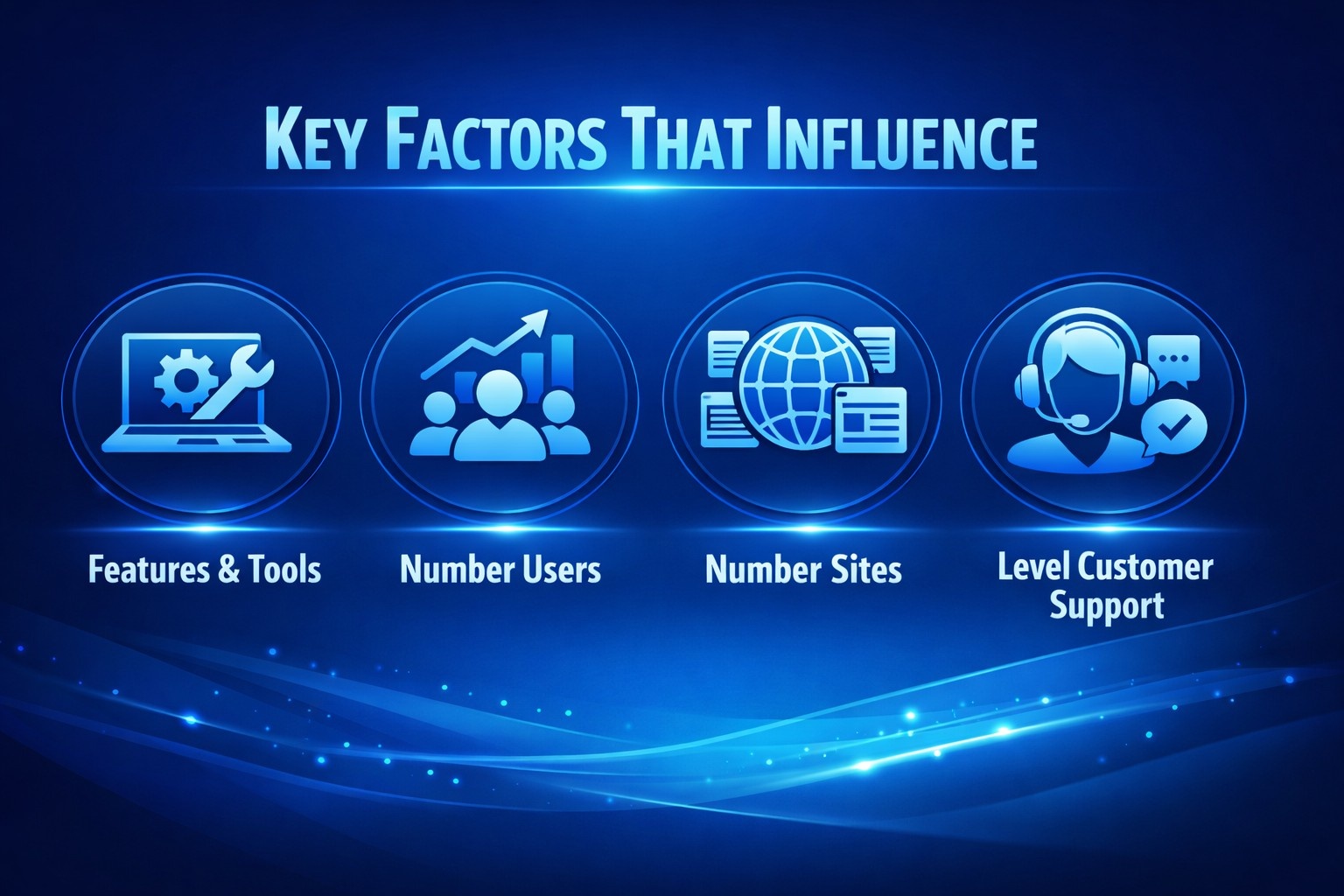
Key Factors That Influence EHS Software Cost
1. The Features and Tools You Choose
This is where costs can shift dramatically. Most vendors now offer modular systems, where you can pick and choose from a range of tools.
Here are some of the most common modules:
- Incident and Observation Tracking
- Audit and Inspection Management
- Chemical and Hazardous Waste Tracking
- Compliance and Regulatory Calendars
- Training and Certification Management
- ESG and Sustainability Reporting
- Asset and Equipment Management
Buying a full-service platform that includes everything can be more cost-effective than adding features one by one. When you buy tools separately, they often don’t integrate as smoothly, and you might end up paying extra later just to connect them.
In short, if your goal is long-term efficiency, it’s usually smarter to start with a core package that includes your must-have tools and room to grow.
2. The Number of Users
Most EHS platforms charge per user or per license. That’s because every new user increases data storage, system load, and support needs.
For example, a small safety team with 10 users will pay far less than a global enterprise with 1,000 active accounts. Vendors often use tiered pricing, where costs increase based on user brackets (such as up to 50 users, up to 200 users, etc.).
There are also unlimited-user plans, usually better suited for universities or organizations that want open access across multiple departments. Those plans cost more up front but can save money later if the platform becomes a campus-wide or enterprise-wide tool.
3. Number of Sites or Locations
The more locations you manage, the more complex your contract becomes. Some vendors charge per site, while others include all facilities in one global agreement.
A company with several warehouses, offices, or research labs may need each location configured separately, especially if local safety regulations differ. This can increase both the licensing and implementation costs.
When requesting quotes, ask vendors specifically how they handle multi-site pricing. It can make a significant difference.
4. Level of Customer Support
Support often looks like a small add-on, but it can have a real impact on total cost. Some organizations are fine with email-only assistance. Others want a dedicated account manager, on-demand training, and 24/7 help. Typical support tiers include:
- Basic: Email and ticket-based help during business hours.
- Standard: Phone and email support with faster response times.
- Premium: Dedicated success manager, training sessions, and strategic planning.
If you’re a large organization or new to EHS software, paying for extra support can be worth it. It helps you implement faster and avoid downtime during critical phases.
Pricing Models: How Vendors Structure Their Costs
Not all software companies price their tools the same way. Understanding the most common pricing models can help you compare quotes more accurately.
Per-User or Seat-Based Pricing
This is the most common setup. You pay a set amount per user license per year. It’s flexible, especially for small or mid-sized companies that plan to grow gradually. When you add users, the total cost increases. If your workforce shrinks, the cost can go down at renewal. It’s a simple, scalable model that lets you pay for what you actually use.
Fixed or Flat-Rate Pricing
With fixed pricing, you pay one fee for unlimited users. It’s usually more expensive upfront but can be cost-effective for large institutions with hundreds of employees who need access. Fixed pricing also simplifies budgeting. You don’t have to track licenses or worry about fluctuating costs if your team grows.
Module-Based Pricing
Some vendors charge by the number of modules or features you choose. This is common in highly customizable platforms. You might start with audits and inspections, then add chemical tracking later as your needs evolve. Just remember that adding modules can add hidden costs, such as training or integration time.
Hidden Costs You Should Watch Out For
Many organizations underestimate the total cost of EHS software because they focus only on the license price. But like any enterprise system, there are implementation and ongoing costs that can add up.
Here are a few to keep in mind:
- Implementation fees: Data import, configuration, and setup can take weeks or months, depending on your complexity.
- Training: Some vendors include training in the initial quote, others charge separately for onboarding sessions.
- API or integration fees: If you want your EHS platform to connect with HR or facility systems, integration may cost extra.
- Data storage limits: Exceeding your data allowance can trigger additional charges.
- Custom forms or workflows: Some systems let you build these yourself; others charge for every change request.
A good rule of thumb is to ask about total cost of ownership, not just the software license. That’s the figure that includes everything from setup to support to updates.
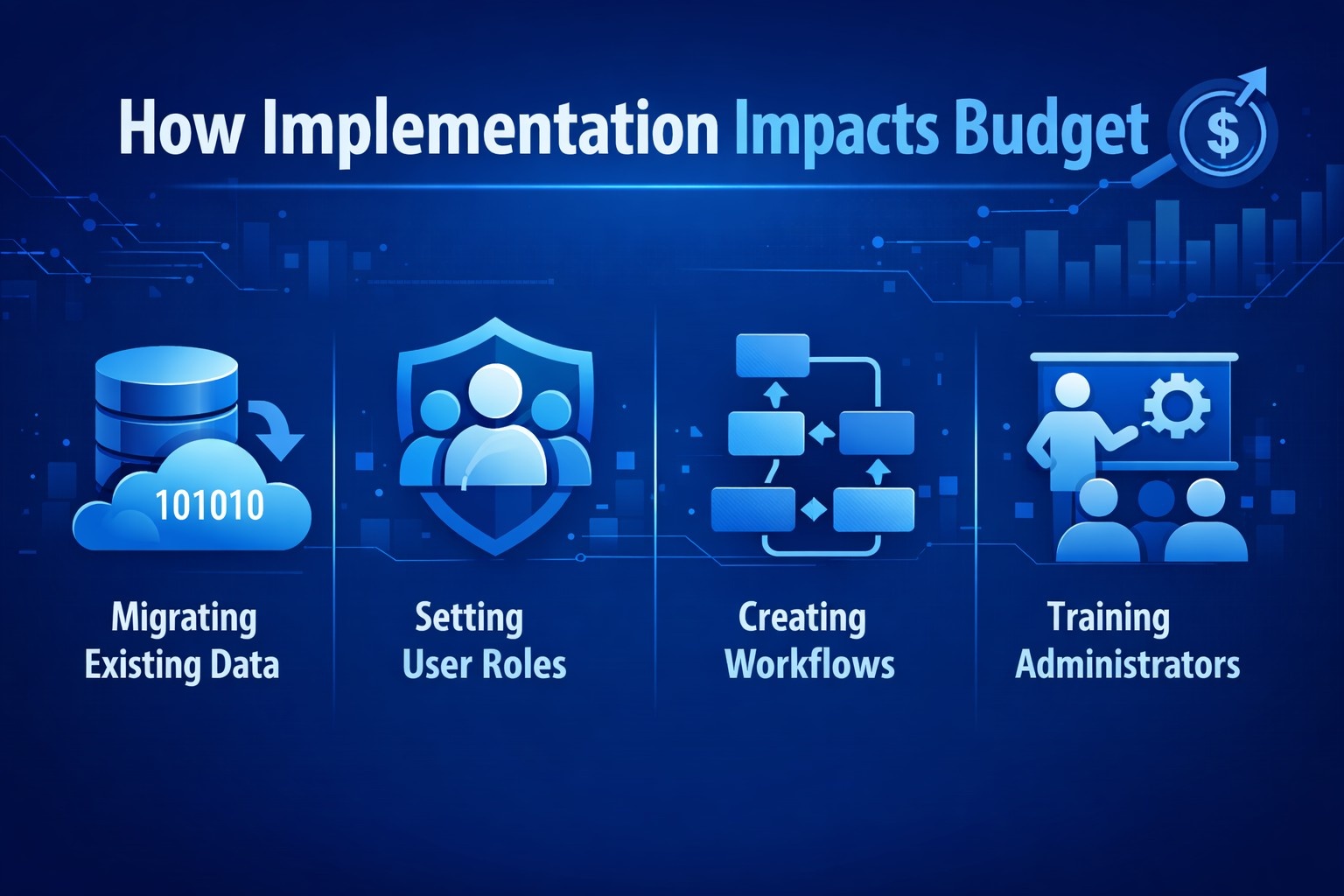
How Implementation Impacts Your Budget
Implementation is one of the biggest line items in EHS software budgets. It’s also the easiest to underestimate.
The process usually includes:
- Migrating your existing data (incidents, inspections, training records)
- Setting up user roles and permissions
- Creating workflows and forms
- Training your administrators and end users
For a small business, implementation might take a few weeks. For a large, multi-site organization, it can take several months. During this time, you’ll pay service fees and allocate internal resources to the rollout.
When comparing vendors, always ask these questions:
- How long does implementation typically take for a company of our size?
- How much of the setup can we do ourselves?
- Is there an additional fee for custom configurations?
Faster implementation doesn’t always mean better, but it does reduce downtime and help you start seeing value sooner.
Avoiding the “Pay to Play” Trap
Some vendors advertise attractively low entry prices but later add unexpected costs for essential features. These “pay to play” setups can quickly turn what seems like an affordable choice into an expensive one. You might find that basic tools such as reporting, API connections, or workflow customization require extra payments. Even something as simple as importing data can carry additional charges.
The best way to avoid these surprises is to identify your non-negotiable features before you start comparing providers. Ask directly which capabilities are included in the base package and which ones come at an added cost. A clear conversation upfront can save you from frustration and overspending later on.
Typical Cost Ranges
It’s one thing to understand what affects EHS software pricing, but seeing actual price ranges helps put everything into perspective. While every vendor and contract will differ, most EHS platforms fall into a few general categories based on company size, complexity, and scope.
For small organizations or single-site setups, annual costs often range between $5,000 and $25,000. These deployments usually cover a limited number of users and focus on core features like incident tracking, audits, or compliance reporting. They’re ideal for teams that want to move away from spreadsheets but don’t yet need a large enterprise platform.
Mid-sized companies with multiple facilities or departments typically spend $25,000 to $100,000 per year. This price range allows for more modules, such as chemical inventory, training management, or risk assessment tools. It also includes moderate customization, integration with HR or facility systems, and ongoing support. At this level, companies often start centralizing all safety and compliance workflows into one system rather than juggling multiple tools.
Large enterprises and multi-campus institutions can expect to invest anywhere from $100,000 to over $500,000 annually. These projects usually involve hundreds or even thousands of users, multiple regulatory frameworks, and highly customized configurations. They might include features like advanced analytics dashboards, ESG reporting, and detailed asset management across many sites. Costs also rise when specialized training, high-touch support, or extended implementation services are included.
It’s worth noting that these figures generally cover licenses, standard support, and base implementation. However, if your organization requires heavy customization, complex data migration, or international compliance functionality, your total cost can exceed the higher end of these ranges.
Ultimately, the right budget depends on your organization’s structure and safety goals. Smaller companies should look for scalable options that can grow with them, while larger institutions often benefit from investing upfront in a robust, enterprise-level solution that reduces long-term overhead and administrative load. The most important thing is to focus on value – how well the system improves safety outcomes, compliance, and efficiency, not just the initial price tag.

How CampusOptics Approaches EHS Software Costs
At CampusOptics, we’ve seen firsthand how complicated EHS software pricing can feel, especially in higher education. Every college or university faces its own mix of risks, regulations, and resource limits, which means no two safety programs ever look the same. That’s exactly why we built our platform to be flexible from the start. Instead of forcing institutions into rigid pricing tiers, we align our costs with what actually matters to you: the tools you need, the size of your campus, and the level of support your team requires.
We don’t believe in hidden add-ons or confusing models that grow more expensive over time. Our goal is to make budgeting for campus safety straightforward. Whether you’re managing labs, residence halls, or entire academic districts, we help you create a single, connected safety system that fits your operations without surprise fees. With unlimited user access, quick implementation, and a focus on transparency, CampusOptics is designed to make EHS management predictable, practical, and sustainable for higher education.
How to Budget for EHS Software
A thoughtful budget does more than cover licenses. It helps you forecast future costs and plan for growth. Here’s how to approach it:
Step 1: Define Your Scope
Decide which tools you truly need. Start with core EHS functions like incident tracking, audits, and compliance calendars. Leave optional modules for later once you understand how your team uses the platform.
Step 2: Involve Stakeholders Early
Your safety manager, IT lead, and finance team all see different sides of the project. Bring them into the discussion early to align expectations and avoid last-minute surprises.
Step 3: Ask for a Detailed Quote
Request itemized pricing that lists software licenses, training, implementation, and ongoing support separately. That transparency helps you compare vendors more accurately.
Step 4: Plan for Year Two and Beyond
Many costs, like user growth or data storage, appear after the first year. Make sure your budget accounts for renewals, potential expansion, and support tier changes.
What You’re Actually Paying For
Beyond the software itself, the real value of EHS platforms lies in time saved and risk reduced. You’re not just buying digital forms or dashboards. You’re investing in:
- Fewer manual processes and less paperwork
- Faster compliance reporting and audit prep
- Reduced risk of violations or safety incidents
- Centralized data for smarter decision-making
- Better collaboration between departments
In many cases, organizations see a strong return on investment within the first year simply by eliminating duplicated work and improving visibility.
Final Thoughts
EHS software can feel expensive at first glance, but the real question isn’t “How much does it cost?” It’s “What is it costing us not to have it?”
Manual tracking, outdated spreadsheets, and reactive safety programs drain time and increase risk. A well-chosen EHS platform centralizes all that work, saves countless hours, and helps your organization stay ahead of compliance requirements.
If you’re budgeting for one this year, start by defining what success looks like for your team, not just what you can afford. With clear priorities and the right questions, you’ll find a solution that fits your goals, scales with your needs, and ultimately pays for itself in both safety and efficiency.
Frequently Asked Questions
How much should a company expect to spend on EHS software?
Budgets vary widely, but most organizations spend anywhere from $5,000 to $500,000 a year, depending on how many users, features, and sites they manage. The best approach is to request a customized quote based on your actual needs instead of comparing flat prices online.
Why don’t most vendors list prices publicly?
Because EHS platforms are highly customized. Each organization has different requirements, from compliance reporting to hazardous waste tracking. Listing a single number would be misleading, so vendors usually provide tailored quotes after reviewing your scope.
Are there hidden fees to watch for?
Sometimes, yes. Costs for data imports, extra storage, advanced reports, or integrations can appear later in the process. Asking for a detailed, itemized quote before signing a contract helps avoid surprises.